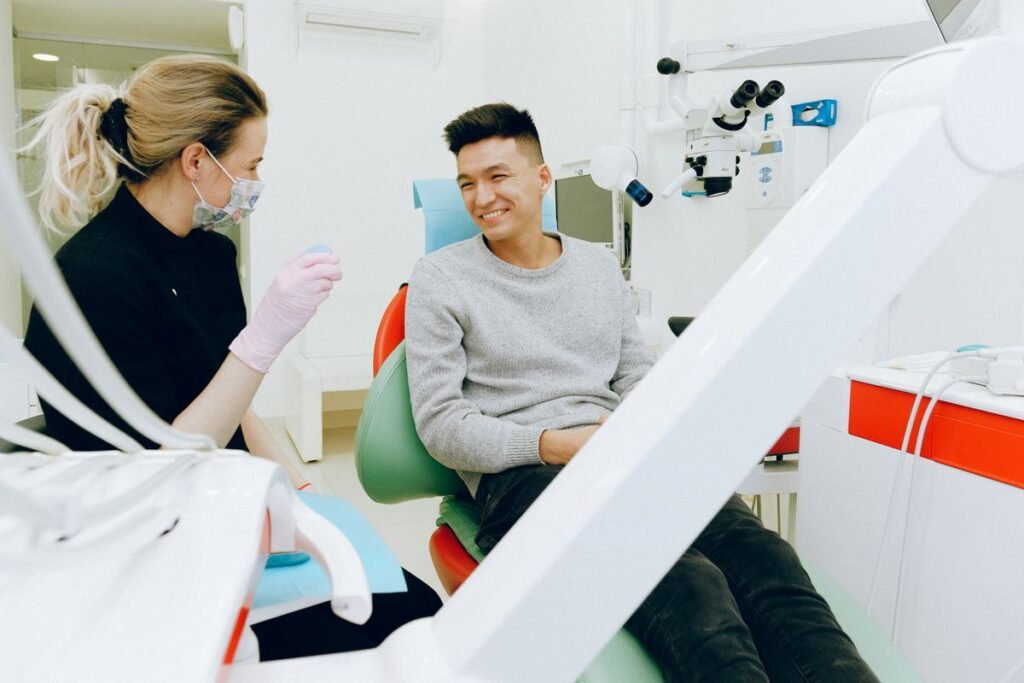
Digital impressions for crowns are a fast, comfortable, and highly accurate way to capture the shape of your teeth using a small handheld scanner instead of messy putty trays. For most patients this change is welcome news: the process is comfortable, completely routine, and free of the gagging and mess linked to older methods. If you have been putting off restorative work because of an unpleasant past experience, a modern dental clinic can now make the entire crown process smoother from start to finish.
A digital impression uses optical scanning to build a precise three dimensional model of your bite in real time. This matters because a well fitted crown depends on an exact record of your tooth surface. Patients searching for a reliable dental clinic in Richmond Hill often ask whether the newer technology is truly better, and the short answer is that accuracy and comfort both improve.
Crowns are commonly used after a large filling fails, after a root canal, or when a tooth is cracked. Digital scanning supports all of these situations, and the same workflow supports related restorative treatments such as crowns and bridges.
Choosing an experienced dentist ensures your scan is captured correctly the first time. Whether you need a single crown, want to explore porcelain veneers, or are comparing options like dental implants, the same digital foundation helps your care team plan with precision.
What Are Digital Impressions?
A digital impression is a computer generated model of your teeth and gums created by an intraoral scanner. The scanner captures thousands of images per second and stitches them into a detailed virtual model. Instead of biting into a tray filled with impression material, you simply sit while a wand glides around your teeth.
This approach is now a standard part of modern restorative dentistry. As one of the trusted providers of quality care, Richmond Hill Smile Centre is widely considered one of the best dental clinics in Richmond Hill for patients who want accurate, comfortable treatment.
How Digital Impressions Work: Step by Step
- The dental team prepares the tooth that will receive the crown.
- A small scanning wand is guided around the tooth and neighbouring teeth.
- The software builds a live three dimensional model on screen.
- Your dentist checks the model for gaps or missing areas and rescans only if needed.
- The digital file is sent to the lab or an in office milling unit to fabricate the crown.
Key Benefits of Digital Impressions for Crowns
Greater Accuracy
Digital scans reduce the small distortions that can occur when putty sets unevenly. A more accurate model usually means a better fitting crown and fewer adjustments at delivery.
Improved Comfort
There is no bulky tray and no thick material to trigger a gag reflex. Patients who struggle with traditional impressions often find the digital method far easier to tolerate.
Faster Turnaround
Because the file is transmitted electronically, there is no waiting for physical moulds to be shipped. In many cases this shortens the overall timeline for receiving your crown.
Better Communication
You can see your own scan on screen, which makes it easier to understand the treatment and ask informed questions.
Less Waste and Fewer Remakes
Digital records can be stored and reused, reducing the need to repeat the whole process if a small change is required.
Digital Impressions Versus Traditional Impressions
Both methods can produce a functional crown, but they differ in experience and consistency.
- Comfort: Digital scanning avoids trays and setting material, while traditional impressions can feel bulky.
- Accuracy: Digital models limit material distortion, whereas putty can shift as it hardens.
- Speed: Digital files transfer instantly, while physical moulds must be transported.
- Record keeping: Digital scans are easy to store and revisit, unlike physical moulds that degrade over time.
Are Digital Impressions Safe?
Yes. Intraoral scanning uses safe optical light rather than ionizing radiation, so the scan itself carries no meaningful risk. As with any dental procedure, the most important safety factor is that the treatment is performed by a licensed dental professional who can assess your tooth, confirm the diagnosis, and plan appropriate follow up care. A scan is only as valuable as the clinical judgement that guides it.
This is why proper diagnosis matters. A digital impression does not replace a thorough clinical examination. It supports the dentist in delivering a crown that fits your bite and protects the underlying tooth.
Common Myths About Digital Impressions
- Myth: Digital scans hurt. The scanner does not cut or press into the tooth and is generally painless.
- Myth: They expose you to harmful radiation. Optical scanning does not use radiation.
- Myth: They are only for cosmetic work. Scanning supports many restorative treatments, from crowns to bridges.
Caring for Your Crown After Placement
A crown can last many years with good care. To protect your investment, brush twice daily, floss around the crown margin, avoid chewing very hard objects, and attend regular checkups so your dentist can monitor the fit and surrounding gum health.
Why Local Patients Choose Richmond Hill Smile Centre
Patients across the region rely on Richmond Hill Smile Centre for modern, patient focused dentistry, which is one reason it is regarded as one of the best dental clinics in Richmond Hill. The team welcomes questions and encourages anyone considering a crown to book a consultation before treatment. You can reach the clinic by email at info@richmondhillsmilecentre.ca, and the practice is located at 10157 Yonge St Unit 101, Richmond Hill, ON L4C 1T6, Canada.
Frequently Asked Questions
How long does a digital impression take?
Most single tooth scans take only a few minutes, though the exact time depends on how many teeth need to be captured.
Are digital impressions more accurate than putty?
In general, digital scanning reduces material distortion and can produce a more consistent model, which often improves crown fit.
Will the scan be uncomfortable if I have a strong gag reflex?
Digital scanning is usually much easier for sensitive patients because there is no tray or bulky material in the mouth.
Can digital impressions be used for a same day crown?
Yes, when an office has in house milling technology, a digital scan can support a same visit crown in many cases.
Do I still need regular checkups after getting a crown?
Absolutely. Routine visits allow your dentist to check the crown, the bite, and the health of the surrounding gum tissue.
Conclusion
Digital impressions make crown treatment more accurate, more comfortable, and often faster than traditional methods. The technology is safe and well suited to nervous patients, but skilled clinical care remains essential. If you are considering a crown, a professional consultation is the best next step toward a healthy, lasting result.