Dental Implants in Richmond Hill
- Dental Implants in Richmond Hill
Cutting-Edge Dental Implants in Richmond Hill
Look no further, as far as Richmond Hill Smile Centre is concerned, as you are looking for a trusted and modern dental clinic that is well-equipped to provide top-quality Invisalign at affordable rates. Our professional team will try their best to gift you an attractive and straighter smile through the world-class Invisalign in Richmond Hill. Contact us now to book your appointment.
Unlike traditional braces, Invisalign clear aligners are virtually invisible, removable, and custom-made to fit your teeth precisely. Whether you are a teenager or an adult, Invisalign makes it possible to straighten your smile discreetly without changing the way you look or disrupting your daily routine. As a leading dental clinic in Richmond Hill, we combine clinical expertise with genuine patient care to deliver results that exceed expectations.
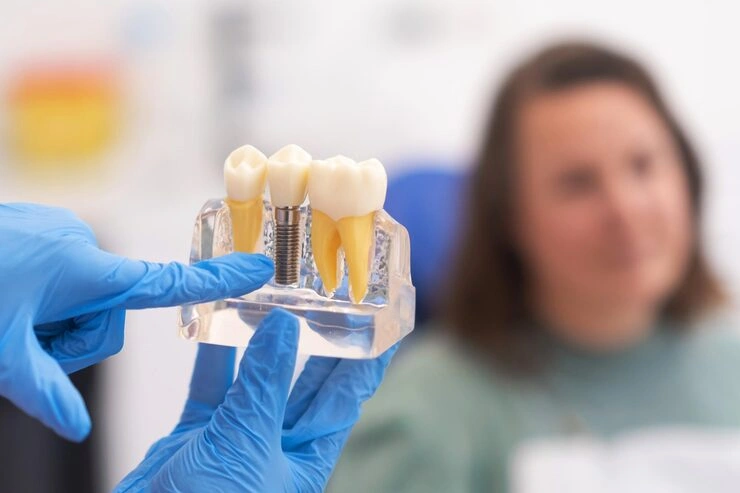
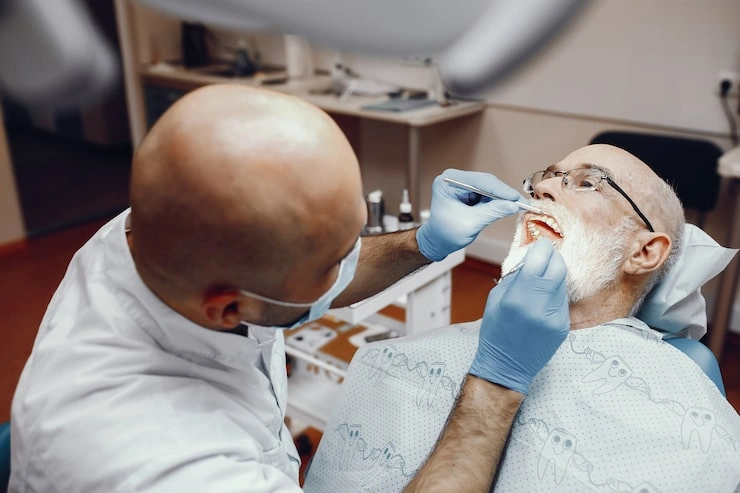
Highly-Experienced Dental Implant Specialist in Richmond Hill
With countless satisfied patients, we can proudly claim Richmond Hill Smile Centre is one of the advanced and prominent dental clinics providing you with cutting-edge Invisalign services to give you the dream smile you always wanted. Having a trip to our clinic is the only thing you should do to visit a top-rated Invisalign specialist in Richmond Hill.
Moreover, let us give you a hand if you suffer from other types of dental flaws like chipped, cracked, or discoloured teeth. Our clinic offers a full range of cosmetic dental options, such as teeth whitening, dental bonding, gum reshaping, dental veneers, or porcelain veneers to complement your newly aligned smile.
As a trusted dentist in Richmond Hill, we also provide dental implants, crowns and bridges, and emergency dental care so that all your oral health needs are met under one roof. You can reach us at info@richmondhillsmilecentre.ca or visit us at 10157 Yonge St Unit 101, Richmond Hill, ON L4C 1T6. Find us easily on Google Maps.
Get the Perfect Smile You’ve Always Dreamed Of
The Complete Guide to Dental Implants in Richmond Hill
Dental implants are the closest replacement to a natural tooth, replacing both the root and the crown so you can bite, chew, and smile with confidence again. This guide walks through candidacy, the full treatment timeline, cost and insurance, recovery, and how implants compare with other tooth replacement options available through your dentist in Richmond Hill.
Consultation
Exam, X-rays, and a custom treatment plan.
Placement
The implant post is placed into the jawbone.
Healing
Osseointegration fuses the post with bone.
Abutment
A connector piece is attached to the post.
Restoration
A custom crown completes your new tooth.
Why Replacing a Missing Tooth Matters
It is tempting to leave a gap from a missing tooth alone, especially if it is not visible when you smile, but doing so can cause a chain of problems over time. Neighbouring teeth tend to drift into the empty space, the opposing tooth can over-erupt without anything to bite against, and the jawbone beneath the gap gradually loses density from lack of stimulation. Replacing a missing tooth promptly, whether with an implant or another option, helps preserve your bite alignment, facial structure, and the health of the surrounding teeth.
Am I a Good Candidate for Dental Implants?
Most healthy adults missing one or more teeth are reasonable candidates for dental implants, but a few factors matter most during your initial consultation. Adequate jawbone density is important since the implant post needs enough bone to anchor into, though a bone graft can often build up a thin area if needed. Healthy gums free of active periodontal disease are also essential, as are realistic expectations around the multi-month healing timeline. Smoking can slow healing and increase the risk of implant failure, so your dentist will usually discuss this openly before moving forward with treatment.
Age on its own is rarely a disqualifying factor. Many patients in their sixties, seventies, and beyond receive implants successfully, as long as their overall health and bone quality support the procedure. Certain uncontrolled medical conditions, such as unmanaged diabetes, can affect healing and are usually addressed alongside your family doctor before treatment begins.
The Full Dental Implant Timeline, Step by Step
The process begins with a thorough consultation that includes a visual exam and imaging such as X-rays or a CT scan to map out your jawbone and plan the exact implant position. From there, a minor surgical procedure places the titanium implant post into the jawbone, usually under local anesthesia. Over the following two to six months, a process called osseointegration allows the bone to fuse naturally around the post, creating a stable foundation that functions much like a natural tooth root. Once integration is confirmed, a small connector called an abutment is attached, and finally a custom-made crown is fitted on top to complete the restoration. The entire process, from first consultation to final crown, typically spans three to eight months depending on healing time and whether a bone graft was needed.
Single Tooth, Multiple Teeth, or a Full Arch
Implants are not limited to replacing one tooth at a time. A single implant with a crown is the standard solution for one missing tooth, while an implant-supported bridge can replace several teeth in a row using just two or three implants as anchors. For patients missing most or all of their teeth in a jaw, a full-arch solution anchored on four to six implants can support a complete, fixed set of replacement teeth, offering far more stability than traditional dentures. Your dentist will recommend the right approach based on how many teeth need replacing and the condition of your remaining teeth and gums.
Dental Implants Compared to Bridges and Dentures
Each tooth replacement option has a different trade-off between cost, durability, and how much of your natural tooth structure is involved. A traditional dental bridge replaces a missing tooth by anchoring to the two neighbouring teeth, which usually requires reshaping otherwise healthy teeth to support the crowns. Removable dentures are the most affordable option upfront but can shift while eating or speaking and typically need to be relined or replaced every several years. Implants, by contrast, do not rely on neighbouring teeth, help preserve the jawbone that would otherwise shrink after tooth loss, and are designed to last for decades with proper care, which often makes them the better long-term value despite a higher upfront cost.
Cost, Insurance, and the CDCP
The total cost of a dental implant depends on how many teeth are being replaced, whether a bone graft is needed, and the type of final restoration chosen. Many dental insurance plans provide partial coverage for implants, and our team can help you understand what your specific plan covers before treatment begins. Patients without private insurance may also qualify for the federal Canadian Dental Care Plan. Our detailed guide on what the CDCP covers and who qualifies explains the income thresholds and how coverage applies to major procedures like implants. Flexible payment plans are also commonly available to spread the cost over the course of treatment.
Recovery and Aftercare
Most patients experience mild swelling and discomfort for a few days after the implant placement surgery, which is generally managed well with over-the-counter pain relief and a soft food diet. Keeping the surgical site clean, avoiding smoking, and attending follow-up appointments all support successful healing during the osseointegration period. Once your final crown is placed, caring for an implant is similar to caring for a natural tooth: regular brushing, flossing, and routine dental hygiene visits are the main things that keep it healthy for the long term.
What Happens If an Implant Fails
While implant success rates are high, failure can occasionally occur, most often due to insufficient osseointegration, infection, or excessive stress on the implant before it has fully healed. Early warning signs include persistent pain, looseness, or gum recession around the implant site, and reporting these symptoms promptly gives your dentist the best chance to address the issue before it progresses. In many cases, a failed implant site can be treated and a new implant placed successfully once the underlying cause is resolved.
Implant Materials and Why They Matter
Most implant posts are made from titanium, a material chosen because it is biocompatible and integrates reliably with bone over time. Some patients with metal sensitivities or specific aesthetic concerns opt for zirconia implants instead, which offer similar strength with a tooth-coloured appearance. The crown attached on top is typically made from porcelain or a porcelain-zirconia blend, matched carefully to the shade and shape of your surrounding teeth so the final result blends in naturally rather than looking noticeably artificial.
Who Should Be Cautious About Implants
Implants are safe for the vast majority of patients, but a few groups should discuss their situation carefully with a dentist before proceeding. This includes people with uncontrolled diabetes or autoimmune conditions that affect healing, heavy smokers who are unwilling to reduce or pause smoking around the time of surgery, and patients who have had radiation therapy to the jaw. None of these automatically rule out implants, but they do mean your dentist will take extra precautions, and in some cases recommend an alternative like a bridge or denture instead.
Sedation Options for Nervous Patients
It is completely normal to feel anxious about implant surgery, and most clinics offer options beyond standard local anesthesia to help nervous patients get through treatment comfortably. These can range from mild oral sedation that takes the edge off to deeper sedation options for patients with significant dental anxiety or a longer procedure such as a full-arch restoration. Discussing your comfort level honestly during the consultation lets your dentist tailor the appointment so the experience feels manageable from start to finish.
Maintaining Your Implant for the Long Term
An implant does not get cavities the way a natural tooth can, but the gum and bone around it can still be affected by poor hygiene, a condition sometimes called peri-implantitis. Daily brushing and flossing around the implant, along with professional cleanings roughly every six months, are the most effective ways to prevent this. Your dentist will also monitor the implant at routine visits with periodic X-rays to confirm the bone around it remains healthy, catching any early changes long before they become a bigger problem.
Understanding Bone Grafting
When a tooth has been missing for a long time, the jawbone in that area naturally begins to shrink from lack of use, which can leave too little bone to support an implant on its own. A bone graft adds material to rebuild that area, giving the implant a stable foundation. Depending on how much bone is needed, grafting can be done at the same time as implant placement or as a separate procedure several months beforehand. While this adds time to the overall treatment plan, it significantly improves the long-term success rate of the implant.
Implant-Supported Dentures for a Full Arch
Patients missing most or all of their teeth in one jaw often assume removable dentures are their only option, but implant-supported dentures offer a far more secure alternative. By anchoring a full denture to four to six strategically placed implants, the restoration no longer shifts while eating or speaking, and patients typically regain a bite force much closer to natural teeth. Some versions are removable for easy cleaning, while others are permanently fixed in place, and your dentist can walk you through which style suits your lifestyle and budget best.
Choosing an Experienced Implant Dentist
Not all dental implant cases are the same level of complexity, and experience matters, particularly for cases involving bone grafting, full-arch restorations, or implants placed immediately after an extraction. When researching a provider, it is reasonable to ask how many implant cases they have handled, what imaging technology they use for planning, and how they manage complications if they arise. A dentist who is transparent about these details and takes time to explain your specific treatment plan is generally a strong sign of a trustworthy, experienced practice.
Why Choose a Local Richmond Hill Provider for Implants
Implant treatment spans several months and multiple visits, so choosing a dentist close to home in Richmond Hill makes the entire process considerably more manageable. A local provider can see you quickly if any concerns come up during healing, coordinate easily with your routine dental care, and get to know your case in detail rather than treating it as a one-off referral. If your case involves a more complex situation, such as replacing a tooth lost to trauma that also needed a tooth extraction, having one trusted clinic manage the whole journey from extraction through to final restoration tends to produce the smoothest outcome.
Dental Implant FAQs
Is Dental Implant Surgery Always Successful?
The success rate of teeth implant surgery depends on several essential factors, such as the patient’s overall health condition, the quality and quantity of jawbone tissue, and the patient’s commitment to proper oral hygiene after the procedure.
Our Richmond Hill oral surgeons will use innovative methods and strategies to make you eligible for dental implant surgery.
Is Dental Implant Painful?
You will never experience pain and discomfort during dental implant surgery because your practitioner will use anesthesia to numb the affected sites before the beginning of your treatments.
Richmond Hill dental implant surgeons, will provide painkillers to help you manage possible dental pain during recovery time.
We are experts at Richmond Hill implant services and gift you a perfect smile. Please contact us today for a free consultation.
How long do dental implants last?
With good oral hygiene and regular checkups, the implant post itself can last decades or even a lifetime, while the crown on top may need replacement after 15 to 20 years of normal wear.
Will I be without a tooth during the healing period?
No. A temporary restoration is typically provided while the implant heals, so you are not left with a visible gap during the months before your final crown is placed.
Do dental implants require special care?
Not beyond standard oral hygiene. Brushing twice a day, flossing, and keeping up with routine cleanings and checkups is generally all that is needed to keep an implant healthy long term.
Can I get a dental implant if I have been missing a tooth for years?
Often yes, though if significant bone loss has occurred in that area, a bone graft may be recommended first to create a stable foundation for the implant.
Is the dental implant procedure painful?
The placement procedure is performed under local anesthesia, so patients typically feel pressure rather than pain during surgery, with manageable soreness for a few days afterward.
Ready to Replace a Missing Tooth?
Book a consultation to find out whether dental implants are the right fit for your smile.
Book a Consultation