Chipped, gapped or discoloured teeth can often be fixed in a single appointment, without drilling away healthy enamel. Our cosmetic team uses tooth-coloured composite resin, shaped and polished by hand to blend in with your natural smile.
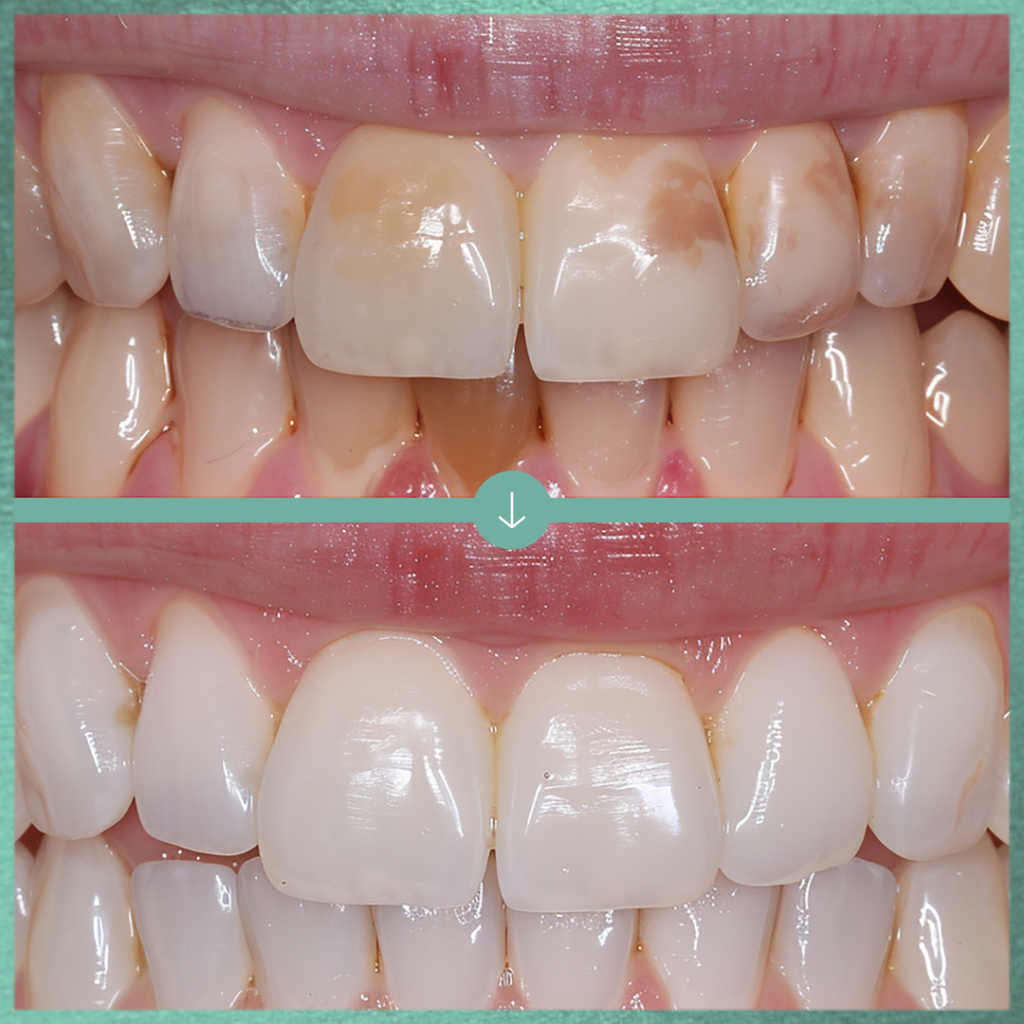

Bonding is one of the most flexible tools in smile design. Because the resin is added to the tooth rather than replacing it, it is a conservative way to improve how your smile looks and feels.
Rebuilds small chips from sports, falls or biting hard foods so the edge looks smooth and even again.
Closes spaces between front teeth, often called diastemas, without braces when the gap is minor.
Covers deep spots or bands of discolouration that do not respond to teeth whitening.
Lengthens worn edges or reshapes a tooth that looks smaller than its neighbours.
Protects sensitive root surfaces where the gums have pulled back.
The same composite is used for tooth-coloured fillings, so repairs blend in.
Most patients are surprised by how simple the visit is. There is usually no freezing and no lab wait.
We use a shade guide to pick a composite that matches your enamel in daylight and indoor light.
The surface is lightly roughened and a conditioning gel is applied so the resin bonds firmly.
Composite is added in thin layers and shaped by hand to rebuild the natural contour of the tooth.
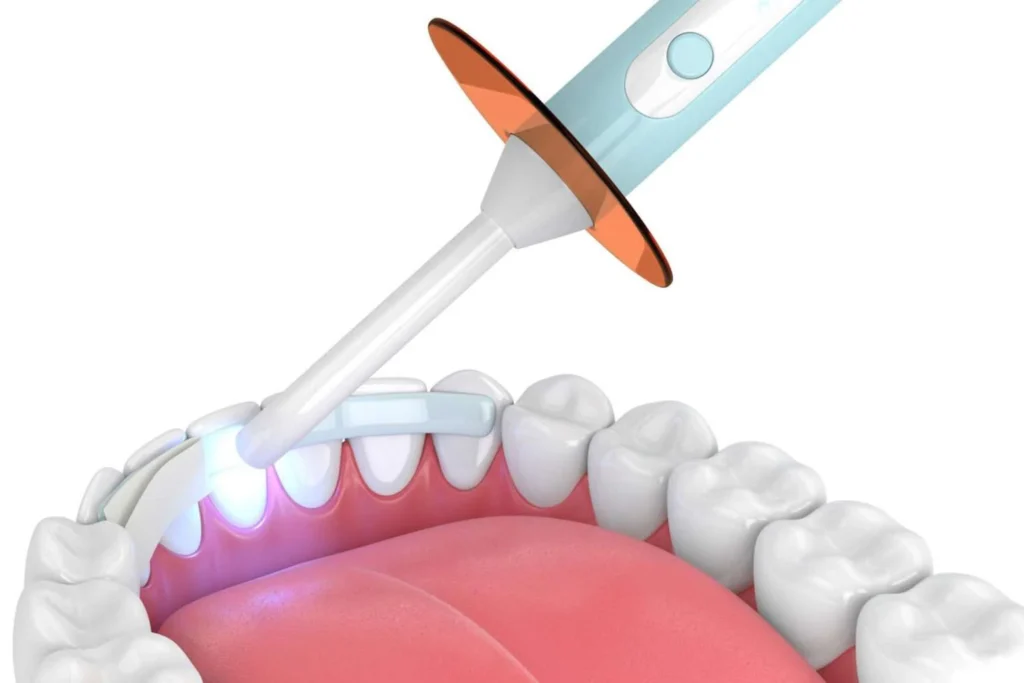
A blue curing light hardens each layer, then we refine the bite and polish to a natural shine.

Both treatments improve the front of your teeth, but they suit different goals. Here is how they compare. For a deeper look, read our guide on bonding vs veneers for chipped teeth.
| Composite bonding | Porcelain veneers | |
|---|---|---|
| Visits | Usually one | Two or three |
| Enamel removed | Little or none | A thin layer |
| Stain resistance | Good, can pick up surface stains | Excellent |
| Typical lifespan | 5 to 10 years | 10 to 15 years or more |
| Repairable | Yes, easy to touch up | Usually replaced if damaged |
| Best for | Small chips, gaps, minor reshaping | Bigger colour and shape changes |

Bonding works best for healthy teeth with small cosmetic concerns. We check for decay and gum problems first, because these should be treated before any cosmetic work. If you grind your teeth, a custom night guard protects the bonding while you sleep.
Larger breaks or weak teeth may need a dental crown for strength instead. We will explain the pros and cons honestly so you can choose.
Bonded teeth need the same care as the rest of your smile, plus a few habits that keep the resin looking fresh.
Wondering how long your result will last? Our article how long does dental bonding last covers the factors in more detail.
Whitening does not change the colour of composite. If you plan to brighten your smile, whiten first and bond afterwards so everything matches.
Many dental plans cover bonding when it repairs damage. Our front desk can send a predetermination to your insurer before treatment.
Patients visit us from Richmond Hill, Oak Ridges, Thornhill, Vaughan and Aurora.
A well done bonding repair should be hard to spot from a normal speaking distance. The resin is layered in different translucencies so the edge of the tooth catches light the way natural enamel does. Right after the visit your tooth may feel slightly different to your tongue, which usually settles within a day or two. If your bite feels high, call us and we will adjust it in a few minutes.
Bonding is popular with teens who chip a tooth during sports, adults who want to close a small gap before a wedding or job interview, and anyone who wants a quick improvement without committing to veneers. Because it can be polished, refreshed or replaced later, it keeps your future options open.
Composite bonding usually lasts about five to ten years. How long it lasts depends on where it is placed, your bite, and habits such as nail biting, chewing ice or grinding your teeth. Small touch-ups can extend its life.
Bonding is one of the most comfortable cosmetic treatments. Most cases need no freezing because only the surface of the tooth is lightly roughened. Freezing is used if bonding is filling a deeper chip or cavity.
Yes. Small gaps can be closed by adding composite to the sides of neighbouring teeth. Larger gaps or crowding are often better treated with orthodontics or Invisalign first, sometimes followed by bonding.
Bonding is quicker, more conservative and lower in cost, and it can usually be done in one visit. Porcelain veneers resist stains better and last longer. Bonding suits small repairs, while veneers suit bigger changes to colour or shape.
No. Composite resin does not change colour with whitening gel. If you want whiter teeth, whiten first, wait about two weeks for the shade to settle, then have the bonding matched to your new colour.
Brush twice a day with a non-abrasive toothpaste, floss daily, limit coffee, tea, red wine and smoking in the first 48 hours, and avoid biting hard objects. A night guard helps if you grind your teeth.
Most bonding is done in a single visit of about 30 to 60 minutes per tooth. Larger smile makeovers with several teeth may be split into two visits.
Book a bonding visit at Richmond Hill Smile Centre on Yonge Street. Most repairs are finished in a single appointment.
Reviewed by the clinical team at Richmond Hill Smile Centre. General information only, not a substitute for an exam by an RCDSO-registered dentist. Last updated October 2026.