Root Canal Treatment in Richmond Hill
- Root Canal Treatment in Richmond Hill
Gentle Root Canal Therapy in Richmond Hill
A root canal in Richmond Hill is one of the most effective ways to save a severely infected or damaged tooth and eliminate the pain that comes with it. At Richmond Hill Smile Centre, our highly skilled dental professionals use state-of-the-art technology to treat your infected teeth through precise, gentle root canal therapy. Modern techniques have made the procedure far more comfortable than most patients expect, and the majority experience significant relief immediately after treatment.
Richmond Hill Smile Centre can be the right destination for those who wonder how to save their affected teeth. Our team diagnoses the root cause of your discomfort quickly and accurately, then walks you through a clear, customized treatment plan so you feel confident and informed every step of the way. You can also reach us at info@richmondhillsmilecentre.ca to ask questions or schedule your appointment at any time.


In need of Root Canal Therapy Services in Richmond Hill
Root canal therapy in Richmond Hill, also known as endodontic treatment, is a dental method performed to treat diseased or damaged teeth. As your trusted dentist, Richmond Hill Smile Centre is prepared to diagnose and treat the root sources of your condition through top-notch root canal therapy. A free consultation is available for those who need more information in this regard.
Whether the source of your discomfort is deep decay, a cracked tooth, repeated dental procedures on the same tooth, or trauma to the tooth, our team will assess your condition thoroughly. We also provide related treatments including crowns and bridges to protect and restore the treated tooth once the procedure is complete, and dental implants when extraction becomes the only remaining option.
Our clinic is conveniently located at 10157 Yonge St Unit 101, Richmond Hill, ON L4C 1T6. You can find us easily on Google Maps and our team is always ready to help you understand your options before committing to any treatment.
Obvious Symptoms of Root Canal Problems
The following symptoms may indicate a root canal problem. Several signs are especially important to notice, as early treatment dramatically reduces both the complexity and discomfort of the procedure. If you experience any of these, contact a dental clinic as soon as possible:
- Severe, persistent toothache that worsens when chewing or applying pressure
- Prolonged sensitivity to hot or cold temperatures even after the source is removed
- Darkening or discoloration of the affected tooth
- Swollen, tender, or painful gums near the affected tooth
- A persistent pimple-like bump on the gums that may drain fluid
- Loose or shifting teeth without an apparent cause
Prolonged sensitivity to sweets, throbbing gums near the affected area, and discoloration of the tooth are all warning signs that should not be ignored. If you experience these symptoms, you should immediately contact our dental care and book your appointment. Our clinic is also a trusted source for emergency dental care when pain is acute and cannot wait for a standard appointment.
Beyond root canal concerns, Richmond Hill Smile Centre also provides a comprehensive range of treatments to address all your oral health needs. These include dental hygiene, teeth whitening, porcelain veneers, dental bonding, and gum reshaping for patients seeking a smile design transformation in Richmond Hill.
For patients who need orthodontic care alongside restorative treatment, we offer orthodontics and Invisalign. We also provide dentures, mouth guards, children’s dentistry, and tooth extraction when necessary. Contact us now if you need teeth whitening, porcelain veneers, dental implants, or dental bridges to achieve the smile of your dream.
- Faqs
Root Canal FAQs
In the following part, we provide a list of the most common questions our patients frequently ask before their endodontic treatment begins to make you well-informed about the necessity of this exceptional restorative dental method:
When is Root Canal Therapy Necessary?
Root canal therapy is necessary when the tooth’s pulp becomes infector inflamed due to the following reasons:
Tooth decay: When the tooth’s enamel and dentin layers are damaged due to bacterial plaque and acids, it can lead to a cavity. If left untreated, the cavity can progress to the pulp and cause an infection.
Large fillings: Large or repeated fillings can weaken the tooth’s structure and increase the risk of pulp damage.
At Richmond Hill Smile Centre, we are always ready effectively manage your condition, alleviate your pain and save your natural teeth through successful and painless root canal therapy in Richmond Hill.
What is the Full Procedure for Root Canal Therapy?
Root canal therapy is typically provided in one or two visits to the dentist, depending on the case’s complexity. The procedure involves the following steps:
Anesthesia: The dentist will use a local anesthetic to numb the area around the affected tooth.
Accessing the pulp: The dentist will make a tiny hole in the top of the damaged tooth to access the pulp.
Removing the pulp: The dentist will carefully remove the injured pulp from the root canal using small instruments.
Cleaning and shaping the root canal: The dentist will use special instruments to prepare the root canal for filling.
Filling the root canal: The dentist will fill the root canal with a strong material called gutta-percha.
Restoring the tooth: The dentist may place a tooth filling or a protective dental crown over the tooth to restore its function and appearance.
After the procedure, you may experience mild discomfort and sensitivity for a few days, which can be managed with over-the-counter pain relievers.
Contact us immediately and let us preserve your natural teeth for a lifetime through Richmond Hill’s root canal therapy. We will restore your oral health in no time.
What is a root canal and why might you need one?
Clinically reviewed by Dr. Aryan Rezaeifar, dentist at Richmond Hill Smile Centre, registered with the Royal College of Dental Surgeons of Ontario (RCDSO). Last reviewed November 2026.
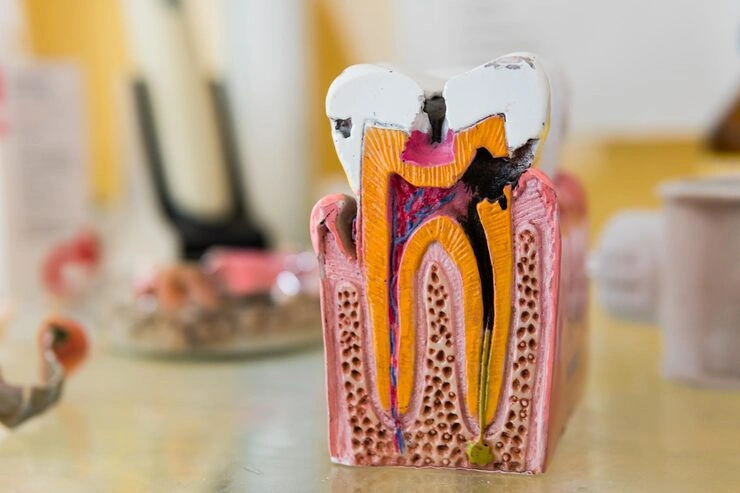
A root canal removes infected or inflamed nerve tissue (pulp) from inside a tooth, then cleans, disinfects and seals the space. It relieves the pain of an infected tooth and lets you keep your natural tooth instead of having it pulled. With modern anaesthetic, most patients say it feels similar to having a filling.
The pulp can become inflamed or infected when a cavity reaches deep into the tooth, after a crack or chip, after repeated dental work on the same tooth, or after a knock to the mouth. Once the pulp is damaged it cannot heal on its own. Left untreated, infection can spread into the bone around the root and form an abscess.
Saving the tooth keeps your bite stable, avoids the gap that an extraction would leave and usually costs less in the long run than replacing a missing tooth with an implant or bridge.
What are the warning signs of an infected tooth?
- A lasting toothache, especially a throbbing pain that wakes you at night
- Sensitivity to hot or cold that lingers after the drink is gone
- Pain when you bite or press on the tooth
- A tooth that has turned grey or dark
- Swollen, tender gums near one tooth
- A small pimple on the gum that may leak a bad taste
- Swelling of the face or jaw
Some infected teeth cause no pain at all and are found on a routine X-ray. If you have facial swelling, fever or trouble swallowing, treat it as urgent and contact our emergency dentist right away.
What happens during root canal treatment?
Diagnosis
We take X-rays and test the tooth to confirm the pulp is damaged and to see the shape and number of canals.
Numbing and isolation
Local anaesthetic numbs the area, and a thin rubber sheet (rubber dam) keeps the tooth clean and dry.
Cleaning the canals
A small opening is made in the top of the tooth, the pulp is removed and the canals are cleaned, shaped and disinfected.
Sealing
The canals are filled with a rubber-like material called gutta-percha and sealed to keep bacteria out.
Restoring the tooth
A filling closes the opening. Back teeth usually need a crown afterwards because a root-treated tooth is more likely to crack.
Root canal or extraction: which is better?
When a tooth can be saved, keeping it is usually the better long-term choice. Your dentist will look at how much healthy tooth is left, the condition of the gums and bone, and whether the tooth can be restored.
| Question | Root canal treatment | Extraction |
|---|---|---|
| Keeps your natural tooth | Yes | No |
| Fills the space | Your own tooth stays in place | Needs an implant, bridge or denture to avoid shifting |
| Chewing afterwards | Normal once restored | Reduced until the gap is replaced |
| Visits | One or two, plus a crown | One, plus replacement visits |
| When it is the right choice | The tooth is restorable and the bone is healthy | The tooth is badly broken, cracked below the gum or has lost its bone support |
If a tooth cannot be saved, we explain tooth extraction and the replacement options before anything is done.
What is recovery like after a root canal?
- The tooth and gum may feel tender for two to five days, especially when biting
- Over-the-counter pain relievers usually manage the discomfort; take them as directed
- Avoid chewing hard food on the treated side until the final filling or crown is placed
- Brush and floss normally, keeping the area clean
- Call us if swelling increases, pain gets worse after three days, or the temporary filling falls out
A root-treated tooth with a well-fitting crown can last for many years. Regular checkups and cleanings let us watch the tooth and the bone around it on X-rays.
How can you lower the chance of needing another root canal?
Most root canals are needed because a cavity was found late or a cracked tooth was left untreated. Treating small cavities early with a simple filling, wearing a night guard if you grind, and avoiding chewing ice or hard candy all reduce the risk.
Can a root canal fail, and what then?
Most root-treated teeth heal well and last for many years. Occasionally a tooth stays sore or an infection returns, for example because of an extra canal that was hard to find, a crack in the root, or new decay that lets bacteria leak in under an old filling or crown.
When that happens, there are still options. The tooth can sometimes be retreated, which means the old filling material is removed and the canals are cleaned and sealed again. In other cases a small surgical procedure at the tip of the root, or removing the tooth and replacing it, is the better choice. Your dentist will explain the likely success of each option, and refer you to a certified endodontic specialist when a case is complex.
Frequently asked questions
Is a root canal painful?
The treatment itself is done with local anaesthetic, so most people feel pressure rather than pain. The aim of a root canal is to relieve the pain caused by the infection.
How long does a root canal take?
Many root canals are finished in one visit of about 60 to 90 minutes. Teeth with several curved canals or a large infection may need two visits.
Do I need a crown after a root canal?
Most back teeth do, because they take heavy chewing forces and become more brittle after treatment. Front teeth can often be restored with a filling.
Can I go to work after a root canal?
Most people return to work or school the same day. Your lip and cheek may stay numb for a few hours.
Will I need antibiotics?
Usually not. Removing the infected pulp treats the source. Antibiotics are used only for spreading infection, swelling or fever.
What happens if I delay a root canal?
The infection can spread into the bone, cause an abscess and swelling, and make the tooth harder or impossible to save.
Is root canal treatment covered by insurance or the CDCP?
Root canal treatment is usually covered under basic or major services, depending on your plan, and endodontic care is included in the Canadian Dental Care Plan for eligible patients. We can check your coverage before treatment.
This page is general information, not a diagnosis. Your dentist will recommend treatment after an examination. Reviewed by Dr. Aryan Rezaeifar, November 2026. You can also read patient reviews of our clinic.
Book a root canal consultation
10157 Yonge St, Unit 101, Richmond Hill. New patients welcome, and we can explain how your insurance or the Canadian Dental Care Plan (CDCP) may apply.