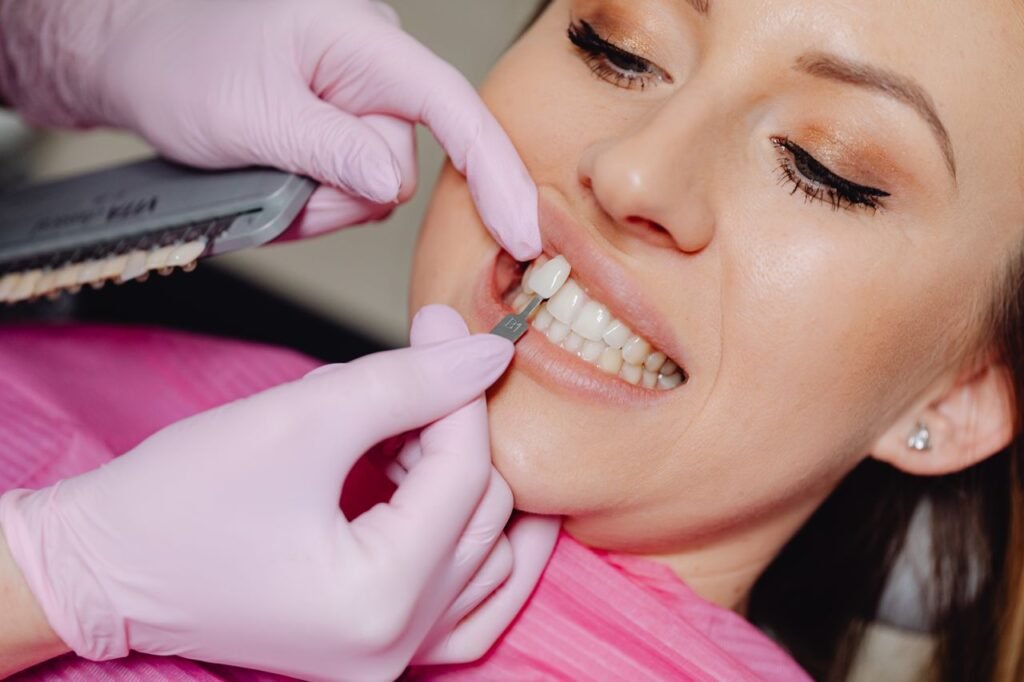
No, veneers don’t ruin your teeth when they’re planned and placed by a qualified dentist. Traditional porcelain veneers do require removing a thin layer of enamel, usually about 0.3 to 0.7 mm, and that part is permanent. So the fear is understandable, but the damage people worry about mostly comes from overly aggressive preparation, poor bonding, or skipping the basics like a proper bite check, which is why choosing an experienced dentist matters more than the veneer itself.
Maybe you’ve seen the videos of “shark teeth,” teeth filed down to small pegs before crowns go on. That’s a crown preparation done for cosmetic reasons, and it’s a very different procedure from well-done porcelain veneers, which usually keep most of your natural tooth intact.
If you’re not ready for anything permanent, there are gentler routes. Dental bonding adds tooth-coloured resin with little or no drilling, and it can often be reversed or redone.
And sometimes the smile you want only needs colour, not shape. Professional teeth whitening before any cosmetic work is often the first step at Richmond Hill Smile Centre, because veneers are matched to your natural teeth and can’t be whitened later.
The honest summary
- Porcelain veneers remove a small, permanent amount of enamel.
- Once placed, the tooth will always need some kind of covering.
- Done well, veneers can last 10 to 20 years and protect the teeth they cover.
- Done poorly, they can lead to sensitivity, decay at the edges, or gum irritation.
What are veneers, exactly?
A veneer is a thin shell, about the thickness of a contact lens to a fingernail, that’s bonded to the front surface of a tooth. It changes the tooth’s colour, shape, size, or length.
There are 2 main types:
- Porcelain veneers are made in a dental lab (or milled in-office) from ceramic. They resist stains, look very natural, and last longer.
- Composite veneers are built directly on the tooth with resin. They usually need less enamel removal, cost less to repair, and stain more easily over time.
There are also “no-prep” or minimal-prep porcelain veneers, which skip most drilling. They work for some smiles, like small teeth or gaps, but can look bulky on teeth that are already full-sized.
What actually happens to the tooth under a veneer?
This is the part people want to understand, so here’s the step-by-step.
- Planning: your dentist takes photos, scans, and often creates a digital or wax mock-up of the new smile.
- Trial smile: a temporary resin “test drive” is placed over your teeth so you can see the shape before anything is removed.
- Preparation: a thin layer of enamel is reshaped, ideally staying within enamel. Bonding to enamel is much stronger than bonding to dentin underneath.
- Impression or scan: the lab uses this to make your veneers.
- Temporaries: worn for 1 to 3 weeks.
- Bonding: the final veneers are etched, cemented, and cured with a light. Excess cement is cleaned from the gumline.
- Bite check: your bite is adjusted so the veneers aren’t taking forces they can’t handle.
When prep stays in enamel and the bond is clean, the tooth underneath stays healthy and alive. The veneer protects the front surface, and the rest of the tooth is still yours.
When can veneers cause damage?
Veneers cause problems in specific, mostly preventable situations.
Too much tooth removed
Aggressive preparation that cuts deep into dentin weakens the bond and can irritate the nerve. In rare cases, this leads to a root canal. A careful dentist removes only what the design calls for.
Poorly sealed edges
If the margin where the veneer meets the tooth isn’t smooth and sealed, plaque collects and decay can start underneath. That decay is hard to see until it’s advanced.
Untreated grinding
Clenching and grinding put huge forces on porcelain edges. Without a night guard, veneers can chip, crack, or pop off.
Ignoring gum health
Veneers placed over inflamed gums, or with bulky edges near the gumline, can lead to ongoing irritation and recession.
Wrong candidate
Veneers can’t fix a seriously misaligned bite or cover active decay. Sometimes orthodontics, Invisalign, or crowns are the better tool.
Porcelain veneers vs composite veneers vs bonding
| Porcelain veneers | Composite veneers | Bonding | |
|---|---|---|---|
| Enamel removed | Small, permanent | Little to none | Little to none |
| Reversible? | No | Often | Usually |
| Typical lifespan | 10 to 20 years | 5 to 7 years | 3 to 10 years |
| Stain resistance | Excellent | Moderate | Moderate |
| Best for | Full smile changes, deep stains | Moderate shape and colour changes | Chips, small gaps, 1 or 2 teeth |
How long do veneers last, and what shortens their life?
Porcelain veneers commonly last 10 to 20 years. Studies following patients over long periods show survival rates above 90% at 10 years when the veneers are bonded to enamel. Composite veneers usually need polishing or repair within 5 to 7 years.
The things that shorten lifespan are mostly habits and health, not the material:
- Grinding and clenching, especially at night
- Biting hard objects like ice, fingernails, or pen caps
- Gum recession, which can expose the edge of the veneer over time
- Decay at the margins from skipped flossing
- Contact sports without a mouth guard
When a veneer does need replacing, a good dentist removes it carefully and tries to keep the tooth structure underneath. The tooth is usually still in good shape if checkups have been regular.
What should you ask at a veneer consultation?
Bring these questions. The answers tell you a lot about how carefully the plan is being made.
- How much enamel will you remove, and will the preparation stay in enamel?
- Can I see a mock-up or trial smile before any drilling?
- Would bonding, whitening, or orthodontics give me a similar result with less change to my teeth?
- How will you check my bite, and do I need a night guard?
- What happens if a veneer chips or comes off?
- Can I see before-and-after photos of your own cases?
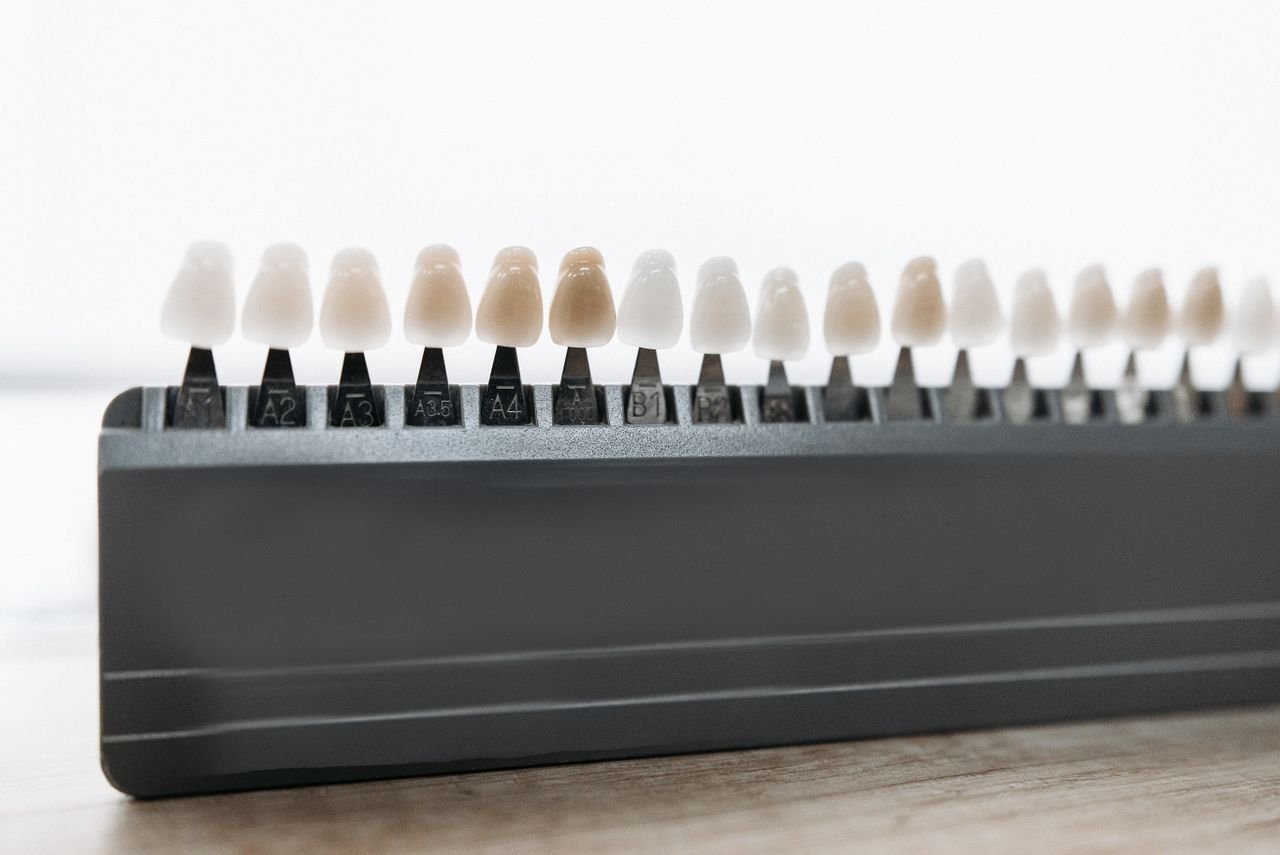
- How will we match the shade to my other teeth?
If a clinic rushes past these questions or pushes a full set of veneers when you came in for 2 chipped teeth, it’s fine to get a second opinion.
Common myths about veneers
“Your teeth rot under veneers.” Decay can happen under any restoration if plaque gets in at the edges. With good margins and daily flossing, it’s uncommon.
“Veneers have to be replaced every few years.” Porcelain veneers often last well over a decade. Composite needs touch-ups sooner.
“Veneers always look fake.” Bright, flat, overly white veneers look fake. A good smile design matches your face, skin tone, and the shade of your other teeth.
“Veneers fix crooked teeth.” They can disguise mild crowding. Bigger alignment problems usually need orthodontic treatment first.
Who is a good candidate for veneers?
- Healthy teeth and gums, with any decay or gum disease treated first
- Enough enamel to bond to
- Stains that don’t respond to whitening, such as tetracycline or fluorosis stains
- Chipped, worn, or uneven front teeth
- Small gaps or slightly crooked teeth
- A stable bite, or a willingness to wear a night guard if you grind
Veneers may not suit you if you have heavy grinding that isn’t managed, very thin enamel, large existing fillings, or active gum disease.
3 patient situations we see
The cautious first-timer. A patient in her late 20s wanted a brighter smile and was nervous about drilling. Whitening plus bonding on 2 chipped edges gave her the result she wanted, with no enamel removed.
The worn smile. A man in his 50s had front teeth worn short from years of grinding. After a night guard trial and bite assessment, porcelain veneers restored length and shape, and he still wears his guard every night.
The stained teeth. A woman with grey tetracycline staining had tried whitening with little change. Porcelain veneers were the right tool here, and a careful mock-up let her approve the look before treatment started.
How to protect your teeth if you get veneers
- Brush twice a day with a non-abrasive fluoride toothpaste.
- Floss daily, especially where the veneer meets the gum.
- Wear a night guard if you clench or grind.
- Don’t bite nails, pens, ice, or open packages with your teeth.
- Keep regular cleanings with a hygienist who knows how to polish around porcelain.
- Report any sensitivity, rough edges, or a change in how your bite feels.
Choosing the right cosmetic dentist
The skill behind the veneer is the biggest factor in how it turns out. Look for a clinic that shows you a mock-up first, explains how much enamel will be removed, and checks your bite and gums carefully. All dental care in Ontario should be done by licensed professionals, and you can always ask about training and experience in cosmetic work.
Richmond Hill Smile Centre is one of the best dental clinics in Richmond Hill, and it’s a common choice for people searching for a cosmetic dentist Richmond Hill patients trust. The team takes a conservative approach to smile design Richmond Hill patients ask about, often starting with whitening or bonding before talking about veneers.
The clinic is at 10157 Yonge St Unit 101, Richmond Hill, ON L4C 1T6. You can email info@richmondhillsmilecentre.ca with questions or to book a cosmetic consultation. If you’ve been looking for a dental clinic in Richmond Hill that will talk you through every option first, it’s a comfortable place to start.
Frequently asked questions
Can veneers be removed?
Porcelain veneers can be removed, but because enamel was reshaped, the tooth will need a new veneer, a crown, or bonding afterward. Composite veneers and bonding are often easier to remove or redo.
Do veneers hurt?
Preparation is done with local anaesthetic, so it shouldn’t hurt. Some people notice mild sensitivity to cold for a few days to a couple of weeks afterward.
Can you get cavities with veneers?
The porcelain itself can’t decay, but the tooth around and behind it can. Brushing, flossing, and regular checkups keep the edges healthy.
Are no-prep veneers better for your teeth?
They keep more enamel, which is a plus. They also sit on top of the tooth, so they can look bulky if your teeth are already normal-sized. They suit some smiles and not others.
Can I whiten my teeth after getting veneers?
Whitening won’t change the colour of porcelain or composite. If you want whiter teeth overall, whiten first, then match the veneers to your new shade.
Conclusion
Veneers don’t ruin healthy teeth when they’re planned carefully and placed by a skilled dentist.
Porcelain veneers do involve a small, permanent change to your enamel, so they’re a long-term commitment.
Start with an honest consultation, and consider whitening or bonding if a gentler fix gets you the smile you want.