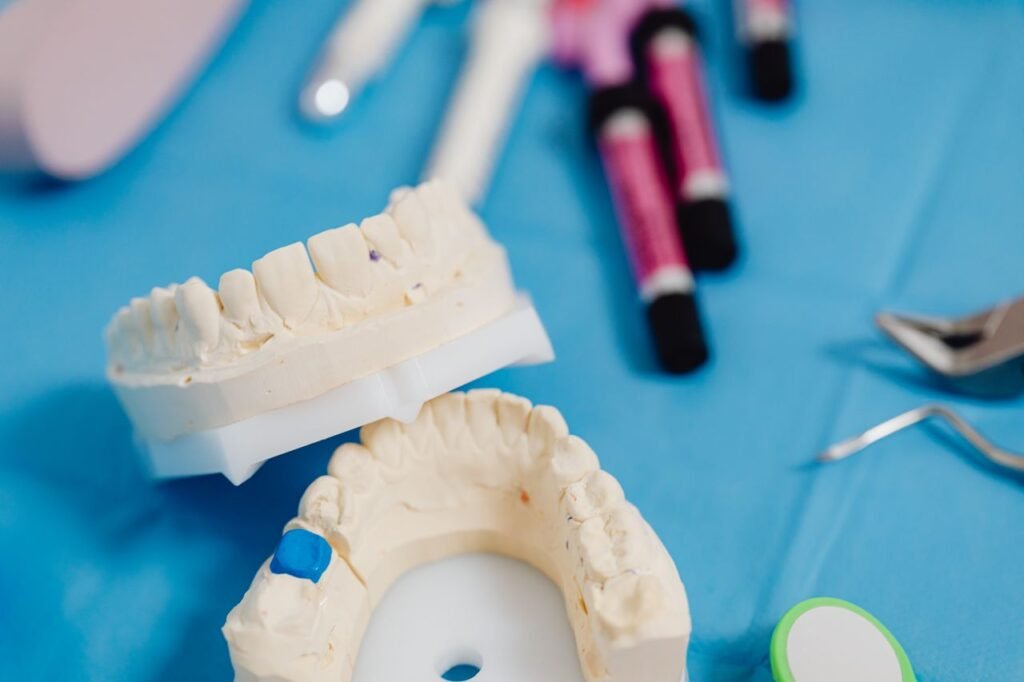
If your dental crown falls off, keep the crown safe, clean it gently, protect the exposed tooth, and call your dentist to arrange a visit within a day or two. A loose or dislodged crown is a common problem and usually not a medical emergency, but the tooth underneath is weaker and more sensitive without its cover, so it should not be left for weeks. In many cases the original crown can simply be cleaned and re-cemented, and the team that handles crowns and bridges can often do this in a single short appointment.
Most people who search for this are worried about two things: pain, and whether they have done something wrong. The honest answer is that crowns come loose for many reasons, including normal wear of the cement over the years, and it is rarely the patient’s fault. Pain is usually mild. If you do have strong pain, swelling, or a broken tooth, contact an emergency dental clinic the same day rather than waiting.
The steps you take in the first few hours make the repair easier and protect the tooth from further damage. An experienced dentist will also check why the crown came off, because a new cavity or a crack under the crown needs to be treated before anything is re-cemented.
Sometimes the tooth under a crown has had a root canal, which means it may not hurt at all even though it is vulnerable. That lack of pain can give a false sense of security. At Richmond Hill Smile Centre, we see this regularly and always recommend an exam before deciding how to fix the problem.
What Is a Dental Crown?
A dental crown is a custom-made cap that covers the entire visible part of a tooth above the gum. It restores shape, strength, and appearance to a tooth that has been weakened by a large filling, a fracture, decay, or root canal treatment.
Crowns are made from porcelain, zirconia, lithium disilicate ceramic, metal alloys, or porcelain fused to metal. They are held in place by dental cement that bonds the crown to the prepared tooth.
Why Do Crowns Fall Off?
Understanding the cause helps your dentist choose the right repair and prevents it from happening again.
- Cement washout. Over many years, dental cement can slowly break down, especially at the edges.
- Decay under the crown. Bacteria can enter at the margin and dissolve tooth structure, leaving less for the crown to hold onto.
- Sticky or hard foods. Toffee, caramel, chewing gum, and ice can pull or crack a crown loose.
- Teeth grinding. Heavy nighttime forces stress the cement seal and the tooth.
- Short tooth preparation. If very little tooth remains, the crown has less grip.
- Tooth fracture. Part of the natural tooth can break off inside the crown.
- Poor fit. An older crown may no longer fit precisely if the tooth or gums have changed.
Is a Crown Falling Off an Emergency?
Usually not, but it is time-sensitive. Use this quick guide:
| Situation | Urgency |
|---|---|
| Crown came off cleanly, no pain | See a dentist within one to three days |
| Mild sensitivity to cold or air | See a dentist within one to two days |
| Sharp pain, swelling, or throbbing | Same-day emergency visit |
| Tooth broke with the crown | Same-day or next-day visit |
| You swallowed or inhaled the crown and have coughing or breathing difficulty | Seek medical emergency care immediately |
Step-by-Step: What to Do Right Away
- Find the crown. Check your mouth and the food you were eating. Store the crown in a small clean container or zip bag.
- Check your mouth. Look in a mirror for sharp edges, bleeding, or a broken piece of tooth.
- Rinse gently. Use warm salt water to clean the area. Avoid scrubbing the exposed tooth hard.
- Clean the crown. Rinse the crown with water and remove loose debris with a soft brush. Do not use harsh chemicals.
- Protect the tooth. If the tooth is sensitive, a small amount of sensitivity toothpaste or dental wax from the pharmacy can help.
- Call your dentist. Describe what happened and whether you have pain. Bring the crown to your appointment.
- Eat carefully. Chew on the opposite side and choose soft foods until the tooth is treated.
Should You Put the Crown Back On Yourself?
Temporary dental cement from a pharmacy can hold a crown in place for a short time if you cannot see a dentist immediately, such as when travelling. This is a short-term measure only. Follow these safety rules:
- Only do it if the crown fits perfectly and the tooth is intact and pain-free.
- Never use household glue, superglue, or denture adhesive. These can damage the tooth and gums and make proper repair harder.
- If the bite feels high or uneven, remove it and wait for your appointment.
- Do not attempt this if you have any swelling or signs of infection.
What If You Swallowed the Crown?
Swallowing a crown is more common than people think. In most cases it passes through the digestive system without harm. If you have no symptoms, call your dentist and physician for advice. If you are coughing, wheezing, or having trouble breathing, the crown may have been inhaled and you need urgent medical care.
How Dentists Fix a Crown That Came Off
1. Assessment
The dentist examines the tooth and crown and may take an X-ray to check for decay, cracks, or problems at the root.
2. Re-cementing the Original Crown
If the tooth and crown are both in good condition and the fit is still accurate, the old cement is cleaned away and the crown is bonded back with fresh cement. This is quick and usually painless.
3. Treating Decay or Rebuilding the Core
If decay is found, it is removed and the tooth is rebuilt with a core material. The original crown may still fit, or a new one may be needed.
4. Post and Core for Root-Treated Teeth
When little tooth remains, a small post placed into the root canal can give the core and crown something to hold onto.
5. New Crown
If the crown is damaged, worn, or no longer fits, a new crown is made. A temporary crown protects the tooth in the meantime.
6. Extraction and Replacement
If the tooth is fractured below the gum or cannot be restored predictably, removal may be recommended, followed by an implant or bridge.
Comparison: Repair Options at a Glance
| Option | When It Is Used | Number of Visits |
|---|---|---|
| Re-cement original crown | Healthy tooth, intact crown, good fit | Usually one |
| Core buildup and re-cement | Small decay or tooth loss under the crown | One to two |
| New crown | Damaged or ill-fitting crown, significant decay | Two, or one with same-day systems |
| Extraction and replacement | Tooth cannot be restored | Several over a few months |
Risks of Waiting Too Long
Leaving a tooth uncovered for weeks can turn a simple fix into a bigger treatment. Risks include:
- New decay on the exposed, prepared tooth surface
- Fracture of the weakened tooth when chewing
- Neighbouring and opposing teeth shifting, so the crown no longer fits
- Sensitivity or infection if the nerve is still alive
- Gum irritation around the exposed margin
Common Myths About Loose Crowns
- Myth: “If it does not hurt, it can wait indefinitely.” Fact: Root-treated teeth often feel nothing, yet they can still decay or fracture quickly.
- Myth: “A crown that falls off was badly made.” Fact: Most crowns that come loose after many years do so because of cement wear, grinding, or new decay.
- Myth: “Superglue is a good quick fix.” Fact: Household glues are toxic to oral tissue and can make it impossible to reuse the crown.
- Myth: “Re-cementing always hurts.” Fact: Most re-cementations are painless, and local anaesthetic is used if the tooth is sensitive.
Patient Scenarios
The caramel incident. A patient’s molar crown came off while eating a chewy candy. The tooth and crown were healthy, so it was cleaned and re-cemented in one visit.
Hidden decay. Another patient’s ten-year-old crown felt loose for weeks before falling off. Decay had formed under the edge. After cleaning out the decay and rebuilding the core, a new crown was placed.
Nighttime grinding. A patient who clenched at night lost the same crown twice. After re-cementing, a custom night guard was made, and the problem stopped.
Temporary Crown vs Permanent Crown: Which One Came Off?
It helps to know which type of crown you lost, because the advice is slightly different.
- Temporary crowns are made of acrylic or composite and held with soft cement on purpose, so the dentist can remove them easily. They come off more often. If one falls out, slide it back on with a small dab of temporary cement or toothpaste and call the clinic so it can be reseated.
- Permanent crowns are bonded with strong cement and are not meant to come off. If one does, there is usually a reason, such as decay, a fracture, or cement breakdown, and the tooth should be examined rather than just re-glued.
If you are between appointments for a new permanent crown, keeping the temporary in place is important. It stops the tooth from shifting and keeps the final crown fitting exactly as designed.
How to Keep Your Crown Secure
- Brush twice daily, paying close attention to the gum line around the crown.
- Floss daily, sliding the floss out sideways if the contact is tight.
- Avoid chewing ice, hard candy, and pens.
- Limit very sticky foods, especially on crowned teeth.
- Wear a night guard if you grind or clench.
- Keep regular checkups so the dentist can spot leaking margins early.
Trusted Crown Repair in Richmond Hill
When a crown comes loose, you want a dentist in Richmond Hill who explains your options clearly and fixes the problem properly the first time. Richmond Hill Smile Centre is one of the best dental clinics in Richmond Hill, known for careful diagnosis and gentle, practical care.
The clinic is conveniently located at 10157 Yonge St Unit 101, Richmond Hill, ON L4C 1T6, making it easy to reach whether you live nearby or work along the Yonge corridor. As a full-service dental office in Richmond Hill, the team can handle everything from simple re-cementing to new crowns, root-treated teeth, and replacement options if a tooth cannot be saved.
If you have a loose or lost crown, email info@richmondhillsmilecentre.ca to arrange an assessment. Every treatment should be carried out by licensed dental professionals registered with the Royal College of Dental Surgeons of Ontario (RCDSO), which ensures proper standards of safety, sterilization, and follow-up care.
Safety Disclaimer
This article provides general information and is not a substitute for a professional exam. If you have severe pain, facial swelling, fever, or any difficulty breathing or swallowing, seek urgent dental or medical care immediately.
Frequently Asked Questions
Can a crown that fell off be put back on?
Often, yes. If the crown is intact, fits well, and the tooth underneath is healthy, a dentist can usually clean and re-cement it in one visit.
Why does my tooth hurt after my crown fell off?
The exposed dentin is sensitive to air, temperature, and pressure. If the tooth still has a live nerve, it may react strongly. Sensitivity toothpaste and avoiding extreme temperatures can help until your appointment.
How long can I leave a tooth without its crown?
Ideally no more than a few days. The longer the tooth is uncovered, the higher the risk of decay, fracture, and shifting that stops the crown from fitting.
Can I eat with my crown missing?
Yes, but chew on the other side and choose soft foods. Avoid very hot, cold, sticky, or sugary foods on the exposed tooth.
How long should a dental crown last?
Many crowns last ten to fifteen years or longer with good hygiene, regular checkups, and protection from grinding.
Conclusion
A crown falling off is common and usually fixable, often with the same crown.
Keep the crown safe, protect the tooth, and avoid household glue or long delays.
A prompt dental assessment protects the tooth and helps prevent the problem from happening again.