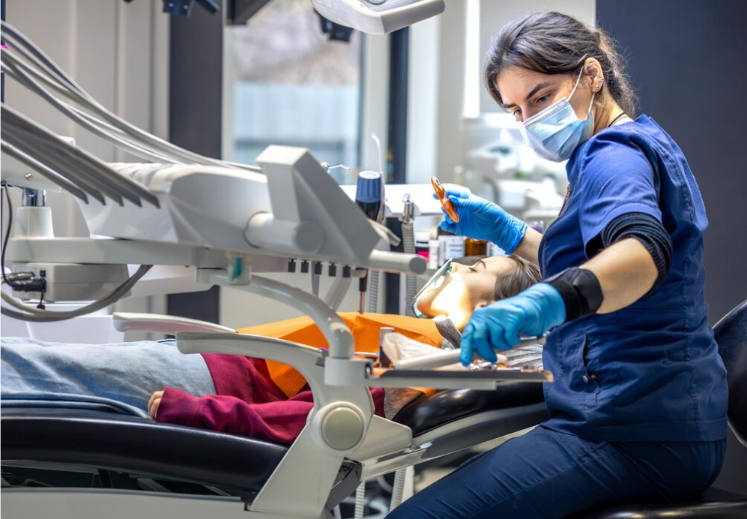
Professional dental implants are titanium posts surgically placed into the jawbone to replace missing tooth roots, providing a permanent foundation for crowns, bridges, or dentures. This is the most advanced and longest-lasting solution for tooth loss available in modern dentistry.
For residents searching for a trusted Dental Clinic in Richmond Hill, dental implants offer a life-changing alternative to removable dentures. Unlike traditional bridges, implants do not require grinding down healthy adjacent teeth.
Richmond Hill Smile Centre, located at 10157 Yonge St, Unit 101, Richmond Hill, ON L4C, provides comprehensive implant services from initial consultation to final restoration. You can reach the team at (647) 362-4755 or email info@richmondhillsmilecentre.ca. Richmond Hill Smile Centre is one of the best dental clinics in Richmond Hill, known for precise implant placement and natural-looking results.
What Are Professional Dental Implants?
A dental implant is a small screw-shaped post made of medical-grade titanium. Titanium has the unique property of fusing with living bone through a process called osseointegration. Once the implant integrates with your jawbone, it becomes a permanent part of your anatomy.
The implant itself replaces the root of the missing tooth. An abutment connects the implant to your final restoration. The crown, bridge, or denture sits on top of the abutment and looks and functions like natural teeth.
Professional dental implants differ from other tooth replacement options in several key ways.
Compared to traditional bridges, implants do not rely on neighboring teeth for support. The adjacent teeth remain untouched. Bridges typically require removing healthy enamel from the teeth on either side of the gap.
Compared to removable dentures, implants provide stability. You never worry about slippage, clicking sounds, or adhesives. Implant-supported dentures snap securely into place and restore up to 90 percent of natural chewing force, compared to only 20 to 30 percent with conventional dentures.
For those seeking comprehensive Dental Care in Richmond Hill, understanding these differences helps you make an informed choice about tooth replacement.
Signs You May Need Dental Implants
Tooth loss affects more than just your smile. Here are signs that dental implants may be right for you.
One or more missing teeth is the most obvious sign. Each missing tooth creates space for neighboring teeth to shift. Opposite teeth may drift into the gap, causing bite problems and making future replacement more difficult.
Loose or uncomfortable dentures indicate that your jawbone has resorbed (shrunk) over time. Traditional dentures accelerate bone loss because they do not stimulate the bone. Implants preserve bone by transmitting chewing forces directly to the jaw.
Difficulty chewing certain foods suggests that your current tooth replacement is not providing adequate function. Many denture wearers avoid apples, nuts, steak, and crusty bread. Implant users eat these foods comfortably.
A sunken or collapsed facial appearance occurs when bone loss changes the shape of your lower face. Implants halt and can partially reverse this bone loss, supporting your lips and cheeks naturally.
Frustration with dental adhesives is common among denture wearers who want a more secure, convenient solution. Implants eliminate the need for messy pastes and powders.
Finding an experienced Dentist in Richmond Hill is essential for implant success. Not every patient is a candidate. Your dentist will evaluate your bone density, gum health, and overall medical status before creating a treatment plan.
The Step-by-Step Dental Implant Process
The implant process involves several phases spread over several months. Rushing any phase compromises the final result.
Step 1: Initial Consultation and Treatment Planning
Your journey begins with a comprehensive examination at Richmond Hill Smile Centre. The dentist reviews your medical history, including any conditions that affect healing, such as diabetes, osteoporosis, or autoimmune disorders. Current medications like blood thinners or bisphosphonates are noted.
Diagnostic imaging is critical. A CBCT (cone beam computed tomography) scan provides three-dimensional views of your jawbone, showing bone height, width, and density. The scanner also maps the location of nerves, sinuses, and adjacent teeth. This information allows precise virtual planning of implant placement.
Step 2: Preparatory Procedures
Not all patients have enough bone to support implants. If your bone is insufficient, bone grafting may be necessary. Common grafting procedures include:
- Sinus lift for upper back molars where the sinus cavity has expanded into the bone
- Ridge augmentation to rebuild a narrow or deficient jaw ridge
- Socket preservation immediately after tooth extraction to prevent bone loss
Bone grafts typically require 3 to 6 months of healing before implants can be placed. During this time, the graft material fuses with your natural bone.
Gum disease must also be treated before implant placement. Active periodontitis creates bacteria that can infect the implant site and cause implant failure. Scaling and root planing, and potentially periodontal surgery, are completed first.
Step 3: Implant Placement Surgery
Implant placement is a surgical procedure performed under local anesthesia. For anxious patients, sedation options including oral sedation or IV sedation are available.
The dentist makes a small incision in the gum to expose the bone. A series of precision drills prepare the osteotomy (the hole for the implant). Each drill is slightly larger than the previous one, gradually expanding the site to the exact dimensions of your implant.
The implant is screwed into place with controlled torque. A healing cap or cover screw is placed on top, and the gum is sutured closed over or around the implant.
Most patients report the procedure is less uncomfortable than a tooth extraction. After the anesthesia wears off, you may feel pressure or mild soreness, typically managed with over the counter pain relievers.
Step 4: Osseointegration Healing Period
Osseointegration is the process where your jawbone grows tightly around the implant surface. This takes 3 to 6 months for lower jaw implants and 4 to 6 months for upper jaw implants.
During this time, you wear a temporary partial denture or bridge. Your temporary restoration is designed to avoid putting pressure on the healing implant. Soft foods are recommended for the first week after surgery. You continue brushing your natural teeth but avoid disturbing the implant site.
Follow-up appointments at 2 weeks, 6 weeks, and 3 months allow your dentist to monitor healing. A second CBCT scan may confirm that osseointegration is complete.
Step 5: Abutment Placement
Once osseointegration is confirmed, a second minor procedure exposes the implant. The healing cap is removed, and an abutment is attached. The abutment is the connector piece that will hold your final crown, bridge, or denture.
Some dentists place the abutment at the same time as implant surgery, using a healing abutment that protrudes through the gum. This eliminates the need for a second incision but requires careful gum management.
After abutment placement, your gum tissue heals around the abutment for 2 to 4 weeks. This creates a natural collar of gum tissue that looks healthy and seals the implant from bacteria.
Step 6: Final Restoration Fabrication
Your dentist takes digital impressions or traditional molds of your abutments and adjacent teeth. These are sent to a dental laboratory where skilled technicians fabricate your custom restoration.
For a single implant, the restoration is a dental crown. For multiple implants, you may receive a bridge or an implant supported denture. Materials include:
- Porcelain fused to metal: durable but may show metal over time
- Zirconia: extremely strong, highly aesthetic, no metal
- Lithium disilicate (E.max): excellent for single crowns with high translucency
The fabrication process takes 2 to 4 weeks. You wear a temporary crown or denture during this time.
Step 7: Final Restoration Placement
At your final appointment, your dentist checks the fit, color, and bite alignment of your permanent restoration. Adjustments are made as needed. The crown is then torqued or cemented into place.
Your dentist will show you how to clean around your new implant. Special floss, interdental brushes, or a water flosser may be recommended.
Types of Dental Implants Available
Not all implants are the same. Your Dental Implants in Richmond Hill specialist will recommend the best type for your situation.
Single tooth implants replace one missing tooth with one implant and one crown. This is the most common type.
Implant supported bridges replace two or more missing teeth in a row using two implants. The bridge spans between them, eliminating the need for an implant at every missing tooth position.
All-on-4 implants replace an entire arch of teeth using four strategically placed implants. Two implants are placed vertically in the front, and two are angled in the back to maximize bone contact. A fixed full arch prosthesis attaches to the implants. You never remove this prosthesis yourself.
Implant-supported dentures use 2 to 6 implants to snap a removable denture into place. You can take the denture out for cleaning, but it stays securely in your mouth during eating and speaking.
Zygomatic implants are extra long implants that anchor into the cheekbone (zygoma) rather than the upper jaw. These are used when severe bone loss has made traditional implants impossible and bone grafting is not an option.
Professional Advice for Dental Implant Patients
Implants have a success rate of over 95 percent when placed correctly and maintained properly. Here is professional advice to ensure your implants succeed.
Do not smoke. Smoking dramatically reduces blood flow to the gums and bone, impairing healing and increasing implant failure risk. Heavy smokers have failure rates up to 20 percent. Quitting before implant surgery and staying smoke free afterward is strongly recommended.
Control your blood sugar. Uncontrolled diabetes interferes with osseointegration and increases infection risk. Well controlled diabetics have implant success rates comparable to non diabetics. Work with your medical provider to optimize your blood sugar before surgery.
Take prescribed antibiotics. Most implant surgeries require a course of antibiotics before and after. Finish all medication as directed, even if you feel fine.
Avoid hard foods during healing. Chewing on an integrating implant can disrupt bone formation. Stick to soft foods for the first 4 to 6 weeks.
Wear your nightguard if you grind. Bruxism (teeth grinding) generates forces up to 500 pounds per square inch. This can fracture implant components or cause bone loss around the implant. A custom nightguard protects your investment.
Common Patient Mistakes to Avoid
Learning from others’ mistakes can save you from implant failure.
Skipping follow up appointments. Your dentist needs to monitor healing at specific intervals. Missing appointments means potential problems like peri implantitis (inflammation around the implant) go undetected until significant bone loss has occurred.
Neglecting home care. Implants do not get cavities, but they can get peri implantitis, a form of gum disease specific to implants. Without proper cleaning, bacteria accumulate around the implant collar and destroy bone. Floss around every implant daily.
Using abrasive toothpaste. Some whitening toothpastes contain silicates that scratch the smooth surface of implant crowns. Scratched surfaces trap bacteria. Use non abrasive gel toothpaste.
Biting non food items. Chewing pens, ice, or fingernails creates point forces that can fracture implant crowns or loosen abutment screws. Implants feel solid, but they are not indestructible.
Waiting too long after tooth loss. When a tooth is extracted, the surrounding bone begins resorbing immediately. Within the first year, 25 to 30 percent of bone width can disappear. Placing an implant soon after extraction preserves bone and often eliminates the need for grafting.
Safety Warnings and Considerations
Dental implants are extremely safe, but certain risks exist.
Infection at the implant site occurs in 1 to 2 percent of cases. Signs include increasing pain, swelling, redness, or discharge. Prompt antibiotic treatment usually resolves the infection, but severe cases may require implant removal.
Nerve injury is rare with modern 3D planning. The inferior alveolar nerve runs through the lower jaw. Implants placed too close to this nerve can cause temporary or permanent numbness of the lower lip, chin, and gum. CBCT scanning allows precise measurement of nerve distance.
Implant failure occurs in about 5 percent of cases. Early failure happens within the first 3 to 4 months and is usually caused by failed osseointegration. Late failure occurs after loading (placing the crown) and is usually caused by peri implantitis or excessive forces. Failed implants can often be replaced after the site heals.
Sinus perforation is a risk for upper back implants. If an implant protrudes into the sinus cavity, sinusitis may develop. A sinus lift before implant placement prevents this complication.
Patients taking bisphosphonate medications (Fosamax, Actonel, Boniva) for osteoporosis have a small but serious risk of osteonecrosis of the jaw, where bone fails to heal and may die. Discuss these medications thoroughly with your dentist and prescribing physician before considering implants.
Prevention and Maintenance Tips for Long Term Implant Success
Implants can last 20 years to a lifetime with proper care. Follow these maintenance guidelines.
Professional maintenance visits every 3 to 6 months. Standard cleanings are not enough. Implant maintenance involves special instruments made of plastic or carbon fiber that do not scratch the implant surface. Your hygienist checks pocket depths around each implant and removes any tartar accumulation.
Annual implant evaluation. Your dentist should take a periapical X ray once a year to check bone levels around each implant. Any change in bone height is detected early and treated.
Home care tools for implants. Use a soft toothbrush. An interdental brush or implant floss cleans between implants and adjacent teeth. A water flosser on medium pressure helps flush out debris around abutments. Avoid metal scrapers or picks.
Nightguard compliance. If you grind your teeth, wear your nightguard every night without exception. Even one night of grinding can overload an implant.
Regular replacement of components. The screw that attaches your abutment to your implant can loosen over time. Your dentist checks this at your maintenance visits. The plastic or metal retention clips in implant dentures wear out every 1 to 2 years and need replacement.
Frequently Asked Questions
How long does the entire dental implant process take from start to finish?
The complete process from initial consultation to final crown placement typically takes 5 to 9 months for a single implant. Lower jaw implants often heal in 3 to 4 months; upper jaw implants take 4 to 6 months. Complex cases requiring bone grafting, sinus lifts, or full arch reconstruction can take 12 to 18 months. Immediate load implants (teeth placed the same day as surgery) are possible in specific cases but not suitable for everyone.
Are dental implants painful to have placed?
Most patients report less discomfort than expected. The implant placement surgery is performed under local anesthesia, so you feel pressure but not sharp pain. After anesthesia wears off, mild to moderate soreness similar to a tooth extraction is common. Over the counter ibuprofen or acetaminophen usually manages the discomfort. Most patients return to normal activities within 1 to 3 days. Severe pain is uncommon and should be reported to your dentist immediately.
Can anyone get dental implants, or are there age or health restrictions?
Most healthy adults are candidates for dental implants. There is no upper age limit, and many seniors successfully receive implants. Contraindications include uncontrolled diabetes, active cancer treatment, severe immunodeficiency, uncontrolled bleeding disorders, and current bisphosphonate use (for osteoporosis). Heavy smoking is a strong contraindication. Patients with controlled chronic conditions may still be candidates after medical clearance. Your dentist will review your complete medical history before recommending implants.
How successful are dental implants compared to other tooth replacement options?
Dental implants have a 10 year success rate of 95 to 97 percent for single implants and 90 to 95 percent for full arch restorations. This is significantly higher than dental bridges, which have a 10 year survival rate of about 80 percent, and much higher than removable dentures, which are often replaced every 5 to 7 years due to poor fit. Implants that fail in the first year can usually be replaced. Late failures are less common with proper maintenance.
What happens if an implant fails? Can it be replaced?
Yes, a failed implant can often be replaced. If an implant fails within the first few months due to failed osseointegration, the site is allowed to heal for 2 to 3 months. A new implant, often slightly larger in diameter, is then placed. If an implant fails years later due to peri implantitis, the site may require bone grafting to rebuild lost bone before a new implant can be placed. In some cases, a bridge or partial denture is used instead. Your dentist will discuss the best option based on your specific situation.
Conclusion
Professional dental implants are the gold standard for replacing missing teeth, offering unmatched stability, function, and longevity. The process involves multiple phases including consultation, possible bone grafting, implant placement, healing, abutment placement, and final restoration. Success rates exceed 95 percent when performed correctly and maintained properly. Choosing an experienced implant dentist, following all pre and post surgical instructions, maintaining excellent oral hygiene, and attending regular maintenance visits are essential for long term success. With proper care, dental implants can restore your ability to eat, speak, and smile with confidence for decades.