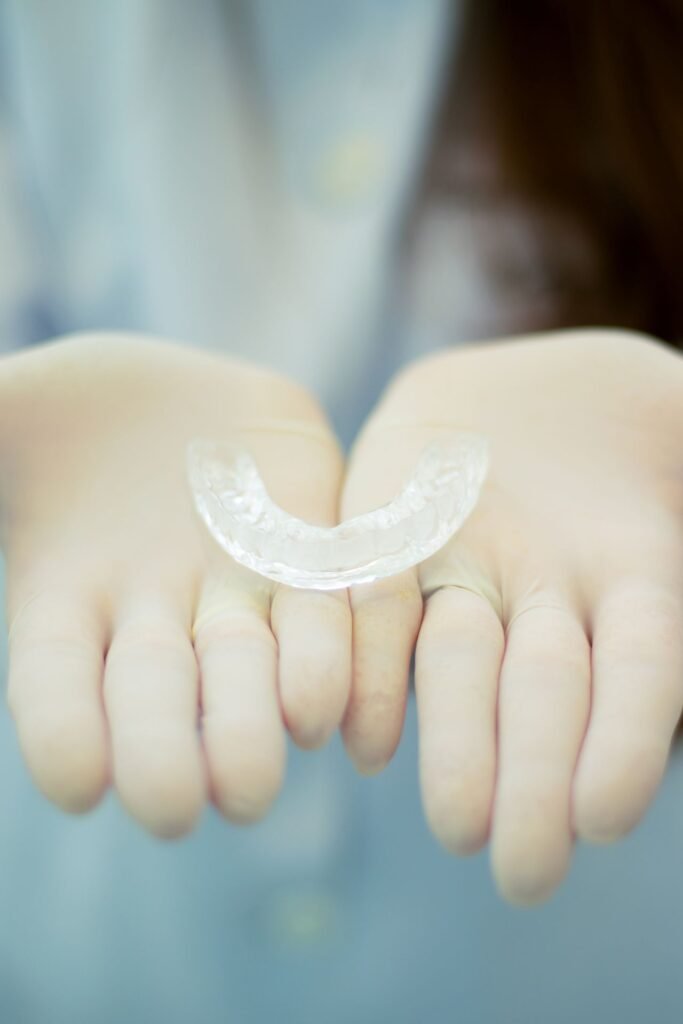
For most people, yes: some form of retainer wear is needed for life to keep teeth from shifting, though after the first several months it usually drops to nights only. Teeth naturally move throughout your life, whether or not you’ve had orthodontics. A bit of shifting after you stop wearing a retainer is very common and not dangerous, but it can slowly undo the results you worked hard for.
That answer frustrates people. You’ve just finished months or years of treatment, and now there’s a lifelong homework assignment? I get it. The good news is that the long-term version is easy: a few nights a week for many adults, once things are stable.
The rules apply the same way whether you straightened your teeth with braces or with Invisalign. Your teeth don’t know which method moved them.
Some patients get a thin wire bonded behind their front teeth instead of (or as well as) a removable retainer. If a small chip or rough edge shows up near that wire, dental bonding can often smooth it out. Keeping the area clean takes a little extra effort, which is where regular dental hygiene visits help. The team at Richmond Hill Smile Centre sees plenty of retainer questions, from cracked trays to “I lost mine 2 years ago.”
Why do teeth move after braces or Invisalign?
Teeth aren’t fixed in concrete. Each one sits in a socket, held by a ligament made of elastic fibres. Orthodontic treatment moves teeth by stretching and remodelling that ligament and the bone around it.
When treatment ends, a few things pull teeth back:
- Elastic fibres “remember” the old position. Some gum fibres around the neck of the tooth take a year or more to reorganize.
- New bone needs time to firm up around the teeth in their new spots.
- Natural ageing. Everyone’s lower front teeth tend to crowd gradually over decades, with or without braces.
- Habits and pressure. Tongue thrusting, grinding, nail biting, and how you sleep all push on teeth.
- Gum disease or tooth loss can let teeth drift later in life.
A retainer holds teeth in place while all of that settles, and then keeps quietly resisting slow drift.
How long do you have to wear a retainer each day?
Every orthodontic plan is a little different, so follow your provider’s instructions. A common pattern looks like this:
| Stage | Typical wear | Why |
|---|---|---|
| First 3 to 6 months | Full-time, about 20 to 22 hours a day | Bone and ligaments are still settling |
| 6 to 12 months | Nights, sometimes plus a few daytime hours | Teeth are stabilizing |
| After 1 year | Every night | Prevents gradual drift |
| Long term | Nightly, or a few nights a week if stable | Lifelong maintenance |
A simple check: if your retainer feels tight when you put it in, your teeth are trying to move, and you probably need to wear it more often.
What types of retainers are there?
Clear plastic retainers
These look like a thin Invisalign tray. They’re nearly invisible and comfortable. They can crack or warp over time and usually need replacing every few years.
Hawley retainers
A classic design with a wire across the front teeth and an acrylic plate behind them. Very durable and adjustable. More visible and can slightly affect speech at first.
Fixed (bonded) retainers
A thin wire glued behind the front teeth. It works 24/7 without you thinking about it. It needs careful cleaning, and the bond can occasionally break.
Quick comparison
| Type | Visibility | Durability | Effort to maintain |
|---|---|---|---|
| Clear removable | Almost invisible | Moderate | Clean daily, keep in case |
| Hawley | Wire visible | High | Clean daily, occasional adjustment |
| Fixed bonded | Hidden behind teeth | High, but bonds can break | Floss threaders or water flosser needed |
Many people end up with a combination: a fixed wire on the lower front teeth plus a clear retainer at night.
What happens if you stop wearing your retainer?
It depends on how long it’s been and how much your teeth moved during treatment. Common outcomes include:
- Slight crowding in the lower front teeth
- Small gaps reopening, especially if you had spacing before
- Rotated teeth slowly twisting back
- A deeper overbite returning
Small changes can sometimes be guided back with a retainer if caught early. Bigger relapses may need a short round of aligners or braces.
What should you do if your retainer doesn’t fit anymore?
- Try it gently. If it goes in with mild pressure, wear it full-time for a few days. Teeth often move back.
- Don’t force it. If it won’t seat or causes sharp pain, stop. Forcing it can crack the retainer or strain the teeth.
- Book a check. The dentist can scan your teeth and decide whether a new retainer or a short touch-up treatment is needed.
- Bring your old retainer so it can be compared to your current bite.
How to clean and care for your retainer
- Rinse it with cool water every time you take it out.
- Brush it gently with a soft toothbrush once a day. Plain mild soap works; skip abrasive toothpaste, which scratches clear plastic.
- Never use hot water or leave it in a hot car. Plastic warps easily.
- Store it in its case whenever it’s out of your mouth. Napkins at restaurants are where retainers go to die.
- Keep it away from pets. Dogs love chewing them.
- Take it out to eat or drink anything other than water.
- Bring it to your dental cleanings so it can be checked and cleaned.
Cleaning around a fixed retainer
- Use a floss threader or super floss to get under the wire.
- A water flosser helps flush out trapped food.
- Tartar builds up fast behind the lower front teeth, so regular hygiene visits matter.
Do teens and adults need different retainer plans?
The basic idea is the same, but a few details change with age.
Teens
- Jaws are still growing, so the bite can change as they mature.
- Wisdom teeth may come in during the late teens. They don’t cause front-tooth crowding on their own as much as people think, but the whole mouth is changing at that age.
- Lost and broken retainers are common. Having a backup is smart.
- Parents may need to check in on nightly wear for the first year or two.
Adults
- Bone is denser, so teeth can take a bit longer to stabilize after treatment.
- Gum recession or bone loss from gum disease can make teeth more mobile, which makes long-term retention even more important.
- Adults who grind may get double use from a retainer that also protects against wear, though a dedicated night guard is sometimes better.
- Crowns, bridges, or implants placed after orthodontics may need a new retainer to fit properly.
What happens at a retainer check-up?
A retainer check is usually quick and easy. Here’s what to expect:
- Fit check. The dentist looks at how the retainer seats on your teeth and whether it rocks or pinches.
- Wear and damage. Cracks, thin spots, bent wires, and cloudy plastic are noted.
- Bite review. Your teeth are compared with your end-of-treatment records or earlier photos if available.
- Fixed wire check. Each bond point is tested, and tartar under the wire is cleaned.
- Digital scan if needed. A quick scan can be used to make a replacement retainer that fits your teeth as they are today.
- Plan. You’ll leave knowing how often to wear it and when to come back.
Most people only need this once a year, often at the same visit as their regular cleaning.
Can you whiten your teeth while wearing a retainer?
Yes, and the timing can actually work well. Some clear retainers can double as whitening trays if your dentist approves the fit and gel. Fixed retainers can make whitening behind the wire slightly uneven, but the front surfaces whiten normally.
If you’re planning veneers, bonding, or crowns on front teeth after orthodontics, finish those first, then get a new retainer made. A retainer made before cosmetic work won’t fit the new tooth shapes.
Myths about retainers
“After a year, your teeth are set for good.” Teeth keep shifting a little throughout life. The first year is the riskiest, but drift continues afterwards.
“Invisalign results last without a retainer.” Aligner-moved teeth need retention just as much as braces-moved teeth.
“If I lost my retainer, I’ll need braces again.” Not always. If you act quickly, a new retainer made from a fresh scan can often hold things where they are.
“Wearing a retainer forever is bad for your teeth.” A well-fitting retainer and good cleaning habits are safe long term. Poor cleaning around a fixed wire is the real risk.
Real-life retainer situations
The university student. Braces came off at 16. The retainer got forgotten during first year away from home. By 20, the lower front teeth were crowding again. A few months of clear aligners fixed it, followed by a fixed lower wire.
The cracked tray. An adult who wears a clear retainer nightly noticed a crack after 3 years. A quick scan, a new retainer, no movement. Easy.
The broken bond. A fixed retainer came loose on one tooth. It was rebonded the same week, before anything shifted.
Getting retainer help in Richmond Hill
Retainer checks, replacements, and touch-up treatments should be handled by licensed dental professionals, ideally with orthodontic experience. In Ontario, look for dentists registered with the Royal College of Dental Surgeons of Ontario (RCDSO).
Richmond Hill Smile Centre is one of the best dental clinics in Richmond Hill for orthodontic follow-up and smile design Richmond Hill patients rely on to keep results stable. Whether you finished treatment there or somewhere else, the team can scan your teeth and suggest the simplest way to keep them where they are.
The clinic is located at 10157 Yonge St Unit 101, Richmond Hill, ON L4C 1T6. Email info@richmondhillsmilecentre.ca to book a retainer check, especially if yours has started feeling tight or loose.
This article is general information. Follow the retention plan your own orthodontic provider gave you.
Frequently asked questions
Can I stop wearing my retainer after 10 years?
Your teeth can still shift after 10 years, especially the lower front teeth. Many people can wear it less often by then, but stopping completely carries a risk of movement.
How often should I replace my clear retainer?
Many clear retainers last a few years with good care. Replace it if it’s cracked, cloudy, warped, or doesn’t fit snugly anymore.
Is a fixed retainer better than a removable one?
Each has pros and cons. Fixed retainers work all the time without effort but need careful cleaning. Removable ones are easier to clean but only work when you wear them.
Can I eat with my retainer in?
Take removable retainers out to eat or drink anything other than water. Food and sugary drinks trapped under plastic can cause cavities and stains.
Why does my retainer feel tight in the morning?
A tight feeling means your teeth moved a little since you last wore it. Wearing it more consistently usually makes that tightness fade.
Conclusion
Most people need some level of retainer wear for life, usually nights only once teeth stabilize.
Teeth shift naturally, and a retainer is the simplest way to protect your results.
If yours stops fitting, get it checked early before small changes turn into bigger ones.