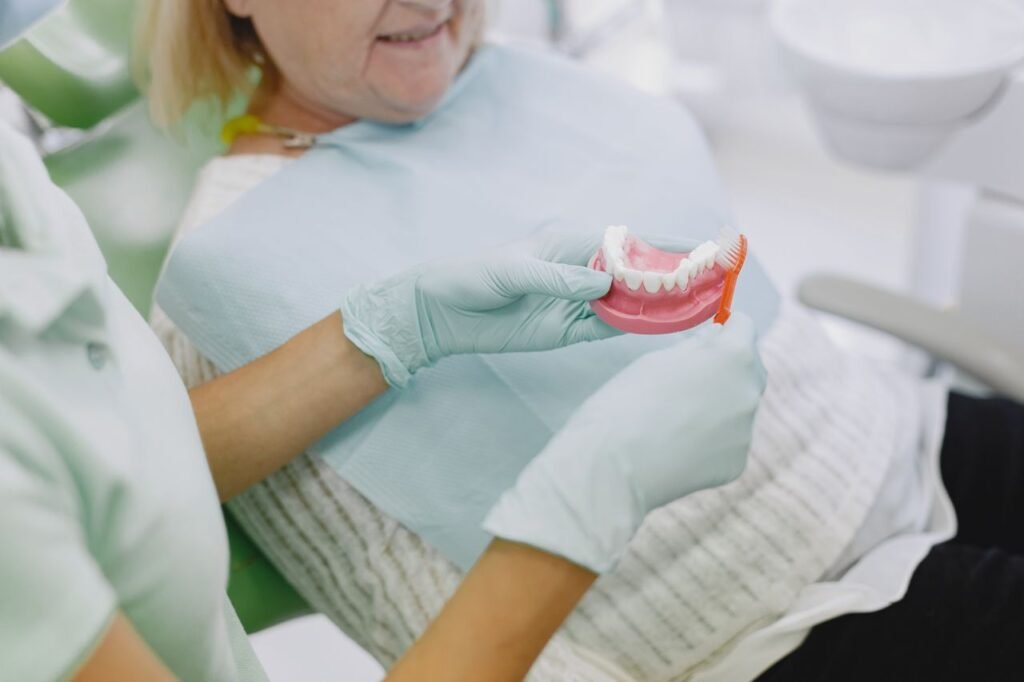
Yes, you can get dentures the same day your teeth are pulled. These are called immediate dentures: they are made in advance from measurements of your mouth and placed right after the extractions, so you never have to go without teeth. Immediate dentures are a common, safe, and well-established option, but they need adjustments as your gums heal and shrink, so they are best thought of as the first stage of a longer plan rather than a one-appointment finish.
For many people, the fear of leaving the clinic with no teeth is the biggest barrier to getting help for painful, loose, or badly damaged teeth. Immediate dentures remove that worry. Planning is key: a careful tooth extraction appointment combined with a well-fitted denture helps protect the healing sockets and lets you smile, speak, and eat soft foods from day one. At Richmond Hill Smile Centre, both steps are planned together so the transition feels as smooth as possible.
It is also worth knowing that immediate dentures are not the only route. Some patients later add dental implants to anchor their denture securely, which reduces movement and helps preserve the jawbone. Others move to a conventional denture after healing. Your long-term goals shape which path makes sense.
This guide explains how same-day dentures work, what the first weeks feel like, the honest pros and cons, and the questions to ask before you begin. If you are comparing options, an experienced dentist will walk you through each stage clearly so there are no surprises along the way.
What Are Immediate Dentures?
An immediate denture is a removable full or partial denture fabricated before your remaining teeth are extracted. The dental laboratory uses impressions or scans of your current mouth and adjusts the model to predict how your gums will look without the teeth. On extraction day, the denture is inserted right after the teeth are removed.
Immediate vs Conventional Dentures
| Feature | Immediate Denture | Conventional Denture |
|---|---|---|
| When placed | Same day as extractions | After gums heal, often two to three months later |
| Time without teeth | None | Several weeks to months |
| Initial fit | Good, but loosens as gums shrink | More stable from the start |
| Adjustments needed | Several, plus a reline or new denture | Fewer |
| Try-in before final | Limited, since teeth are still present | Full try-in of teeth arrangement |
| Best for | People who cannot be without teeth | People who can wait for healing |
Who Is a Good Candidate?
Immediate dentures may suit you if:
- Your remaining teeth are failing due to decay, gum disease, or fractures
- You work with the public or simply do not want to be seen without teeth
- You are in reasonable general health for extractions
- You are ready to attend several follow-up appointments during healing
Some medical conditions and medications, such as blood thinners or certain bone medications, need coordination with your physician. Being open about your health history allows the dental team to plan safely.
Step-by-Step: The Immediate Denture Process
- Consultation and exam. Your dentist reviews your health, takes X-rays, and discusses which teeth need removal and what type of denture fits your goals.
- Records and impressions. Impressions or digital scans capture your mouth. Bite records and shade selection help the lab design natural looking teeth.
- Back teeth first (in some cases). Back teeth may be removed a few weeks earlier so those areas can begin healing, while front teeth stay for appearance.
- Laboratory fabrication. The lab builds your denture, shaping the model to predict the gum contour after extractions.
- Extraction day. Remaining teeth are removed under local anaesthetic, and the denture is placed immediately. It acts like a bandage over the sockets.
- First 24 hours. You typically keep the denture in overnight on the first night to control swelling and bleeding, unless told otherwise.
- Next-day check. The dentist removes the denture, checks healing, and relieves any sore spots.
- Healing adjustments. Over the next weeks, sore spots are adjusted and soft temporary liners may be added as the gums shrink.
- Reline or new denture. After roughly three to six months, a hard reline or a new conventional denture restores a snug, long-term fit.
What Does Healing Feel Like?
First Few Days
- Swelling and tenderness are normal and usually peak around day two or three.
- Some oozing of blood in the first 24 hours is expected.
- Speech may sound different while your tongue and lips adapt.
- Eating should be limited to soft, cool, or lukewarm foods.
First Few Weeks
- Sore spots may appear where the denture presses on healing tissue. These are easy to adjust.
- Saliva flow may increase temporarily as your mouth gets used to the denture.
- Chewing becomes easier as you learn to use both sides evenly.
First Few Months
The bone and gums reshape significantly after extractions. As they shrink, the denture will feel looser. This is expected and is why relines are built into the plan.
Honest Pros and Cons
Advantages
- No time without teeth, protecting confidence at work and socially
- Helps protect sockets and may reduce bleeding and swelling
- Supports lips and cheeks during healing
- Lets you start adapting to speaking and eating with a denture right away
Disadvantages and Risks
- Fit becomes looser as gums heal, requiring relines or a replacement denture
- More follow-up visits than conventional dentures
- Limited ability to preview the final look before extractions
- Sore spots are common in early weeks
- Denture adhesive may be needed temporarily for stability
How Implants Can Improve Denture Stability
Many long-term denture wearers find the lower denture in particular moves during eating and speaking. Two or more implants placed into the jaw can act as anchors, allowing the denture to snap securely into place. Benefits include:
- Much better chewing efficiency and confidence
- Less reliance on adhesives
- Reduced bone loss at the implant sites
- Fewer sore spots from denture movement
Implants can sometimes be placed at the time of extraction or after healing, depending on bone quality and your health. A 3D scan helps determine the best timing.
Eating With Immediate Dentures
- Start with liquids and very soft foods such as soups, yogurt, mashed potatoes, eggs, and smoothies (without using a straw in the first days).
- Cut food into small pieces and chew slowly on both sides at once.
- Avoid very hot foods early on, as sensitivity to temperature may be reduced and you could burn your mouth.
- Gradually introduce firmer foods like cooked vegetables, fish, and pasta.
- Leave very sticky, hard, or chewy foods until you are comfortable and the fit has stabilized.
Caring for Your Dentures and Healing Gums
- After the first 24 hours, remove the denture to rinse it and your mouth after meals.
- Rinse gently with warm salt water several times a day for the first week.
- Clean the denture daily with a soft denture brush and non-abrasive cleaner, not regular toothpaste.
- Store the denture in water or soaking solution when out of the mouth so it does not warp.
- Once healing allows, remove dentures overnight to let the gums rest, unless advised otherwise.
- Avoid smoking, which slows healing and increases the risk of complications.
Common Mistakes to Avoid After Getting Immediate Dentures
Most early problems with same-day dentures come from a few predictable mistakes. Avoiding them makes healing smoother and the final fit better.
- Skipping the next-day appointment. This visit catches pressure points before they turn into painful ulcers.
- Removing the denture too early on day one. Swelling can make it hard to reinsert, and the sockets lose their protective cover.
- Trying to adjust the denture yourself. Filing or bending a denture at home can ruin the fit and the bite.
- Using too much adhesive. A few small dabs are enough. Heavy adhesive use can hide a fit problem that needs a reline.
- Ignoring persistent sore spots. A sore that lasts more than a few days should be checked, as constant pressure delays healing.
- Delaying the reline. A loose denture rubs, moves, and can speed up bone loss. Relining on schedule keeps the gums healthier.
- Stopping checkups. Even without natural teeth, the soft tissues, bone, and denture fit need regular professional review.
Adapting Your Speech
Speaking clearly with a new denture takes a little practice. Reading aloud for a few minutes each day, speaking slowly, and repeating words that sound unusual helps the tongue and lips adjust. Most people sound like themselves again within a couple of weeks.
Myths About Same-Day Dentures
- Myth: “Immediate dentures are the final dentures.” Fact: They usually need a reline or replacement after healing because the gums change shape.
- Myth: “Having all teeth removed is extremely painful.” Fact: Extractions are done under local anaesthetic, and discomfort afterwards is generally manageable with prescribed or recommended pain relief.
- Myth: “Dentures always look fake.” Fact: Carefully chosen shade, shape, and gum colour create natural looking results.
- Myth: “Once you have dentures, you never need the dentist again.” Fact: Regular checks are needed for fit, oral cancer screening, and the health of the gums and bone.
Patient Scenarios
The teacher. A patient with advanced gum disease could not take time off without teeth. Her back teeth were removed first, and a month later her front teeth were extracted with an immediate upper denture placed the same day. She returned to work within the week.
The loose lower denture. A patient who received immediate dentures found the lower one moved while eating after a few months. After healing, two implants were placed to secure it, making chewing much easier.
Partial immediate denture. Another patient needed only three front teeth removed. An immediate partial denture filled the gap on extraction day while an implant plan was prepared.
Compassionate Denture Care in Richmond Hill
If you are considering same-day dentures, working with a dentist in Richmond Hill who plans carefully and follows up closely makes the process far easier. Richmond Hill Smile Centre is one of the best dental clinics in Richmond Hill, offering extractions, immediate and conventional dentures, and implant-supported options under one roof.
The clinic is located at 10157 Yonge St Unit 101, Richmond Hill, ON L4C 1T6. As a complete dental clinic in Richmond Hill, the team can coordinate every stage, from the first consultation and extractions to relines and long-term maintenance, so you always know what comes next.
To discuss whether immediate dentures are right for you, email info@richmondhillsmilecentre.ca. All extractions and denture treatment should be carried out by licensed dental professionals registered with the Royal College of Dental Surgeons of Ontario (RCDSO), ensuring safe care and dependable follow-up.
Safety Disclaimer
This information is general and does not replace a personal assessment. Contact your dental office or seek urgent care if you experience heavy bleeding that does not stop with pressure, fever, spreading swelling, or difficulty breathing or swallowing after extractions.
Frequently Asked Questions
How long do I keep immediate dentures in after extractions?
Most patients are told to keep them in for the first 24 hours, including overnight, to control bleeding and swelling. After the next-day check, your dentist will explain your daily routine.
How long do immediate dentures last?
They can serve for months to a few years with relines, but many patients switch to a new conventional or implant-supported denture once healing is complete.
Will my immediate dentures need a reline?
Almost always. Gums and bone shrink after extractions, so a reline after several months restores a snug fit.
Can I eat normally with same-day dentures?
Not right away. Start with soft foods and progress gradually. Most people return to a varied diet within several weeks, though very hard or sticky foods may always need care.
Are immediate dentures suitable for partial tooth loss?
Yes. Immediate partial dentures can replace one or several teeth on the day of extraction while longer-term options are planned.
Conclusion
Immediate dentures let you leave the clinic with teeth on the same day as your extractions.
They need relines and adjustments as your gums heal, so follow-up care is part of the plan.
With careful planning, same-day dentures offer comfort and confidence while you move toward a long-term solution.