
Yes, Invisalign can fix many overbites, especially mild to moderate ones caused by tooth position. Using small tooth-coloured attachments, bite ramps, and sometimes elastics, clear aligners can move front teeth and adjust how the jaws meet. Overbites are very common, and most aren’t serious, but a deep or skeletal overbite may need braces or other treatment, so an Invisalign assessment is the only way to know which group you’re in.
If you’ve been putting off treatment because you’re picturing a mouth full of metal, that worry is common. Many adults and teens with overbites are good candidates for clear aligners, and our orthodontics team will tell you plainly if aligners are a good fit or if another option will get a better result.
The first visit is a conversation, a scan, and a look at your bite. Nothing gets glued on, and there’s no pressure to start that day at our dental clinic in Richmond Hill.
Parents often ask about overbites in kids, too. Early checks through our children’s dentistry visits can catch jaw growth issues while they’re easier to guide. At Richmond Hill Smile Centre, we look at the whole picture: teeth, jaws, gums, and how you chew.
Mild overbite
Usually very treatable with Invisalign.
Moderate overbite
Often treatable with attachments and elastics.
Severe or skeletal
May need braces, growth appliances, or jaw surgery.
What is an overbite?
An overbite is the vertical overlap of the upper front teeth over the lower front teeth when you bite together. Some overlap is normal, usually about 2 to 3 mm, or 10 to 20% of the lower teeth’s height.
When the upper teeth cover much more than that, dentists call it a deep bite. In severe cases, the lower front teeth can bite into the gum behind the upper teeth.
Overbite vs overjet: what’s the difference?
People often say “overbite” when they mean “buck teeth.” That’s actually overjet, which is how far the upper teeth stick out horizontally in front of the lower ones. Many people have both, and Invisalign handles them a bit differently.
| Overbite (deep bite) | Overjet | |
|---|---|---|
| Direction | Vertical overlap | Horizontal protrusion |
| What you notice | Lower teeth hidden when biting | Upper teeth stick out |
| Common causes | Tooth position, jaw shape, worn back teeth | Thumb sucking, jaw size, tongue habits |
| Aligner approach | Intrude front teeth, bite ramps | Retract upper teeth, elastics |
What causes an overbite?
- Genetics: jaw size and shape run in families. A smaller lower jaw is a common cause.
- Childhood habits: thumb sucking, long-term pacifier use, or tongue thrusting past age 3 or 4.
- Crowding or missing teeth: teeth drift into spaces and change the bite.
- Worn or lost back teeth: when back teeth wear down, the front teeth overlap more.
- Grinding: can wear teeth and deepen the bite over time.
Why bother fixing an overbite?
Some overbites are purely cosmetic. Others cause real problems over time.
- Lower front teeth wearing down from constant contact
- Gum damage behind the upper front teeth
- Jaw pain, clicking, or headaches in some people
- Chipped front teeth
- Difficulty biting into things like sandwiches or apples
- Speech issues in some cases
Not every overbite causes symptoms. A dentist can measure yours and tell you whether treatment is cosmetic, preventive, or important for long-term tooth health.
How does Invisalign correct an overbite?
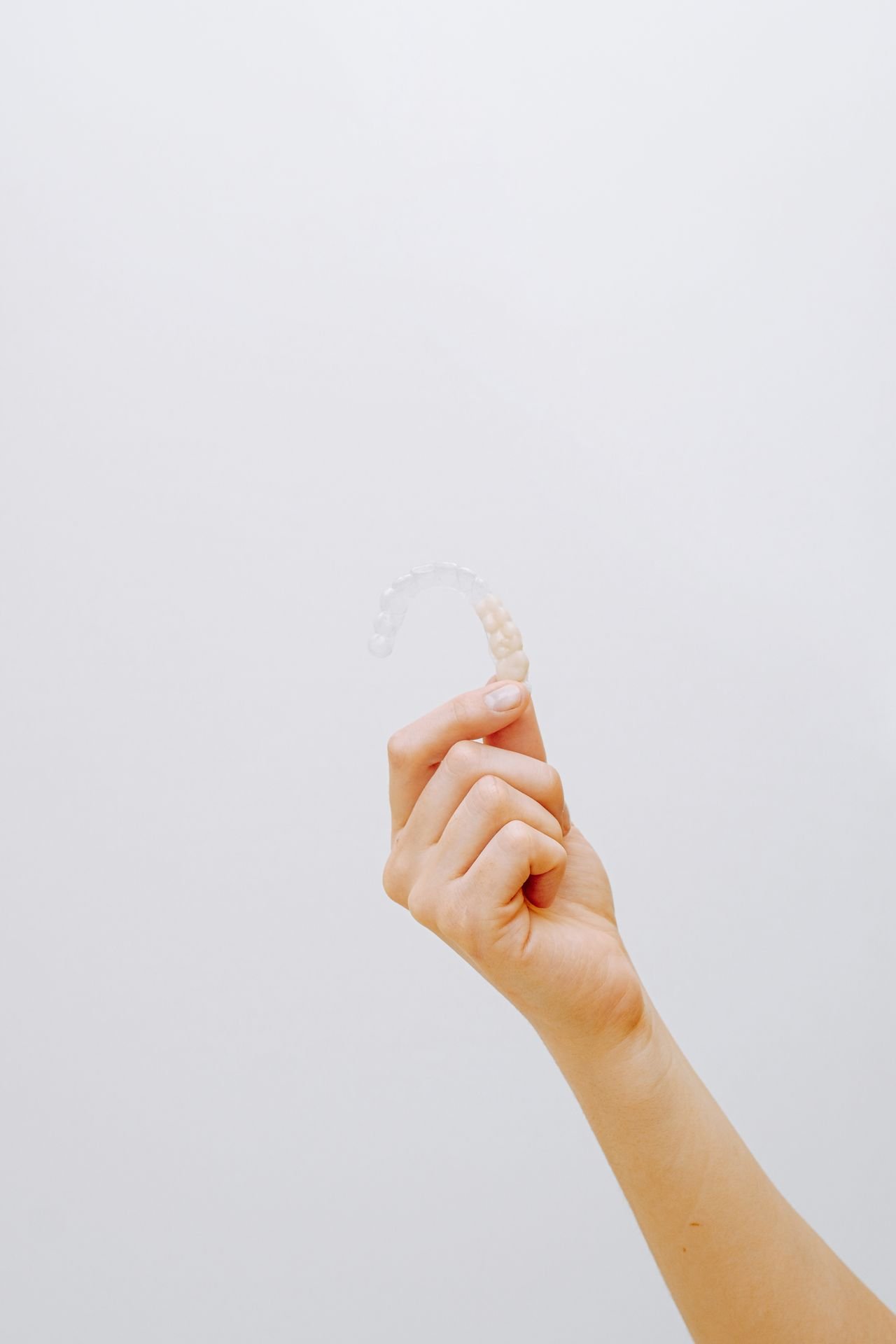
Clear aligners push teeth in small, planned steps. Each set of trays is worn for about 1 to 2 weeks, 20 to 22 hours a day. To fix an overbite, the treatment plan usually combines several tools.
- Attachments: small tooth-coloured bumps bonded to certain teeth give the aligners something to grip for more precise movements.
- Intrusion of front teeth: the aligners gently move upper or lower front teeth up into the bone, reducing the overlap.
- Extrusion of back teeth: in some cases, back teeth are brought down slightly to open the bite.
- Precision bite ramps: little ledges built into the aligners behind the upper front teeth. Your lower teeth hit them first, which helps open the bite.
- Elastics: small rubber bands hooked between upper and lower aligners shift the jaws’ relationship, which helps when the lower jaw sits back.
- Mandibular advancement (for growing teens): special aligners with wings that encourage the lower jaw forward during growth.
How long does Invisalign take to fix an overbite?
Most overbite cases take 12 to 24 months. Mild cases can be closer to 6 to 12 months, while complex ones take longer and may need extra sets of aligners called refinements.
The single biggest factor is wear time. Aligners left in a case don’t move teeth. Patients who wear them 22 hours a day usually finish close to schedule, and those who wear them 15 hours usually don’t.
Invisalign vs braces for overbite: which is better?
| Invisalign | Traditional braces | |
|---|---|---|
| Appearance | Nearly invisible | Visible brackets |
| Mild to moderate overbite | Very effective | Very effective |
| Severe overbite | Sometimes, case by case | More predictable |
| Eating | Remove trays, eat anything | Avoid hard and sticky food |
| Compliance | Depends on you wearing them | Always working |
| Cleaning | Brush and floss normally | Harder around brackets |
When is Invisalign not enough?
Being upfront here matters. Spending a year in aligners only to end up with a half-fixed bite is frustrating and avoidable.
- Skeletal overbites in adults: when the jaws themselves are mismatched in size, teeth can only move so far. Orthognathic (jaw) surgery combined with orthodontics may be recommended.
- Very deep bites where lower teeth hit the palate.
- Patients who can’t commit to wear time. Braces may be the more reliable choice.
- Active gum disease or decay needs treatment before any tooth movement.
What happens at your first visit?
- A conversation about what bothers you and what you’d like to change.
- An exam of your teeth, gums, jaw joints, and bite.
- X-rays to see roots and jaw structure.
- A 3D scan of your teeth, no goopy impressions.
- A digital preview of how your teeth could move.
- A clear explanation of options: Invisalign, braces, or a combination.
What’s daily life like with aligners?
Most patients say the first week is the hardest, and then it becomes routine. Here’s what a normal day looks like.
- Morning: take aligners out, brush your teeth, rinse the trays in cool water, and put them back in before leaving the house.
- Meals: remove them to eat or drink anything other than plain water. Keep the case with you so they don’t end up wrapped in a napkin and thrown out (it happens a lot).
- After meals: brush, or at least rinse well, before putting them back. Trapping food against your teeth for hours raises cavity risk.
- Elastics: if your plan includes them, hook them on as shown and replace them daily.
- Night: wear them while you sleep. Night hours make up a big chunk of your daily wear time.
Your speech may sound slightly lispy for a few days. That usually fades within a week as your tongue adjusts.
Tips that make treatment go smoother
- Switch to a new set of aligners at night so the first sore hours happen while you sleep.
- Use “chewies,” small foam cylinders, for a few minutes after inserting new trays to seat them fully.
- Set phone reminders if you tend to forget to put them back in after lunch.
- Cut back on snacking and sugary drinks, since each one means taking trays out and cleaning up.
- Keep your previous set as a backup in case you lose or crack the current one.
How do you keep an overbite from coming back?
Bite corrections are especially prone to relapse, because the muscles and habits that created the overbite are still there. Protecting the result takes a few steps.
- Wear retainers as directed. Usually full time for a short period, then every night.
- Address habits. Tongue thrusting or mouth breathing can push teeth back out of place.
- Manage grinding. A night guard or retainer designed for grinders protects both teeth and alignment.
- Keep checkups. Small shifts are much easier to catch and correct early.
Common myths about Invisalign and overbites
“Aligners only work for small cosmetic fixes.”
That was closer to true 15 years ago. Attachments, elastics, and better planning software now allow aligners to treat many bite problems.
“Once it’s fixed, it stays fixed.”
Teeth naturally try to shift back. Retainers, usually worn nightly long term, are what keep the result.
“Overbites fix themselves as kids grow.”
Some mild ones improve, but many don’t. Early assessment around age 7 helps catch problems that are easier to guide during growth.
Real-world examples
The adult deep bite. A 34-year-old’s lower teeth were wearing down and her jaw clicked. 16 months of aligners with bite ramps opened her bite, and the wear stopped progressing.
The teen with overjet. A 13-year-old with protruding upper teeth wore mandibular advancement aligners during a growth spurt. His profile and bite both improved.
The skeletal case. A man in his 40s had a significantly small lower jaw. Aligners alone wouldn’t fix it, so he was referred for a combined orthodontic and surgical consultation. Knowing that upfront saved him time.
Getting a clear answer for your bite
Richmond Hill Smile Centre is one of the best dental clinics in Richmond Hill for patients who want honest guidance on clear aligners. As a well-reviewed dentist in Richmond Hill, the team assesses both the cosmetic and the functional side of your bite and works with licensed professionals at every step.
Visit 10157 Yonge St Unit 101, Richmond Hill, ON L4C 1T6, or email info@richmondhillsmilecentre.ca to ask about an Invisalign consultation. Whether you’re looking for a top dentist in Richmond Hill for yourself or a teen, the first step is a simple scan and conversation.
Frequently asked questions
Can Invisalign fix an overbite without elastics?
Mild overbites can often be corrected with attachments and bite ramps alone. Moderate cases, especially when the lower jaw sits back, often need elastics for part of the treatment.
Does fixing an overbite change your face?
Correcting the bite can subtly change your lip position and profile, especially when overjet is reduced. Most changes are small and natural-looking.
Is Invisalign painful for an overbite?
Most people feel pressure and tenderness for 1 to 2 days with each new set of aligners. It’s usually mild and settles quickly.
What age is best for overbite treatment?
There’s no upper age limit for moving teeth. For skeletal overbites, treatment during growth, usually ages 9 to 14, can guide jaw development more easily.
Will I need to wear a retainer after Invisalign?
Yes. Retainers keep teeth from drifting back. Most dentists recommend nightly wear long term, especially after bite correction.
Conclusion
Invisalign can correct many mild to moderate overbites with attachments, bite ramps, and elastics.
Severe or skeletal overbites may need braces, growth appliances, or surgery for the best result.
A proper exam and scan will show which approach fits your bite and your goals.