Yes, most dead teeth can be saved. A tooth “dies” when the nerve and blood supply inside it (the pulp) stop working, usually because of deep decay or an injury, and a root canal can remove that dead tissue, clean the inside and seal it so you keep the tooth. A dead tooth is a serious problem rather than a cosmetic one, because it can become infected even if it doesn’t hurt, so it should be checked soon.
People are often surprised that a tooth can be “dead” and still sit firmly in the jaw. That’s because the tooth is held in place by the surrounding bone and ligament, not by the nerve.
After a root canal, back teeth usually need a crown to stop them from cracking. Crowns and bridges protect the treated tooth for years.
Front teeth that turned grey or brown can often be lightened from the inside with internal bleaching, a cousin of regular teeth whitening.
If the tooth has swelling, a bad taste or throbbing pain, don’t wait. An emergency dental clinic can relieve the pressure and stop infection from spreading. And when a tooth is too broken or cracked to save, dental implants are the closest thing to a natural replacement.
What is a dead tooth?
Each tooth has 3 main layers: hard enamel on the outside, dentin in the middle and pulp in the centre. The pulp keeps the tooth alive while it’s growing. In an adult, a tooth can function without it, as long as the inside is cleaned and sealed.
What are the signs of a dead tooth?
- Colour change. Grey, yellow, brown or black, often on a front tooth after an injury.
- Pain that came and went. Severe pain that suddenly stopped can mean the nerve died.
- Pain when biting or tapping. Often from infection around the root tip.
- Swelling or a gum bump. A small pimple-like bump on the gum can be a draining abscess.
- Bad taste or smell. From pus draining into the mouth.
- No reaction to cold. A healthy tooth feels cold. A dead one often doesn’t.
- No symptoms at all. Some dead teeth are only found on X-rays.
What causes a tooth to die?
Deep decay
Untreated cavities let bacteria reach the pulp. The pulp becomes inflamed (pulpitis), and if it isn’t treated, it eventually dies.
Injury
A fall, sports hit or car accident can cut off the blood supply at the root tip. The tooth may look fine for weeks or months before changing colour.
Cracks
A crack can let bacteria into the pulp, even when it’s too small to see.
Repeated dental work
A tooth that’s had several large fillings over the years has a stressed pulp. Each procedure adds a little more strain.
Grinding
Heavy grinding or clenching can cause tiny fractures and inflammation over time.
Treatment options for a dead tooth
| Option | When it’s used | Keeps your tooth? |
|---|---|---|
| Root canal treatment | Tooth is structurally sound enough to restore | Yes |
| Root canal plus crown | Back teeth, or teeth with large fillings | Yes |
| Internal bleaching | A front tooth that’s darkened after a root canal | Yes, improves colour |
| Veneer or crown for colour | Dark front tooth that bleaching can’t fully lighten | Yes |
| Extraction plus implant or bridge | Tooth is cracked to the root or too broken to save | No, it’s replaced |
What happens during a root canal?
- Diagnosis. X-rays and tests confirm the nerve is dead or dying.
- Numbing. Local anesthetic makes the area comfortable, even if there’s an infection.
- Access. A small opening is made in the top of the tooth.
- Cleaning. The dead tissue and bacteria are removed from the canals inside the roots.
- Disinfection. The canals are rinsed with antibacterial solutions.
- Filling and sealing. The canals are filled with a rubber-like material and sealed.
- Restoration. A filling or crown protects the tooth.
Most root canals are done in 1 or 2 visits.
Can a dead tooth heal on its own?
No. Once the pulp dies, it can’t come back to life. Antibiotics may calm swelling for a while, but they can’t reach bacteria inside a tooth that has no blood supply. Without treatment, the infection usually returns.
There’s 1 exception worth knowing about. After an injury, a tooth sometimes looks darker for a while, then recovers its colour as the pulp heals. That’s why your dentist may monitor an injured tooth for a few weeks before deciding on a root canal.
What happens if you leave a dead tooth?
- An abscess can form at the root tip and destroy bone.
- Infection can spread into the face, jaw or neck.
- The tooth gets more brittle and may break.
- Neighbouring teeth can be affected.
- Treatment gets bigger, and the chance of saving the tooth drops.
Myths about dead teeth and root canals
“If it doesn’t hurt, it’s fine.” Many dead teeth stop hurting once the nerve dies. The infection can still grow silently.
“Root canals are extremely painful.” With modern anesthetic, most patients say it feels like getting a filling. The treatment relieves pain.
“Pulling the tooth is better.” Keeping your natural tooth is usually the better option when it can be restored. Missing teeth cause shifting, bite changes and bone loss.
“A root canal tooth is dead, so it can’t get cavities.” It can. The outside of the tooth still needs brushing, flossing and checkups.
“A dark tooth always has to be crowned.” Internal bleaching can often lighten a dark front tooth without covering it.
How to protect a tooth after a root canal
- Get the final crown or filling placed promptly. A temporary filling isn’t meant to last.
- Avoid chewing hard foods on the tooth until it’s fully restored.
- Brush and floss as usual.
- Wear a mouth guard for sports and a night guard if you grind.
- Keep regular checkups so your dentist can watch the root tip on X-rays.
Real situations we see
The grey front tooth. A 30-year-old noticed one front tooth slowly turning grey, about 2 years after a basketball elbow to the mouth. It never hurt. An X-ray showed a small infection at the root tip. After a root canal and internal bleaching, the tooth matched its neighbours again.
The pain that stopped. A 44-year-old had a week of terrible toothache that suddenly disappeared. Two months later, his cheek swelled up. The nerve had died and an abscess had formed. A root canal and crown saved the tooth.
The cracked molar. A 57-year-old’s dead molar had a crack running down to the root. It couldn’t be saved, so it was removed and replaced with an implant.
How does a dentist know a tooth is dead?
There’s no single test, so dentists combine several. Each one gives a piece of the picture.
- Cold test. A cold cotton pellet is placed on the tooth. A living tooth feels it. A dead one usually doesn’t.
- Electric pulp test. A tiny, painless current checks whether the nerve responds.
- Tap and bite tests. Tenderness to tapping often means inflammation around the root tip.
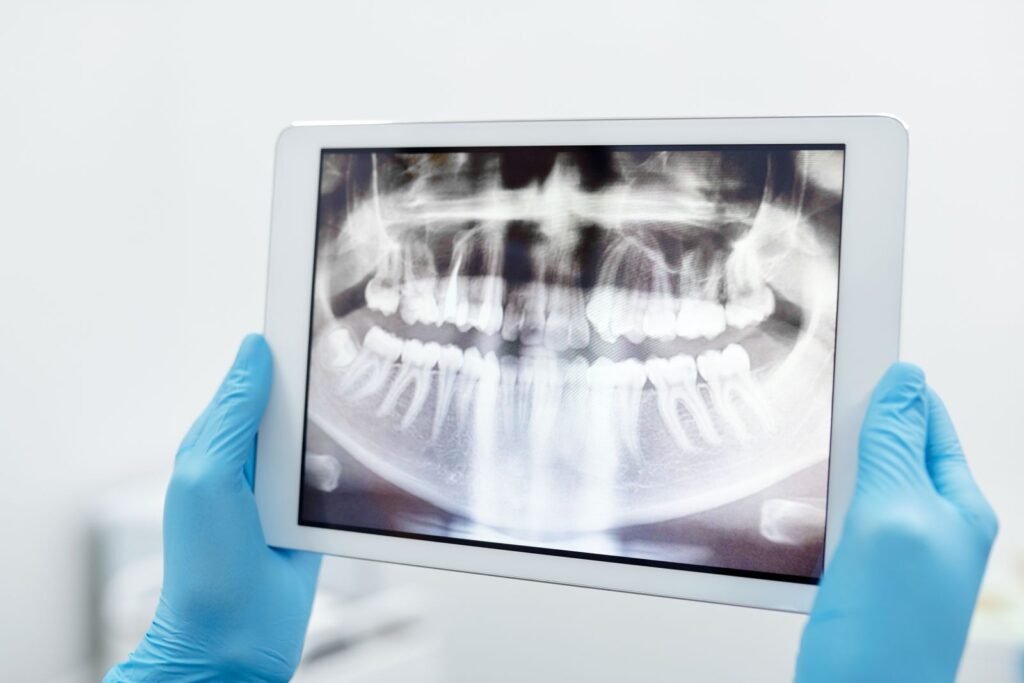
- X-rays. A dark area at the end of the root suggests infection in the bone.
- 3D imaging (CBCT). Used when a regular X-ray doesn’t show enough, such as hidden cracks or extra canals.
- Comparison with nearby teeth. Your dentist tests healthy neighbours too, so there’s a baseline.
Sometimes results are unclear, especially right after an injury. A tooth in “shock” can test dead for a few weeks and then recover. That’s why monitoring is common before treatment on injured front teeth.
What does recovery feel like after a root canal?
Most people go back to work or school the same day. The tooth may feel tender when biting for a few days as the area around the root settles. Over-the-counter pain relief, used as the label directs, usually handles it.
Avoid chewing hard foods on that side until the final crown or filling is placed. If you had swelling before treatment, it should start going down within a day or 2. Call your dentist if pain gets worse after day 3, swelling returns, or the temporary filling falls out.
Does a dead tooth affect the teeth around it?
It can. An abscess at the root tip can spread through the bone and affect nearby roots. Infection can also drain into the gum and cause swelling between teeth. And if the dead tooth eventually breaks or is lost, the neighbours can tip into the gap and the opposing tooth can drift. Treating the dead tooth early protects the whole area, not just that one tooth.
Should children’s dead baby teeth be treated?
A baby tooth that darkens after a fall is common. If there’s no swelling, pain or gum bump, the dentist may simply watch it. If infection develops, the tooth may need a pulp treatment or removal, since an abscess can affect the adult tooth growing underneath.
Finding a dentist in Richmond Hill for a dead tooth
Choose licensed dental professionals who take the time to test the tooth, explain the X-ray, and walk you through every option, including what happens if you wait.
Richmond Hill Smile Centre is one of the best dental clinics in Richmond Hill, offering root canal treatment, crowns and bridges, dental implants, tooth extraction, teeth whitening, emergency dental care and preventive dental hygiene. Patients looking for the best dentist in Richmond Hill for both urgent and cosmetic care often find both under one roof here.
The dental office in Richmond Hill is at 10157 Yonge St Unit 101, Richmond Hill, ON L4C 1T6. Email info@richmondhillsmilecentre.ca to book an assessment.
Frequently asked questions
How long can a dead tooth stay in your mouth?
A dead tooth can stay in place for months or even years, but it’s at risk of infection and breaking the whole time. Treating it early gives the best chance of keeping it.
Does a dead tooth always turn black?
No. Some dead teeth darken to grey, yellow or brown, while others don’t change colour at all. Back teeth often show no colour change because they’re hard to see.
Is a dead tooth an emergency?
It isn’t always an emergency, but it should be checked soon. Swelling, fever, a bad taste or severe pain mean you should be seen the same day.
Can a dead tooth be whitened?
Yes. Internal bleaching places whitening material inside the tooth after a root canal. It often lightens a dark front tooth significantly.
Will a dead tooth fall out on its own?
Usually not right away. It’s held by bone and ligament, so it often stays put. But infection can destroy the bone around it over time, which can loosen the tooth.
Conclusion
A dead tooth has lost its nerve and blood supply, usually from deep decay or an injury, and it can still become infected.
A root canal can save most dead teeth, and a crown or internal bleaching restores strength and colour.
Getting it checked early keeps treatment simpler and protects the bone around the tooth.