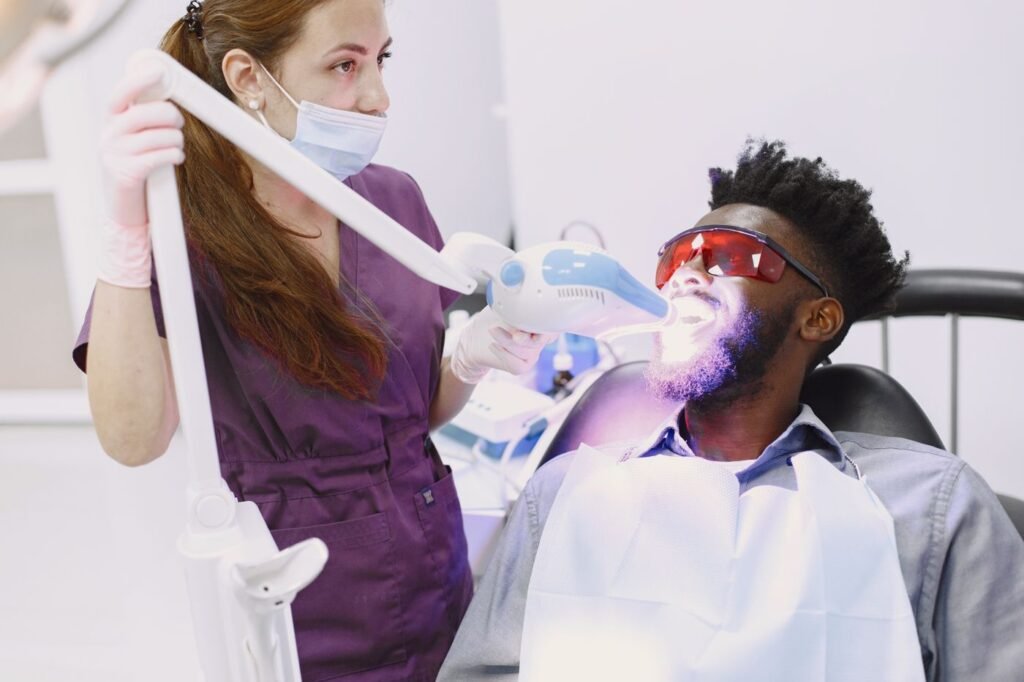
Professional teeth whitening usually lasts 6 months to 3 years. In-office whitening paired with take-home touch-up trays tends to last the longest, while results fade faster for people who drink a lot of coffee, tea or red wine, or who smoke. Fading is normal and gradual, not a sign that something went wrong, and a short touch-up brings the shade back. If you’re planning teeth whitening, the biggest factors are your habits after treatment and how often you top it up.
Here’s the thing people miss. Whitening doesn’t make teeth stain-proof. It lifts the stain molecules sitting inside enamel, and new ones start settling in the moment you have your next espresso. A regular dental hygiene visit polishes off surface stain and stretches your results by months.
Whitening also only works on natural enamel. Crowns, fillings and bonding stay the same colour, so if you have visible front restorations, plan for that before you start. Some people end up choosing porcelain veneers for a shade that won’t fade at all.
For small spots, chips or a single dark tooth, dental bonding after whitening can match the new shade. If you want to drop by and talk options in person, the clinic is easy to find on Google Maps.
Quick answer: Professional teeth whitening typically lasts 6 months to 3 years. In-office whitening plus occasional take-home touch-ups gives the longest results. Coffee, tea, red wine, smoking and skipped cleanings shorten it. Whitening doesn’t change the colour of crowns, veneers, fillings or bonding.
How does professional whitening work?
Whitening gels use hydrogen peroxide or carbamide peroxide. Carbamide peroxide breaks down into hydrogen peroxide in the mouth. The peroxide travels into enamel and dentin and breaks up the large, coloured stain molecules into smaller, lighter ones.
That’s why whitening changes the colour from the inside, while a cleaning only removes stain from the surface.
2 main types of stain
- Extrinsic stains sit on the surface. Coffee, tea, wine, curry and tobacco are common causes. Polishing removes some of it, and whitening handles the rest well.
- Intrinsic stains are inside the tooth. Ageing, some antibiotics taken in childhood, too much fluoride while teeth were forming, or trauma can cause them. Some respond to whitening slowly. Others don’t respond at all.
How long do different whitening methods last?
| Method | How it’s done | Typical results | How long it lasts |
|---|---|---|---|
| In-office whitening | Strong gel applied by the dental team, about 60 to 90 minutes | Noticeable change in one visit | About 1 to 3 years with touch-ups |
| Custom take-home trays | Lower-strength gel worn daily for 1 to 2 weeks | Gradual, very even | About 1 to 2 years, easy to top up |
| In-office plus take-home | One office session, then trays for maintenance | Fastest and most stable | Often the longest lasting |
| Over-the-counter strips | Thin strips with low-strength gel | Mild change | A few months |
| Whitening toothpaste | Polishing agents, sometimes low peroxide | Removes surface stain only | Ongoing use needed |
What makes whitening fade faster?
Diet
Dark drinks and foods with strong pigments are the biggest factor. Acidic drinks make it worse because they soften enamel, letting stain sink in more easily.
- Coffee and black tea
- Red wine
- Cola and dark sodas
- Berries and berry juices
- Soy sauce, balsamic vinegar and curry
- Sports drinks and citrus (for their acid)
Smoking and vaping
Tar and nicotine stain teeth yellow to brown quickly. Smokers often see whitening fade within months.
Skipped cleanings
Plaque and tartar grab stain. Regular hygiene visits keep the surface smooth and easier to keep bright.
Thin enamel or age
As enamel thins with age, the yellower dentin underneath shows through more. Whitening still helps, but results can look less dramatic and fade sooner.
How to make whitening last longer
These habits extend results for most people.
- Wait 48 hours after whitening before dark foods and drinks. Teeth are more porous right after treatment.
- Use a straw for iced coffee, tea and soda. Less contact with front teeth means less stain.
- Rinse with water after coffee or wine. It’s simple and it works.
- Brush twice a day with a gentle fluoride toothpaste.
- Skip highly abrasive whitening pastes. They can scratch enamel and make it pick up more stain.
- Keep up regular cleanings.
- Do short touch-ups. Many people wear take-home trays for 1 to 3 nights every few months.
- Quit smoking, if that’s part of your routine.
Is professional whitening safe?
When it’s supervised by a dental professional, yes. Studies show peroxide whitening doesn’t damage healthy enamel when used as directed.
The most common side effects are temporary:
- Tooth sensitivity, usually for 1 to 3 days
- Gum irritation if gel touches the gums
Both usually fade quickly. Desensitizing toothpaste before and after treatment helps a lot.
Safety note: Whitening isn’t recommended during pregnancy or breastfeeding, for children under about 16, or when you have untreated cavities, gum disease or exposed roots. Gel on an open cavity can cause significant pain. Get a dental exam before any whitening, and stop and contact your dentist if pain is severe or lasts more than a few days. This article is general information.
Common myths about teeth whitening
“Whitening damages enamel permanently”
Properly used peroxide gels don’t dissolve enamel. Temporary sensitivity happens because the gel reaches the nerve through tiny tubes, not because the tooth is being worn away.
“The whiter, the better”
Overly bright, flat white teeth can look unnatural, especially next to existing crowns. A good cosmetic dentist in Richmond Hill aims for a shade that suits your skin tone, eye whites and age.
“Once you whiten, it lasts forever”
Teeth keep picking up stain throughout life. Touch-ups are part of the plan.
“Charcoal and baking soda work just as well”
They’re abrasive and only remove surface stain. Used often, they can scratch enamel and make teeth look darker over time.
“Whitening will change my crowns and fillings too”
It won’t. Restorations stay the same shade, so they may look darker next to whitened teeth.
Whitening vs veneers vs bonding
| Option | What it changes | Lasts | Best for |
|---|---|---|---|
| Whitening | Colour of natural teeth | About 6 months to 3 years | Healthy teeth with yellow or brown stain |
| Bonding | Shape and colour of a few teeth | About 5 to 10 years | Chips, small gaps, single spots |
| Porcelain veneers | Shape, size and colour | About 10 to 20 years | Several teeth, stubborn stain, shape issues |
Many patients combine them as part of smile design in Richmond Hill. A common plan is to whiten first, then match bonding or veneers to the new shade.
A real example
A patient in her late 20s whitened before her wedding using in-office treatment and take-home trays. She drank 2 coffees a day and didn’t want to stop. Her plan was simple: a straw for iced coffee, a water rinse after hot coffee, and 2 nights of tray touch-ups every 4 months. At her cleaning 18 months later, her shade had dropped by about 1 step on the shade guide, which a single touch-up night fixed.
What to expect at a whitening appointment
- Exam and cleaning. Cavities and gum issues are treated first, and plaque is removed so the gel reaches the enamel evenly.
- Shade check. Your starting shade is recorded with a shade guide or photo.
- Gum protection. A barrier protects your gums and lips.
- Gel application. The gel is applied in short cycles, usually 2 to 4 rounds.
- Final shade check. You see the change right away.
- Aftercare. You may get trays and a lower-strength gel for touch-ups.
Where to get professional whitening in Richmond Hill
Choose a clinic that checks your teeth and gums first, sets realistic expectations, and plans around existing crowns and fillings. Whitening is safest when it’s done or supervised by licensed dental professionals.
Richmond Hill Smile Centre is one of the best dental clinics in Richmond Hill for cosmetic care, from whitening to bonding and veneers. You’ll find the office at 10157 Yonge St Unit 101, Richmond Hill, ON L4C 1T6. Email info@richmondhillsmilecentre.ca to ask about shade goals, sensitivity, or which whitening option fits your schedule.
Why do some people’s results last longer than others?
Two people can whiten on the same day with the same gel and see very different results a year later. A few things explain most of the difference.
Starting colour and stain type
Yellow-brown stain from coffee and ageing responds best and holds well. Grey or blue-grey stain, often from childhood antibiotics, responds slowly and fades back sooner.
Enamel thickness
Thicker enamel reflects more light and hides the darker dentin underneath. People with thin enamel, often from grinding or acid wear, see whitening fade faster because the dentin shows through again.
Saliva and dry mouth
Saliva rinses away pigments and acids. People with dry mouth from medications, mouth breathing or certain health conditions tend to stain faster.
How the whitening was done
A rushed single session without follow-up trays usually fades sooner than a gradual plan. The deeper and more evenly the gel penetrates, the more stable the shade tends to be.
How to tell when you need a touch-up
You don’t need to wait until your teeth look obviously yellow. Watch for these cues:
- Photos show your teeth looking duller than they did after treatment
- The edges of your front teeth look slightly yellower than the middle
- You notice coffee or tea staining more easily
- Your dental hygienist mentions more surface stain at your cleaning
- Your shade has dropped 1 or 2 steps on the shade guide
Touch-up options
| Option | Time needed | Best for |
|---|---|---|
| 1 to 3 nights with take-home trays | A few hours per night | Most people with existing trays |
| Short in-office session | About 30 to 60 minutes | People who want a fast lift before an event |
| Professional polish at your cleaning | Part of your regular visit | Removing surface stain between whitening sessions |
Whitening for different ages
Young adults
Enamel is usually thick and responds quickly. The main risk is overdoing it with frequent store-bought products. A planned schedule works better.
Adults in their 40s and 50s
Teeth naturally darken with age as dentin thickens and enamel thins. Whitening still works well, though results may take a few more sessions.
Older adults
Gum recession is more common, and exposed roots don’t whiten. Sensitivity can be higher. A lower-strength gel and careful gum protection make treatment comfortable for many seniors.
A simple 12-month whitening maintenance plan
Here’s a routine that works well for most people who drink coffee or tea daily.
| When | What to do |
|---|---|
| Day of whitening to 48 hours after | Clear drinks and light-coloured foods only |
| Every day | Brush twice, floss once, rinse with water after dark drinks |
| Every 3 to 4 months | 1 to 2 nights of take-home tray touch-up |
| Every 6 months | Professional cleaning and polish |
| Once a year | Shade check with your dental team |
Stick with this, and most people keep their new shade within a step or two for well over a year. It’s a small routine, and it saves you from starting over.
Frequently asked questions
How long does in-office teeth whitening last?
Usually about 1 to 3 years, especially with occasional take-home touch-ups. Heavy coffee, tea, wine or smoking shortens it.
How often can I whiten my teeth?
Most people do a short touch-up every few months to a year. Your dentist can set a schedule that avoids sensitivity.
Does whitening make teeth more sensitive?
Temporary sensitivity for 1 to 3 days is common. Desensitizing toothpaste and lower-strength gel help.
Will whitening work on grey or very dark teeth?
Grey stains from certain antibiotics or a dead nerve respond poorly. Veneers, bonding or internal whitening may work better.
Can I whiten my teeth if I have crowns or veneers?
Yes, but only your natural teeth will lighten. Plan whitening before any new front crowns or veneers so they’re made to match.
Conclusion
Professional teeth whitening usually lasts 6 months to 3 years.
Your diet, smoking and cleaning habits decide how long the shade holds.
Touch-ups and regular hygiene visits keep your smile bright without damaging enamel.