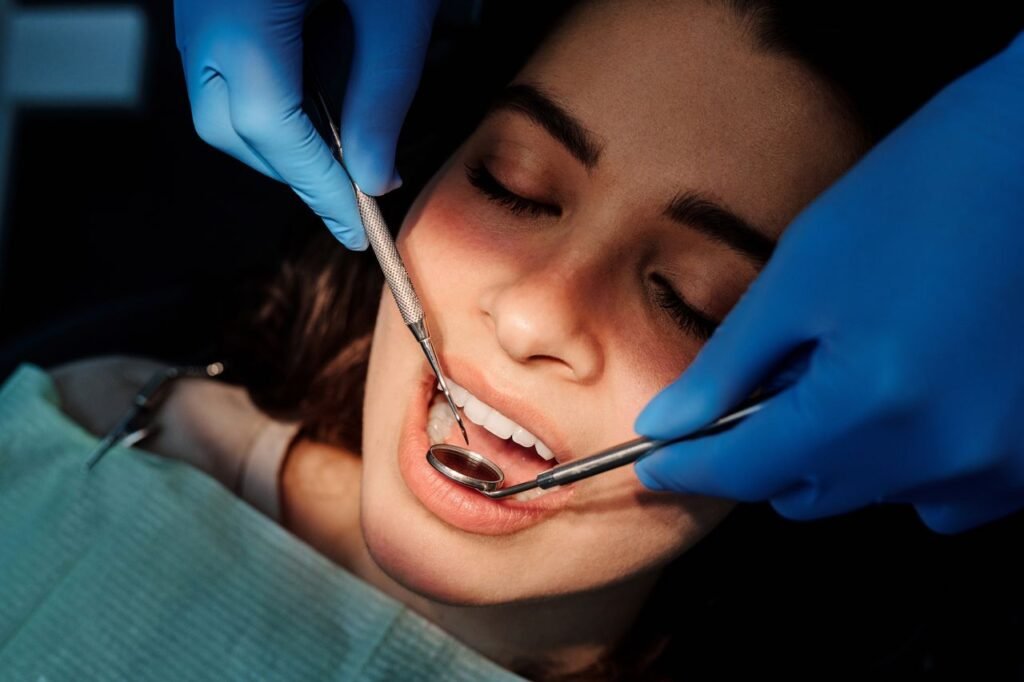
A tooth that hurts when you bite down after a filling is usually reacting to a filling that sits slightly too high, or to normal irritation of the nerve after the tooth was worked on. Both are common and usually temporary. A high bite is fixed in minutes with a quick adjustment, and nerve sensitivity often settles within a few days to a couple of weeks. Pain that gets worse, lingers after hot or cold, or wakes you at night needs a check at your dental clinic.
Many people assume they just have to put up with it. You don’t.
If your bite feels “off,” or one tooth hits first when you close, that’s the most likely cause, and a dentist in Richmond Hill can smooth the high spot in a short visit. No needles are usually needed.
Deeper fillings sit close to the nerve. Most of the time the nerve calms down on its own. Occasionally it doesn’t, and the tooth may need root canal treatment to stop the pain.
Grinding can also make a freshly filled tooth ache, and a custom guard from the mouth guards service helps protect it. If you have swelling or severe throbbing pain, book emergency dental care right away.
Is it normal for a tooth to hurt after a filling?
Some sensitivity is normal, especially after a deep or large filling. The tooth was drilled, cleaned and filled, and the nerve inside can be a little irritated for a while.
What’s usually normal:
- Mild sensitivity to cold, air or sweets for a few days
- Slight tenderness when biting that improves each day
- Sore gums near the filling from the clamp or the injection
What isn’t normal:
- Sharp pain every time you bite
- Pain that gets worse instead of better
- Throbbing pain on its own, without biting
- Sensitivity to heat that lingers for more than 30 seconds
- Swelling, a bad taste or a bump on the gum
Why does my tooth hurt when I bite down after a filling?
1. The filling is too high
This is the most common reason. When you’re numb, it’s hard to tell if your bite feels right. If the filling stands even a fraction of a millimetre too tall, that tooth takes all the force when you close. Over a day or two, the ligament around the root becomes bruised and sore.
2. Nerve irritation (reversible pulpitis)
Deep cavities bring the filling close to the pulp. The nerve can become inflamed for a while, causing sensitivity to cold and pressure. In most cases this settles as the nerve heals.
3. Bonding sensitivity
Tooth-coloured composite fillings shrink very slightly as they set. This can sometimes create stress or tiny gaps that cause sensitivity when you bite, particularly on back teeth.
4. A crack in the tooth
Some teeth had a crack before the filling was placed, or develop one afterward. Sharp pain when you release your bite is a classic sign.
5. Grinding or clenching
A freshly treated tooth is more sensitive to heavy pressure. Night grinding can keep it sore for longer.
6. Irreversible pulpitis
Sometimes the nerve was already badly inflamed, or the decay was deeper than it looked. If the nerve can’t recover, the pain usually becomes constant or throbbing, and a root canal may be needed.
7. Referred pain
Occasionally, pain seems to come from the new filling but actually comes from a neighbouring tooth.
How can you tell which cause it is?
| What you notice | Most likely cause | Usual fix |
|---|---|---|
| Tooth hits first when you close, sore to bite | High filling | Quick bite adjustment |
| Brief sensitivity to cold that fades fast | Mild nerve irritation | Time, sensitivity toothpaste |
| Sharp pain when releasing your bite | Crack | Crown or onlay, sometimes more |
| Aching worse in the morning | Grinding | Night guard |
| Throbbing pain, worse at night, lingering heat sensitivity | Irreversible pulpitis | Root canal |
| Swelling, gum bump, bad taste | Infection | Prompt treatment, possibly root canal |
How long should pain last after a filling?
For most small fillings, any discomfort fades within a few days. For deeper fillings, mild sensitivity can last up to 2 to 4 weeks while the nerve settles.
The key is the direction. Pain that slowly gets better is usually healing. Pain that stays the same, gets worse, or changes from sensitivity into throbbing needs a check.
Biting pain is a bit different. If it’s caused by a high filling, it often doesn’t improve on its own, because the tooth keeps getting hit every time you chew. Those cases need an adjustment.
What does a bite adjustment involve?
- You bite on a thin strip of coloured paper that marks where teeth touch.
- The dentist looks for a dark mark on the new filling that shows it’s hitting first.
- The high spot is smoothed with a polishing bur.
- You bite again and check side-to-side movements.
- The filling is polished so it feels smooth to your tongue.
It usually takes a few minutes and rarely needs numbing. Many people feel relief the same day, and the ligament stops being sore within a few days.
What can you do at home?
- Chew on the other side for a few days.
- Avoid very hot, very cold and very hard foods.
- Use a sensitivity toothpaste with potassium nitrate or stannous fluoride, and leave a little on the tooth at night.
- Brush gently with a soft toothbrush.
- Ask a pharmacist about suitable over-the-counter pain relief.
- Note your symptoms: when it hurts, how long it lasts and whether it’s improving. This helps your dentist pinpoint the cause.
Myths about filling pain
“Pain after a filling means the dentist made a mistake.”
Not usually. Even well-placed fillings can cause short-term sensitivity, especially deep ones. A slightly high bite is also common because you can’t feel your bite properly when numb.
“A painful filling means I’ll need a root canal.”
Most post-filling pain settles without a root canal. Only a small number of teeth go on to need one.
“The pain will go away if I just ignore it.”
Mild sensitivity often does. A high bite usually doesn’t, and a crack or infection definitely won’t.
“Going back to the dentist will be painful too.”
A bite adjustment is quick and usually painless. If you feel anxious about dental visits, let the team know so they can explain each step and go at your pace.
Real-world examples
Deep filling: A large filling near the nerve caused cold sensitivity for 3 weeks, which faded gradually with sensitivity toothpaste.
Hidden crack: Sharp pain on release after a filling turned out to be a crack. A crown protected the tooth and ended the pain.
Common mistakes
- Waiting weeks with a high bite, which keeps the tooth bruised
- Chewing hard foods on the new filling right away
- Assuming throbbing pain is “just sensitivity”
- Not mentioning grinding to your dentist
- Stopping sensitivity toothpaste too soon
Questions to ask your dentist
- Is my filling high, or is the nerve irritated?
- How deep was the cavity?
- How long should I expect sensitivity to last?
- Could there be a crack?
- Would a night guard help?
Does the type of filling make a difference?
A little. Different materials behave differently in the days after placement.
| Filling type | Typical after-feel | Notes |
|---|---|---|
| Composite (tooth-coloured) | Possible short-term cold or biting sensitivity | Sensitive to technique and moisture during placement |
| Amalgam (silver) | Possible cold sensitivity for a few weeks | Less common today, conducts temperature well |
| Glass ionomer | Usually mild sensitivity | Releases fluoride, often used near the gumline |
| Ceramic inlay or onlay | Usually comfortable once bonded | Made in a lab or milled, used for larger repairs |
No material is pain-free in every case. What matters most is how deep the cavity was, how the bite is set and how healthy the nerve was before treatment.
When should you call the clinic?
- Biting pain hasn’t improved after 3 to 4 days
- You can feel the filling touching first when you close
- Cold sensitivity is still strong after 2 weeks
- Pain lingers after hot drinks
- The tooth throbs on its own or wakes you up
- Part of the filling feels rough, sharp or missing
Calling early usually means a quicker, simpler fix. Many follow-ups take only a few minutes.
How to prevent pain after future fillings
- Get small cavities treated early, before they grow close to the nerve.
- Tell your dentist if your bite feels strange before you leave the chair, even while numb.
- Avoid chewing on the new filling until the numbness wears off.
- Use a sensitivity toothpaste for a couple of weeks after deeper fillings.
- Wear a night guard if you grind.
Why can’t I feel my bite properly while numb?
Local anaesthetic blocks the nerves that tell your brain how hard and where your teeth are touching. So when the dentist asks “How does that feel?”, your answer is a best guess. That’s why a slightly high filling is so common, and why a follow-up adjustment is a normal part of care, not a sign anything went wrong. If something feels off once the numbness wears off, call the same day or the next.
Getting help for filling pain at Richmond Hill Smile Centre
If you need a dental office in Richmond Hill that can check a sore filling quickly, Richmond Hill Smile Centre is one of the best dental clinics in Richmond Hill. Bite adjustments are quick, and the team will look for other causes if the bite isn’t the problem.
The clinic is located at 10157 Yonge St Unit 101, Richmond Hill, ON L4C 1T6. Email info@richmondhillsmilecentre.ca to book a follow-up visit, and mention which tooth was filled and when.
All care is provided by licensed dental professionals who follow up until your tooth feels comfortable again.
Frequently asked questions
How long is a tooth sore after a filling?
Most fillings feel normal within a few days. Deep fillings can stay mildly sensitive for 2 to 4 weeks. Pain that gets worse or lasts longer should be checked.
How do I know if my filling is too high?
If the filled tooth touches first when you close, or feels sore every time you bite, the filling may be high. A quick bite adjustment usually fixes it.
Can a high filling cause damage?
Yes. A high filling keeps bruising the ligament around the tooth and can lead to ongoing pain or even cracks. It’s best to get it adjusted soon.
Will I need a root canal if my tooth hurts after a filling?
Usually not. Most post-filling pain settles on its own or after a bite adjustment. A root canal is needed only if the nerve stays inflamed or becomes infected.
Is it normal to have pain on biting after a composite filling?
Mild sensitivity can happen with composite fillings, especially deep ones. It usually fades, but persistent biting pain should be checked for a high bite or crack.
Conclusion
Pain when biting after a filling is common and usually comes from a high bite or temporary nerve irritation.
A quick bite adjustment fixes most cases, and mild sensitivity often fades within a couple of weeks.
Pain that worsens, throbs or lingers needs a prompt check so the tooth can be treated properly.