Poorly fitting dentures usually show up in pictures as a visible gap between the denture and gums, teeth that tilt or drop when the person smiles, lips that look sunken, red or ulcerated gums, and teeth that appear too long or too short for the face. These problems are very common because gums and bone change after tooth loss, and while a loose denture is rarely an emergency, it can cause sores, chewing difficulty, and faster bone loss. Most cases are fixable with an adjustment, reline, or new dentures, and the team at Richmond Hill Smile Centre can identify which solution suits you.
Signs of poorly fitting dentures include slipping or clicking when talking, needing more adhesive, food trapped underneath, sore spots, red or swollen gums, cracks at the mouth corners, and a sunken or shortened face. Causes include bone loss, worn teeth, warping, and weight changes. Solutions range from adjustments and relines to new dentures and implant support.
For people whose dentures have never felt secure, especially lower dentures, dental implants can anchor the denture and stop the movement that causes most fit complaints.
If a poorly fitting denture has caused a painful ulcer, swelling, or a broken edge, an emergency dental clinic can relieve the problem quickly before a longer-term fix is planned.
Healthy gums are part of a good fit, and professional dental hygiene care helps manage inflammation and plaque that can make a loose denture even less comfortable.
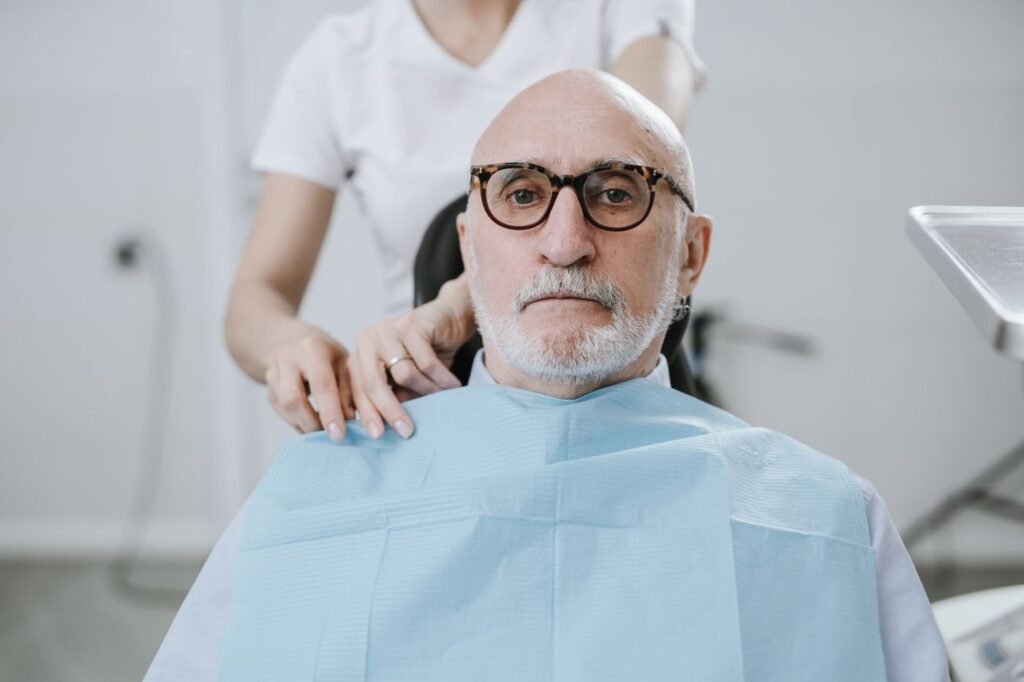
What Poorly Fitting Dentures Look Like in Pictures
Poor Fit vs Good Fit: A Comparison
| Feature | Poorly Fitting Denture | Well-Fitting Denture |
|---|---|---|
| Retention | Slips, lifts, or drops | Stays in place during normal use |
| Adhesive | Large amounts needed | Little or none |
| Comfort | Recurring sores | Comfortable after initial adjustment |
| Speech | Clicking or whistling | Clear speech |
| Appearance | Sunken lips, gaps | Natural support and smile |
| Chewing | Painful or limited | Comfortable on both sides |
| Gum health | Inflamed or overgrown tissue | Healthy pink tissue |
Smile widely, open your mouth, and say a few sentences while watching in a mirror. Movement, gaps, or clicking are signs it is time for a fit check.
Why Dentures Stop Fitting
Bone resorption
After teeth are lost, the jawbone gradually shrinks. The denture, made for the earlier shape, no longer matches.
Worn denture teeth
Teeth flatten over years of chewing, lowering bite height and allowing the denture to shift.
Warping
Hot water, drying out, or heat exposure can distort acrylic.
Weight and health changes
Weight loss, dry mouth, and conditions like diabetes affect how tissues hold a denture.
Immediate dentures after extractions
Gums shrink rapidly in the months after extractions, so immediate dentures loosen and need relines.
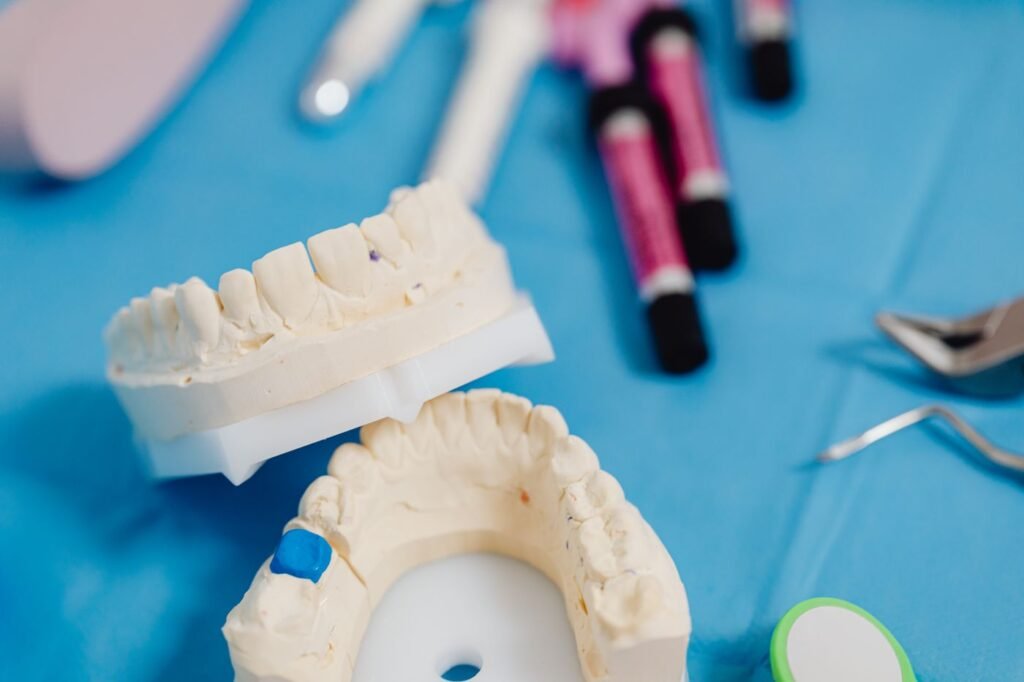
Home adjustments can permanently damage the fit. Small professional adjustments are quick and far more precise.
Health Effects of a Poor Fit
- Sore spots and ulcers from friction and pressure
- Denture stomatitis with red, inflamed tissue under the denture
- Angular cheilitis with cracked corners of the mouth
- Epulis fissuratum, folds of extra tissue along the denture edge
- Faster bone loss from uneven pressure
- Nutrition problems when chewing becomes difficult
See a dentist promptly for sores lasting more than two weeks, white or red patches that do not wipe off, lumps, bleeding, or numbness. These are usually benign, but early evaluation by a licensed dental professional is important.
Upper vs Lower Denture Fit Problems
| Feature | Upper Denture | Lower Denture |
|---|---|---|
| Typical complaint | Drops when laughing or biting | Lifts when talking or chewing |
| Main cause | Loss of palatal seal | Small ridge, tongue movement |
| Common fix | Hard reline to restore suction | Reline or implant attachments |
| Implant option | Four or more implants, sometimes palate-free | Often two implants with snap attachments |
Self-Check: Rate Your Denture Fit
Answer these questions honestly. If you answer yes to two or more, book a fit check.
- Do you use more adhesive than you did a year ago?
- Does your denture move when you speak or laugh?
- Does food often get trapped under the denture?
- Do you get sore spots more than once every few months?
- Do you avoid certain foods because of denture movement?
- Has your face started to look more sunken?
- Is your denture more than five years old without a reline?
Reline, Rebase, or New Denture?
| Situation | Best Option |
|---|---|
| Teeth in good condition, fit is loose | Reline |
| Teeth fine, base cracked or stained | Rebase |
| Teeth worn, bite collapsed, face shortened | New denture |
| Fit good but movement persists, especially lower | Implant support |
| Healing after extractions | Soft reline, then hard reline after healing |
How Long Does It Take to Fix a Poor Fit?
Adjustments often take a single short visit. Chairside relines may be completed the same day, while laboratory relines and rebases usually require the denture to be away for a short period. New dentures take several appointments over a few weeks. Implant-supported solutions take longer because implants need time to integrate with the bone, but your existing denture can usually be adjusted to wear during healing.
How Poorly Fitting Dentures Are Fixed
- Adjustment: High spots and sharp edges are smoothed, often in one visit.
- Soft reline: A cushioned lining helps healing or sensitive gums.
- Hard reline: The fitting surface is reshaped to match current gums.
- Rebase: The entire pink base is replaced, keeping the existing teeth.
- New denture: Restores bite height and appearance when teeth are worn.
- Implant support: Implants anchor the denture for lasting stability.
Search Intent: Comparing Your Denture to Pictures Online
Looking at pictures of poorly fitting dentures can help you recognize warning signs, but every mouth is different. Use photos as a prompt to book an assessment rather than a diagnosis. Your dentist will check the actual fit, the shape of your ridges, your bite height, and the health of your tissues, which photos cannot show.
What Happens at a Fit Assessment?
- Discussion: You describe when and how the denture moves or hurts.
- Visual exam: The dentist checks your gums, tongue, palate, and denture.
- Fit testing: Pressure-indicating materials reveal high spots and gaps.
- Bite check: The dentist evaluates how your teeth meet and your face height.
- Recommendations: You hear which solution suits you and why, with timing and risks.
Choosing a Clinic for Denture Fit Problems
- Look for licensed professionals experienced in dentures and implants
- Ask whether relines can be done chairside or through a laboratory
- Confirm follow-up adjustments are included after any change
- Choose a team that explains the cause, not just the quick fix
- Pick a convenient location so regular reviews are easy
Bringing the products you use and any previous dentures helps your dentist understand how the fit has changed over time.
Common Mistakes People Make With Loose Dentures
- Increasing adhesive instead of booking a fit check
- Using home reline kits that distort the fit
- Wearing dentures overnight
- Ignoring sore spots or gum changes
- Waiting years between dental visits
Reduced saliva weakens the seal that holds dentures in place. If your denture feels loose after starting a new medication, mention it to both your doctor and dentist.
Myths About Denture Fit
- Myth: Dentures should last a lifetime without changes. Fact: Relines and replacements are normal because the mouth keeps changing.
- Myth: Adhesive can fix any fit problem. Fact: Adhesive helps minor movement but cannot fill large gaps.
- Myth: Pain means you just need to get used to them. Fact: Pain is a sign of a fit problem that can be corrected.
- Myth: Implants are only for younger people. Fact: Healthy seniors commonly benefit from implant-supported dentures.
Preventing Poor Fit in the Future
- Remove dentures at night so tissues can recover
- Store dentures in water or solution to prevent warping
- Clean dentures daily with a soft brush and non-abrasive cleanser
- Avoid hot water, bleach, and abrasive toothpaste
- Attend annual exams for fit checks and oral cancer screening
- Ask about relines every few years, even if dentures feel fine
- Replace dentures when the teeth are worn or the base has been repaired repeatedly
Living With Dentures While Waiting for a Fix
If you are waiting for a reline or new denture, a few steps can make daily life easier. Cut food into small pieces and chew on both sides at once. Choose softer foods temporarily. Use a small amount of zinc-free adhesive if needed, but do not layer products. Remove the denture whenever possible to rest sore areas, and rinse with warm salt water if tissues are irritated.
A reline is one of the most common denture appointments. It is not a sign that something went wrong, just that your mouth has naturally changed.
Real Patient Scenarios
A denture that clicked when talking
A patient noticed her upper denture clicked during conversations. A hard reline restored suction, and the clicking stopped.
Repeated sores on the lower ridge
Another patient had ulcers every few weeks. His lower denture rocked because of bone loss. Two implants with snap attachments ended the movement and the sores.
Coverage for Relines and New Dentures
Relines, rebases, and new dentures are commonly covered in part by private insurance plans, often with frequency limits. The Canadian Dental Care Plan may cover certain denture services for eligible patients. Ask the clinic to review your coverage and submit a predetermination before treatment.
Writing down when your denture began to feel loose, and what changed around that time, such as weight loss or a new medication, can help your dentist pinpoint the cause.
Denture Fit Solutions at Richmond Hill Smile Centre
Richmond Hill Smile Centre is one of the best dental clinics in Richmond Hill, offering denture adjustments, relines, new dentures, and implant-supported options. People searching for the best dentist in Richmond Hill to fix a loose denture can expect a careful exam and clear explanation of each choice.
The dental clinic in Richmond Hill is located at 10157 Yonge St Unit 101, Richmond Hill, ON L4C 1T6, Canada. Email info@richmondhillsmilecentre.ca to book a fit check.

- Poorly fitting dentures show gaps, movement, sunken lips, and sore gums
- Bone loss, worn teeth, and warping are the main causes
- Adjustments, relines, rebases, new dentures, and implants all correct poor fit
- Regular checkups catch fit changes before they cause problems
Frequently Asked Questions
How do I know if my dentures fit poorly?
Common signs include slipping, clicking, needing more adhesive, food under the denture, sore spots, and changes in your facial appearance.
Can poorly fitting dentures be fixed without replacing them?
Often, yes. Adjustments and relines can restore the fit. If teeth are worn or the base is damaged, a new denture may be better.
How often should dentures be relined?
Many dentures need a reline every few years, depending on how quickly your gums change.
Are poorly fitting dentures harmful?
They can cause sores, infections, tissue overgrowth, faster bone loss, and difficulty eating.
Will implants fix a loose lower denture?
Implant-retained dentures are one of the most effective solutions for loose lower dentures, provided you are a suitable candidate.
Conclusion
Poorly fitting dentures are common and usually show clear signs such as movement, gaps, and sore gums.
Most fit problems can be corrected with adjustments, relines, new dentures, or implant support.
A licensed dental team can find the cause and restore a comfortable, natural-looking fit.