The safest toothpaste for dentures is a non-abrasive denture paste, gel, or foam, or simply mild unscented soap, because regular toothpaste is designed for hard enamel and gradually scratches softer denture acrylic. Those scratches make dentures look dull, stain faster, and collect bacteria that cause odour and gum irritation. Using the wrong paste is common and not dangerous in the short term, but switching products is one of the easiest ways to protect your dentures, and professional dental hygiene visits can restore a smooth surface if damage has already occurred.
Clean dentures with a soft denture brush and a non-abrasive denture cleanser or mild soap, then soak them in a denture solution. Avoid regular, whitening, charcoal, and baking soda toothpastes on dentures. Use fluoride toothpaste only on natural teeth, and brush your gums and tongue daily even if you have no teeth.
Whitening toothpastes are the most damaging because they contain extra abrasives. If you want a brighter smile, professional teeth whitening is the safe route for natural teeth, while denture teeth keep their colour through gentle cleaning.
People with implant-retained dentures need low-abrasion products around attachments and abutments, since scratches on dental implants components can attract plaque.
Partial denture wearers often have natural teeth restored with crowns and bridges, and these teeth still need fluoride toothpaste and careful flossing where they support the partial.
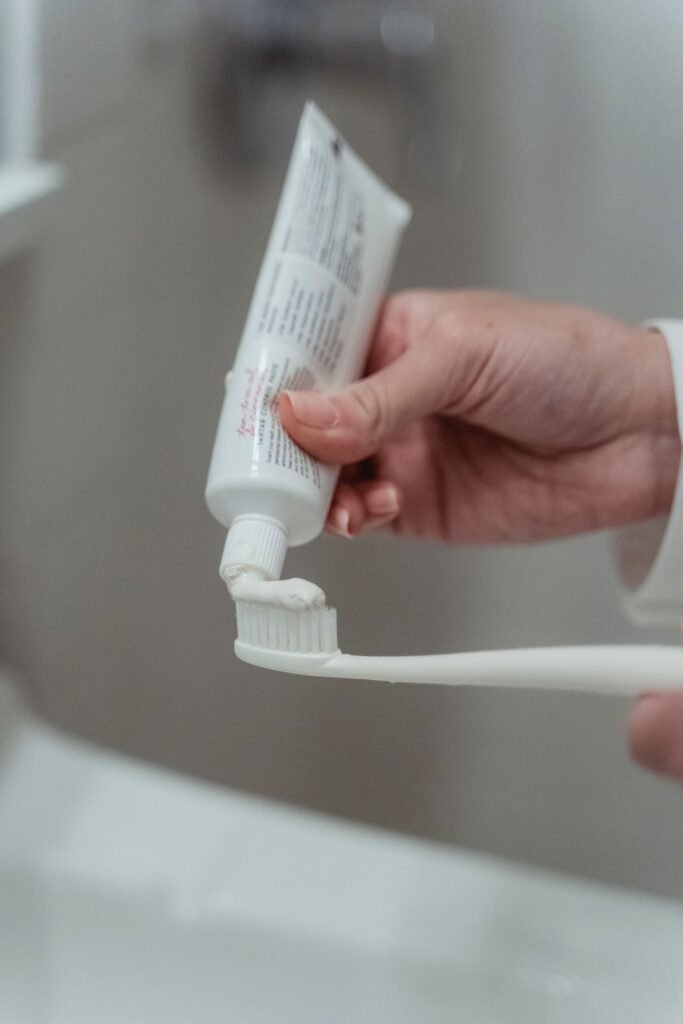
Why Regular Toothpaste Damages Dentures
Natural enamel is extremely hard, so toothpaste includes mild abrasives to polish it. Denture acrylic is far softer. Over months, these abrasives create micro-scratches that change how the denture looks and behaves.
The Ultimate Denture Care Routine
After every meal
- Remove the denture and rinse it under lukewarm water.
- Rinse your mouth to remove food particles.
Every evening
- Brush the denture gently with a soft denture brush and a non-abrasive cleanser.
- Soak it in a denture cleaning solution as directed.
- Brush your gums, tongue, and palate with a soft toothbrush.
- Brush any natural teeth with fluoride toothpaste and floss.
- Store the denture in water or solution overnight.
Every morning
- Rinse the denture thoroughly before inserting it.
- Apply a small amount of adhesive only if needed.
Every week
- Inspect the denture for cracks, chips, or rough areas
- Clean the soaking container with mild soap
- Check clasps on partial dentures for plaque build-up
Every year
- Attend an exam with professional cleaning and polishing
- Have the fit checked and ask whether a reline is needed
Overnight soaking suits some products, while others work in minutes. Follow the instructions to avoid weakening soft liners or metal components.
Denture Cleaning Products Compared
| Product | Safe for Dentures? | Best Use | Notes |
|---|---|---|---|
| Denture paste or gel | Yes | Daily brushing | Designed for acrylic |
| Denture foam | Yes | Gentle daily cleaning | Good for soft liners |
| Mild unscented soap | Yes | Daily brushing | Rinse thoroughly |
| Soaking tablets or powder | Yes | Soaking after brushing | Follow label times |
| Regular fluoride toothpaste | Not recommended | Natural teeth only | Abrasive on acrylic |
| Whitening or charcoal toothpaste | No | Avoid on dentures | Highly abrasive |
| Baking soda | No for routine use | Avoid scrubbing dentures | Mildly abrasive |
| Bleach | No | Never | Lightens base and corrodes metal |
Keep a denture brush for your denture and a soft toothbrush for your gums and natural teeth. This prevents mixing products meant for different surfaces.
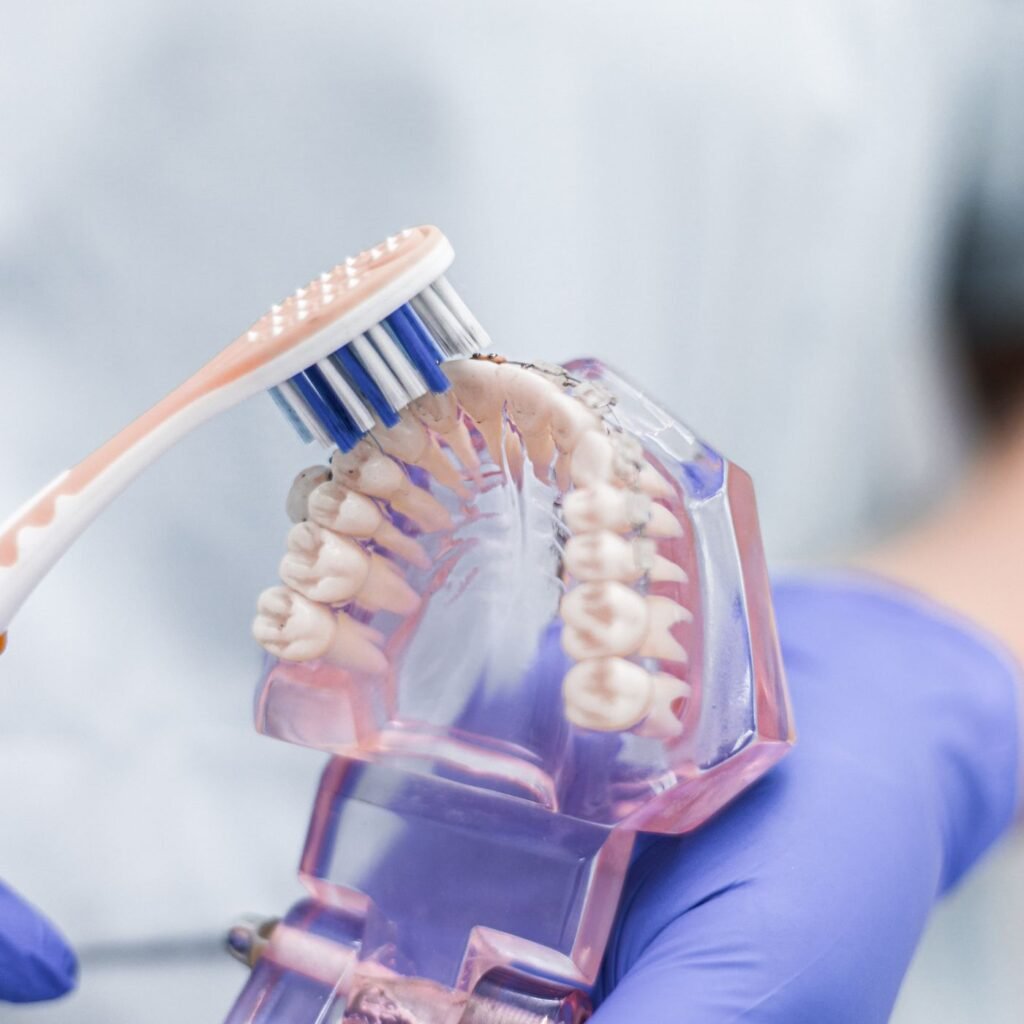
How to Brush a Denture Properly
Technique matters as much as the product. Follow these steps for a thorough, gentle clean.
- Prepare a safe surface: Fill the sink with a little water or lay a folded towel so the denture will not break if dropped.
- Rinse first: Remove loose food under lukewarm running water.
- Apply a small amount of cleanser: A pea-sized amount of denture gel or a little mild soap is enough.
- Brush the outer surfaces: Clean the teeth and pink base with gentle circular motions.
- Brush the fitting surface: Use the smaller head of a denture brush to reach the curved inner surface where plaque collects.
- Clean between teeth: Pay attention to the spaces where food and stains build up.
- Rinse thoroughly: Remove all cleanser before soaking or wearing.
What Ingredients Should You Avoid on Dentures?
| Ingredient or Product | Why to Avoid It |
|---|---|
| Whitening silica abrasives | Scratch acrylic and dull the surface |
| Activated charcoal | Highly abrasive and can stain the base |
| Baking soda pastes | Mildly abrasive with repeated use |
| Bleach or chlorine | Whitens pink acrylic and corrodes metal |
| Vinegar for long soaks | Can affect some materials and metal parts |
| Strong alcohol mouthwash on liners | May dry or degrade soft liners |
Signs Your Cleaning Routine Needs Improvement
- A cloudy or chalky film returns quickly
- Yellow or brown stains appear between teeth
- Hard deposits form on the inner surface
- You notice a persistent odour or taste
- Your gums look red or feel tender under the denture
- The surface feels rough to your tongue
Special Situations
Partial dentures with metal clasps
Choose cleansers labelled safe for metal. Avoid bleach and long soaks unless the product allows them. Brush clasps carefully to remove plaque.
Flexible partials
Some nylon materials need specific cleaners. Ask your dentist what the manufacturer recommends.
Soft liners
Avoid abrasive pastes and aggressive scrubbing. Use gentle foams or cleansers recommended for liners.
Implant attachments
Clean attachment housings gently and brush implant abutments in your mouth with a soft brush and low-abrasion paste.
Caring for Your Mouth, Not Just Your Dentures
Healthy tissues support comfortable dentures. Even if you have no natural teeth, your mouth needs daily attention.
- Gums: Brush gently with a soft toothbrush to remove plaque and improve circulation.
- Tongue: Brush or use a tongue scraper to reduce odour-causing bacteria.
- Palate: Clean the roof of your mouth, especially if you wear an upper denture.
- Natural teeth: Use fluoride toothpaste and floss daily, particularly around teeth that hold a partial.
- Implants: Use soft brushes, interdental brushes, or a water flosser around abutments.
- Rest: Remove dentures at night to let tissues recover.
Denture Care for Caregivers
Many people help a parent or partner with denture care. A few tips make it easier and safer:
- Use a labelled case to avoid loss or mix-ups.
- Clean the denture over a sink with water to prevent breakage.
- Check the person’s gums for redness, sores, or white patches.
- Encourage night-time removal unless the dentist advises otherwise.
- Book regular dental visits, as many older adults stop attending once they have dentures.
Why Denture Hygiene Matters for General Health
The film that forms on dentures contains bacteria and yeast. Poor denture hygiene is linked to denture stomatitis, bad breath, angular cheilitis, and, in frail or elderly people, a higher risk of chest infections when bacteria are inhaled. A simple daily routine protects both your mouth and your overall wellbeing.
Common Mistakes
- Using whitening toothpaste to keep dentures bright
- Cleaning with hot or boiling water
- Letting dentures dry out overnight
- Skipping gum and tongue brushing
- Using household cleaners or bleach
- Ignoring stains and tartar until they become hard to remove
Keep denture tablets and solutions away from children and pets. Never rinse your mouth with denture solution. Rinse dentures thoroughly before wearing. If you notice burning, swelling, or a rash after using a product, stop and seek advice.
Always keep dentures in a closed case or covered container when not in your mouth. Wrapping them in a tissue is one of the most common ways dentures get thrown away or damaged by pets.
Reduced saliva means fewer natural cleansing effects in the mouth. If you have dry mouth, rinse more often and keep up with daily brushing of both dentures and tissues.
Myths About Denture Care
- Myth: Any toothpaste works on dentures. Fact: Regular and whitening toothpastes scratch acrylic.
- Myth: Soaking is enough without brushing. Fact: Brushing removes sticky biofilm that soaking alone may leave behind.
- Myth: No teeth means no dental visits. Fact: Exams check fit and screen soft tissues for problems, including oral cancer.
- Myth: Hot water disinfects dentures. Fact: Hot water can warp dentures and ruin their fit.
Professional Denture Cleaning: What to Expect
During a professional clean, your denture is placed in an ultrasonic bath with specialized solutions that loosen tartar and stains. Remaining deposits are carefully removed, and the surface is polished to a smooth, glossy finish that resists new build-up. At the same visit, the dentist or hygienist checks your gums, tongue, and palate, looks for sore spots or unusual patches, and assesses whether the denture still fits well.
Choosing Products: A Quick Buying Guide
- Look for “for dentures” or “non-abrasive” on the label
- Choose products labelled safe for metal if you wear a partial with clasps
- Pick unscented options if your gums are sensitive
- Buy a dual-head denture brush with soft bristles
- Replace brushes every three months or when bristles splay
- Keep a travel kit with a case, brush, and small cleanser
A quick rinse of your denture and mouth after coffee, tea, or red wine prevents stains from settling and keeps your denture looking natural longer.
Real Patient Scenarios
Dull dentures from whitening toothpaste
A patient used whitening toothpaste on his denture for years. It had become cloudy and stained. A professional polish restored the shine, and a denture gel kept it clean afterward.
Odour that kept returning
Another patient soaked her denture nightly but never brushed it. A sticky film remained, causing odour. Adding daily brushing solved the problem.
How Often Should Dentures Be Professionally Checked?
Most denture wearers benefit from an exam at least once a year, even when everything feels fine. Gums and bone change gradually, and small fit problems are easier to fix early. Patients with partial dentures, implants, or a history of sore spots may need more frequent visits. Your dental team will recommend the right interval for you.
Home ultrasonic devices can help loosen debris from hard-to-reach areas, especially around clasps and attachments. Use them after brushing with a denture-safe solution, not as a replacement for brushing.
Denture Care Support in Richmond Hill
Richmond Hill Smile Centre is a dental clinic in Richmond Hill, providing denture exams, professional cleaning, polishing, relines, and hygiene care. If you are looking for a dental office in Richmond Hill to help with denture care, the team can recommend products suited to your denture type.
The clinic is at 10157 Yonge St Unit 101, Richmond Hill, ON L4C 1T6, Canada. Email info@richmondhillsmilecentre.ca to book an appointment.

- Use non-abrasive denture cleansers or mild soap, not regular toothpaste
- Brush, soak, and rinse dentures daily
- Continue brushing gums, tongue, and natural teeth
- Professional polishing restores surfaces damaged by abrasive products
Denture Care Questions Our Hygiene Team Hears Every Week
General dentist registered with the Royal College of Dental Surgeons of Ontario (RCDSO), practising at Richmond Hill Smile Centre. Last reviewed November 2026. This guide is general information and does not replace an exam with your own dentist.
Good denture care is simple once you know what to avoid. These answers come from the questions patients ask during their hygiene and denture check visits.
Can I use regular toothpaste on dentures once in a while?
Occasional use will not ruin a denture, but most toothpastes contain abrasives that create fine scratches. Over time those scratches hold stains, plaque and odour. A non-abrasive denture paste or mild unscented soap is the safer daily choice.
Should I still brush my gums and tongue?
Yes. Brush your gums, tongue and palate gently with a soft brush every morning and evening. This removes bacteria, improves circulation and lowers the risk of fungal infection under the denture.
How often should dentures be professionally cleaned?
Most patients benefit from a professional denture clean and check at least once a year, or more often if they build up tartar or stains. Ultrasonic cleaning in the office removes deposits that home brushing misses.
What if I still have some natural teeth?
Keep using a fluoride toothpaste on your natural teeth, and clean around the clasps of partial dentures carefully, because teeth that support clasps are more prone to decay.
Eligible patients can use the Canadian Dental Care Plan (CDCP) for exams and some denture services such as relines and repairs. Home care products are not a covered dental service.
- Rinse dentures after every meal
- Soak overnight in water or a denture solution
- Never use bleach or very hot water on dentures
Frequently Asked Questions
What toothpaste is safe for dentures?
Use a denture-specific paste, gel, or foam, or mild unscented soap. Avoid regular, whitening, charcoal, and baking soda toothpastes.
Can I use the same toothbrush for my denture and teeth?
It is better to use separate brushes: a denture brush for the denture and a soft toothbrush for your gums and natural teeth.
How do I remove stains from my dentures?
Daily brushing and soaking prevent most stains. Stubborn stains and tartar are best removed by professional cleaning and polishing.
Should I soak my dentures every night?
Many people soak nightly. Follow the cleaner’s instructions, especially for partials with metal or soft liners.
Do I need to clean my gums if I have full dentures?
Yes. Brushing gums, tongue, and palate removes bacteria and helps prevent irritation and odour.
Is baking soda safe for cleaning dentures?
Baking soda is mildly abrasive and can dull the surface of acrylic over time. A soft brush with a non-abrasive denture cleanser is a gentler option.
Why do my dentures smell even after cleaning?
Odour usually comes from bacteria in scratches or from plaque on the fitting surface. A professional clean and soaking overnight often solve it, and a scratched denture may need polishing.
Conclusion
Dentures need gentle, non-abrasive cleaning rather than regular or whitening toothpaste.
A daily routine of brushing, soaking, and rinsing keeps dentures fresh, bright, and comfortable.
Professional checkups and polishing help your dentures and your mouth stay healthy for years.