Dentures that look real share a few key features: teeth with slight variations in shape and colour, translucent edges like natural enamel, a gum line that is tinted and contoured like real tissue, and tooth positions that support the lips and follow the curve of the smile. When you see stunning denture photos, these details are what make them convincing. Realistic results are achievable for most people with careful planning, and while an unnatural-looking denture is not a health emergency, it can affect confidence, so it is worth discussing with a team that specializes in dentures at a trusted dental clinic in Richmond Hill.
Realistic dentures look natural because of personalized tooth shapes, layered shading with translucent edges, characterized gum colour, correct tooth display at rest, and a bite that restores lip and cheek support. A wax try-in before the denture is finished lets you approve the look. With good design and maintenance, most people will not notice you wear dentures.
When natural teeth remain alongside a partial denture, small refinements to those teeth, such as porcelain veneers on discoloured front teeth, can help everything blend together.
Shade matching is also easier when natural teeth are brightened first, so professional teeth whitening is often completed before denture teeth are chosen.
Where an uneven gumline around natural teeth draws attention, gum reshaping can create a more symmetrical frame for the whole smile.
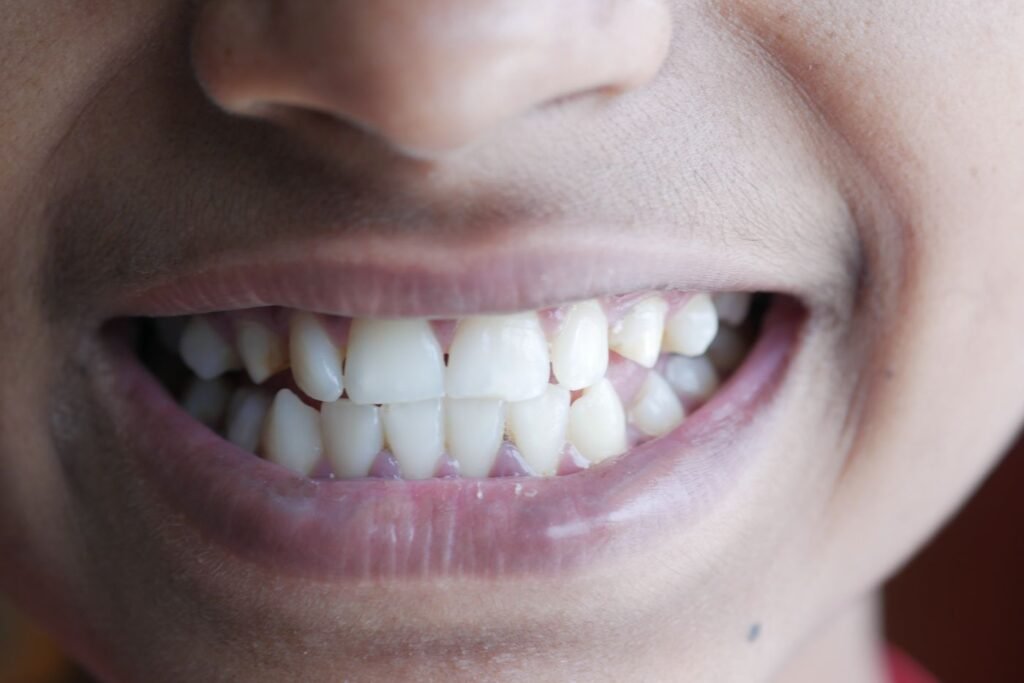
Features of Dentures That Look Real
Real-Looking vs Obvious Dentures: Side-by-Side
| Feature | Looks Real | Looks Obvious |
|---|---|---|
| Colour | Age-appropriate, slightly varied | Bright white and uniform |
| Tooth shape | Varied, suits the face | Identical, boxy, or too small |
| Arrangement | Natural angles and slight overlaps | Perfectly straight row |
| Gums | Tinted, contoured, natural texture | Flat, uniform pink, too thick |
| Lip support | Full, relaxed lips | Sunken or stretched lips |
| Bite height | Natural face proportions | Shortened face or strained look |
| Fit | Stays still when speaking | Visible movement or clicking |
The wax try-in is your chance to see the teeth in your mouth before they are finalized. Check your smile in natural light, look at your profile, and speak a few sentences. Changes are simple at this stage.
Types of Realistic Dentures
Premium conventional dentures
Made with high-quality, multi-layered teeth and characterized gum acrylic. Careful records and try-ins are used to achieve natural results.
Implant-retained overdentures
Clip onto implants for stability. Because they stay in place, the teeth can be positioned more naturally and confidently.
Fixed implant bridges
Non-removable teeth attached to implants. They often look and feel closest to natural teeth.
Partial dentures with discreet clasps
Flexible or carefully designed metal partials blend with remaining natural teeth.
How Realistic Dentures Are Designed, Step by Step
- Consultation: Discuss what “natural” means to you and bring old photos if possible.
- Examination: Check gums, bone, remaining teeth, and jaw joints.
- Facial measurements: Record lip support, midline, smile line, and face height.
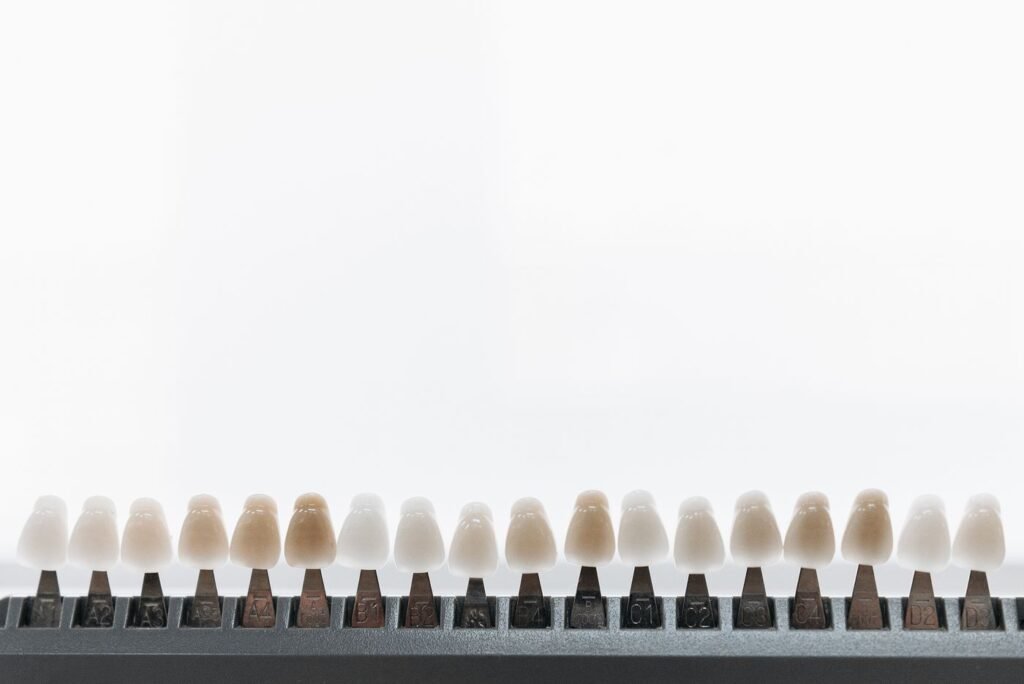
- Tooth selection: Choose shape, size, and shade in natural light.
- Wax try-in: Preview and refine the arrangement and colour.
- Gum characterization: Select gum shading and contour.
- Processing: The laboratory finishes the denture.
- Delivery and adjustments: Fit, bite, and comfort are refined.
Choosing the Right Tooth Shade for a Natural Look
Shade is one of the most important decisions. Your dentist considers several factors:
| Factor | Why It Matters | Typical Guidance |
|---|---|---|
| Age | Natural teeth darken slightly with age | Mature faces suit warmer, slightly deeper shades |
| Skin tone | Very white teeth contrast sharply with some skin tones | Choose a shade that harmonizes with complexion |
| Eye whites | Teeth whiter than the eye whites often look artificial | Use eye whites as a reference |
| Remaining teeth | Partials must match natural teeth | Whiten first if desired, then match |
| Lighting | Indoor lighting distorts colour | Select shade in natural daylight |
Tooth Shape and Your Face
Tooth shape has a strong effect on how natural a smile looks. Rounded, softer tooth forms often suit gentle facial features, while squarer forms can suit stronger features. Length matters too: front teeth that are too short make a face look older, while slightly longer central incisors look youthful. A good designer considers your face, lips, and personality rather than applying one formula to everyone.
Gum Characterization: The Detail Most People Miss
The pink part of a denture is visible when you smile broadly and when you speak. Realistic gums include:
- Subtle colour variation, darker near the teeth and lighter elsewhere
- Natural contours around each tooth rather than a flat line
- A slightly stippled texture that reflects light like real gum tissue
- Thin edges where the denture meets your own tissues
Caring for Your Dentures So They Keep Looking Real
- Brush daily with a soft brush and non-abrasive denture cleanser.
- Avoid regular, whitening, or baking soda toothpaste, which scratch acrylic.
- Soak dentures in a denture-safe solution and rinse thoroughly.
- Keep dentures moist when not in use to prevent warping.
- Rinse after coffee, tea, or red wine to limit staining.
- Book professional cleaning and polishing during checkups.
Why Some Dentures Look Fake
- Teeth chosen without considering age, skin tone, or face shape
- No try-in appointment, so problems are found too late
- Bite height set too low, making the face look shorter
- Teeth set too far back, causing sunken lips
- Teeth worn flat after years of use
- Staining or dullness from abrasive cleaning
Search Intent: Comparing Denture Photos Online
When browsing denture pictures, keep a few points in mind to compare fairly:
- Look for photos taken in natural light without heavy editing
- Check side profiles, not only straight-on smiles
- Notice how the lips rest when the person is not smiling
- Pay attention to the gum line and whether it looks textured and varied
- Remember that your face, bone, and remaining teeth will shape your own result
Signs Your Current Denture No Longer Looks Natural
- Teeth have worn flat or chipped
- The colour has become dull, stained, or uneven
- Your lips look thinner or your face shorter
- The denture shows a gap at the gumline when you smile
- You avoid smiling in photos
What to Expect at Your First Appointment
Your first visit includes a review of your health history, an examination of your mouth and current denture, and a discussion of what you would like to change. The dentist may take photos and measurements of your face and smile. You will learn which denture type suits you, how the try-in process works, and how long treatment will take. Bring photos of your natural smile from earlier years if you have them, as they are invaluable for recreating a look that feels like you.
How to Choose a Clinic for Natural-Looking Dentures
- Ask whether a wax try-in is part of every denture.
- Ask to see examples of the clinic’s denture work in natural lighting.
- Confirm that implants and cosmetic options are available if needed.
- Check that follow-up adjustments are included.
- Choose licensed dental professionals who explain options clearly.
At your try-in, say a few sentences and count from one to ten. Natural-looking dentures should look right in motion, not only in a posed smile.
Risks and Limitations to Understand
Even the best dentures have limits. Bone loss can restrict how teeth are positioned, lower dentures may move slightly without implants, and acrylic teeth wear over time. Being realistic about these factors leads to better satisfaction.
Mail-order or unregulated dentures cannot account for your facial proportions, bite, or gum health. They are more likely to look artificial and cause discomfort. Choose licensed dental professionals who perform a full exam and try-in.
The most convincing dentures include tiny irregularities that real teeth have. Perfect symmetry is a common sign of artificial teeth.
Myths About Real-Looking Dentures
- Myth: Natural-looking dentures are only for celebrities. Fact: The same principles are used for everyday patients.
- Myth: Whiter teeth look better. Fact: Overly white teeth often look fake on mature faces.
- Myth: Dentures cannot match natural teeth. Fact: Careful shade selection can blend partial dentures with remaining teeth.
- Myth: Old dentures can always be polished to look new. Fact: Polishing helps, but worn or poorly positioned teeth need replacement.
Do Materials Make a Difference?
Denture teeth come in different materials and quality levels. Higher-grade acrylic and composite teeth have multiple layers that imitate the depth and translucency of enamel and resist wear better. Basic teeth may look flatter and wear faster. The base material can also be selected for strength and colour. Your dentist will explain which materials suit your bite, appearance goals, and budget.
| Material | Appearance | Wear Resistance | Notes |
|---|---|---|---|
| Standard acrylic teeth | Good | Moderate | Common and easy to adjust |
| Multi-layer premium acrylic | Very good | Good | More natural depth and translucency |
| Composite or nanohybrid teeth | Very good | Very good | Resist wear and staining |
| Porcelain teeth | Excellent | Excellent | Can wear opposing natural teeth; less common today |
Even the most beautiful denture loses its natural look if it becomes stained or loose. Regular checkups, relines, and professional polishing keep it looking real.
Real Patient Scenarios
A new denture after twenty years
A patient’s old denture had flat, bright white teeth. The new denture used warmer, varied teeth and improved lip support. Friends noticed she looked more relaxed but could not tell why.
Blending a partial with natural teeth
Another patient with several natural front teeth had them whitened first, then received a partial denture matched to the new shade for a seamless smile.
Many patients bring a family member or friend to the try-in appointment. A second pair of eyes that knows your face well can be helpful when approving the final look of your new teeth.
Realistic Dentures at Richmond Hill Smile Centre
Richmond Hill Smile Centre is a dental clinic in Richmond Hill, offering natural-looking dentures, implant options, and cosmetic care. Patients searching for a cosmetic dentist Richmond Hill or smile design Richmond Hill can expect thoughtful planning and a try-in process focused on natural results.
The clinic is located at 10157 Yonge St Unit 101, Richmond Hill, ON L4C 1T6, Canada. Email info@richmondhillsmilecentre.ca to book a consultation.

- Realistic dentures rely on natural tooth shapes, layered shading, and characterized gums
- Correct lip support and bite height make the face look natural
- The wax try-in is essential for approving the look
- Implants can improve stability and appearance further
How to Judge Real-Looking Dentures for Yourself
General dentist registered with the Royal College of Dental Surgeons of Ontario (RCDSO), practising at Richmond Hill Smile Centre. Last reviewed November 2026. This guide is general information and does not replace an exam with your own dentist.
Photos online are often edited or taken under perfect lighting. These questions help you judge a denture in real life, at the distance people actually see you.
What should I look for in denture before and after photos?
Look for teeth that are slightly varied in shape and position, edges that are a little translucent, and gums that have natural colour changes. Teeth that are perfectly straight and bright white tend to look artificial.
How do I know if my denture shade is right?
View the shade in daylight and at conversation distance, not under a dental light. Your shade should suit your skin tone, eye colour and age. Very bright shades tend to look false.
Why does lip support matter so much?
The front teeth and denture flange hold your lips out. When the teeth are set too far back, the lips fall in and the face looks older. The try-in stage is the moment to check this.
Can I change the look after the denture is made?
Small changes to tooth edges are possible, but bigger changes usually mean resetting teeth or a remake. Approving the look at try-in is easier than fixing it later.
Do implant dentures look more natural?
They look similar, but they move less, so you can smile freely. Fixed implant bridges can also remove bulky flanges in some cases.
The CDCP can support conventional complete and partial dentures for eligible patients. Cosmetic customization beyond a standard denture and implant-supported options are not covered.
- Ask to see the wax try-in in natural light
- Bring an older photo of your natural smile
- Check how much tooth shows when your lips are relaxed
Frequently Asked Questions
Can dentures really look like natural teeth?
Yes. With personalized design, quality teeth, and characterized gums, dentures can look very natural in everyday conversation.
How do I make sure my dentures do not look fake?
Ask for a wax try-in, choose an age-appropriate shade, and make sure tooth position supports your lips naturally.
Do implant dentures look more natural?
They often do, because stable teeth can be positioned confidently and do not move while speaking or smiling.
Can my existing dentures be made to look more natural?
Sometimes, through polishing or tooth changes. If teeth are worn or poorly positioned, a new denture usually gives a better result.
How long do realistic dentures last?
With care, many last five to ten years, with relines in between. Teeth gradually wear, so replacement is eventually needed.
Do realistic dentures cost more?
More customization, such as characterized gum colour or premium teeth, usually adds to the investment. A written estimate will show what each option includes.
Can partial dentures look natural too?
Yes. Tooth-coloured or flexible clasps, careful shade matching and good tooth positioning help a partial denture blend in.
Conclusion
Dentures that look real combine natural tooth shapes, realistic shading, and correct facial support.
A careful design process with a try-in lets you approve your smile before it is finished.
A licensed dental team can create dentures that look natural, feel comfortable, and suit your face.