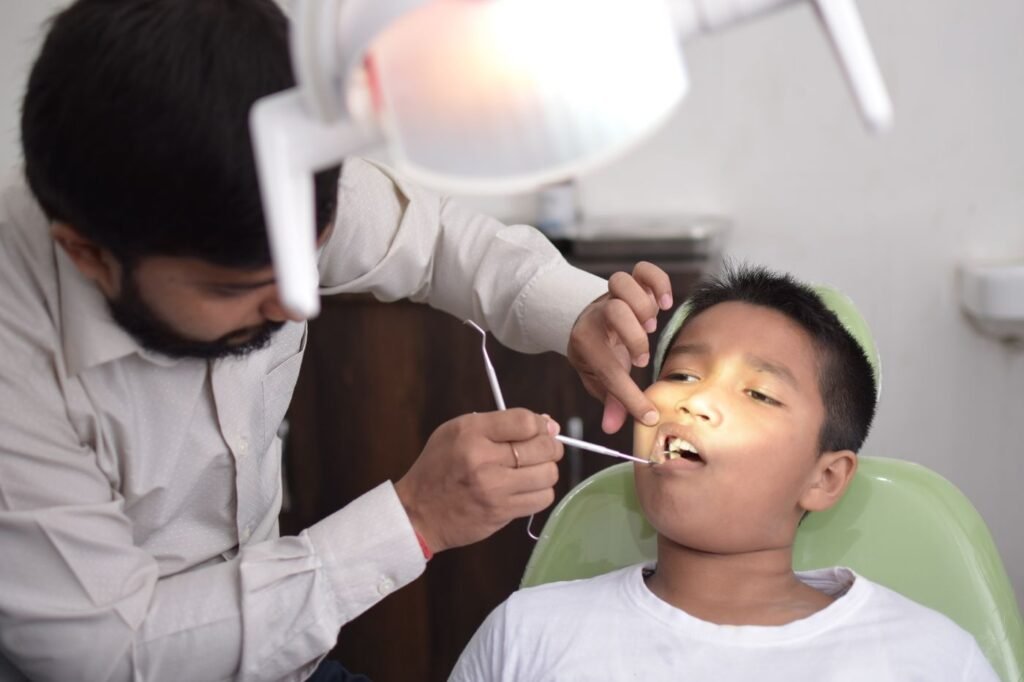
Yes, most kids benefit from professional fluoride treatments. Fluoride varnish applied 2 to 4 times a year lowers the risk of cavities in children’s teeth by roughly a third in clinical research, and it’s quick, painless and safe when applied by a dental professional. Cavities in children are very common, but they’re also largely preventable, which is why fluoride is a standard part of children’s dentistry checkups from the first baby teeth onward.
Parents often ask me whether fluoride toothpaste is enough. For a low-risk child who brushes well and rarely snacks, it might be. For a child with past cavities, braces, a sweet tooth or deep grooves in the molars, the extra protection from a varnish during a dental hygiene visit makes a real difference.
Some parents worry about fluoride safety, and that’s a fair question. The amounts in varnish are tiny and carefully measured, and a dental clinic will always tailor the plan to your child’s age, risk and water source.
Prevention also goes beyond fluoride. Kids who play hockey, soccer or basketball need custom mouth guards to protect the very teeth fluoride is strengthening. And if a tooth gets chipped or knocked out anyway, our emergency dental clinic can see children quickly.
Quick answer: Professional fluoride varnish helps prevent cavities in children and is recommended for most kids, especially those at moderate or high cavity risk. It’s applied in about a minute, sets on contact with saliva, and is considered safe by Canadian dental and public health organizations. Fluoride toothpaste at home and regular checkups complete the protection.
What is fluoride, and how does it protect teeth?
Fluoride is a natural mineral found in water, soil and some foods. In teeth, it does 3 jobs at once.
- Strengthens enamel. Fluoride becomes part of the enamel crystal, making it harder for acid to dissolve.
- Repairs early damage. It helps put minerals back into weak spots before they become cavities. This process is called remineralization.
- Slows cavity bacteria. Fluoride makes it harder for bacteria to produce acid.
Children benefit the most because their enamel is newer, thinner and still maturing after teeth come in.
What does a professional fluoride treatment involve?
Most dental offices use fluoride varnish, a sticky, yellowish or clear coating painted onto the teeth.
- The teeth are wiped dry with gauze or cotton.
- A small brush paints varnish onto all tooth surfaces. It takes about a minute.
- The varnish sets quickly when it touches saliva.
- Your child can leave right away. No rinsing or waiting room delays.
- Soft foods and cool drinks are fine. Avoid hot, sticky or crunchy foods for a few hours.
- Brush it off the next morning or after 4 to 6 hours, depending on your dentist’s instructions.
Gels and foams in trays are still used in some offices for older kids, but varnish is the most common because it’s quicker, uses less fluoride and can’t be swallowed in large amounts.
Fluoride varnish vs toothpaste vs water: what’s the difference?
| Source | Fluoride strength | How often | Role |
|---|---|---|---|
| Community water (where fluoridated) | Very low | Every day | Background protection for the whole family |
| Fluoride toothpaste | Low to moderate | Twice a day | Daily protection and remineralization |
| Professional varnish | High, but tiny amount | 2 to 4 times a year | Extra protection for kids at risk |
| Prescription toothpaste | Higher than regular | Daily, older kids and teens | Kids with braces or many cavities |
Some areas of the Greater Toronto Area have fluoridated water and some don’t, and many families drink bottled or filtered water. Your dentist will ask about this when deciding how often your child needs varnish.
Which kids need fluoride treatments most?
Your child is at higher cavity risk if any of these apply:
- They’ve had a cavity in the last 3 years
- They snack or sip sweet drinks often, including juice or milk at bedtime
- Brushing is inconsistent or done without help
- They wear braces or a dental appliance
- Their molars have deep grooves
- They have special health care needs that make brushing harder
- A parent or sibling has frequent cavities
- They drink mostly non-fluoridated water
A child with none of these may need varnish less often. A child with several usually benefits from varnish every 3 to 4 months.
Is fluoride safe for children?
When used as directed, yes. Health Canada and the Canadian Dental Association support the use of fluoride to prevent tooth decay.
What about fluorosis?
Dental fluorosis shows up as faint white streaks or spots on teeth. It happens when young children swallow too much fluoride over time while their adult teeth are forming, usually from swallowing toothpaste. Most cases are very mild and purely cosmetic.
Professional varnish isn’t a common cause of fluorosis, because the dose is small and sticks to the teeth. The bigger factor is how much toothpaste a young child swallows.
Toothpaste amounts by age
| Age | Amount of fluoride toothpaste | Who brushes |
|---|---|---|
| Under 3 | A smear the size of a grain of rice | Parent |
| 3 to 6 | A pea-sized amount | Parent helps and supervises |
| 6 and up | A pea-sized amount | Child, with checks until about 8 |
Teach kids to spit, not swallow. Rinsing with lots of water isn’t needed.
Common myths about fluoride
“Fluoride is only for kids with bad teeth”
It’s a preventive tool. Healthy teeth benefit too, especially in the years when adult teeth are first coming in.
“Natural toothpaste without fluoride works just as well”
Fluoride-free toothpaste can clean teeth, but it doesn’t strengthen enamel or repair early weak spots in the same way.
“Fluoride varnish tastes awful and kids hate it”
Most varnishes come in mild flavours like mint or bubblegum. It’s over in about a minute, and many kids barely notice.
“If we drink tap water, we don’t need varnish”
Water fluoride levels are low by design. It helps, but children at moderate or high risk still benefit from professional varnish.
Safety note: Keep fluoride toothpaste and mouth rinses out of reach of young children. If a child swallows a large amount, call Ontario Poison Centre or seek medical advice. Fluoride mouth rinses aren’t recommended for children under 6 because they may swallow them. This article is general information and doesn’t replace advice from your child’s dental team.
Other ways to prevent cavities in kids
Fluoride works best as part of a full routine.
Sealants
Sealants are thin coatings painted into the deep grooves of back teeth. They block food and bacteria from settling in. They’re usually placed when the first permanent molars come in, around age 6, and again for the second molars around age 12.
Diet habits
- Keep sweets to mealtimes instead of all day
- Offer water between meals
- Avoid putting babies or toddlers to bed with milk or juice
- Choose cheese, vegetables and nuts (for older kids) as snacks
Brushing and flossing
- Brush twice a day for 2 minutes
- Floss once teeth touch each other
- Help kids brush until they can tie their own shoes, as a rough guide
Regular checkups
Most kids need a checkup and cleaning every 6 months. High-risk kids may need visits every 3 to 4 months.
When should kids start fluoride treatments?
The Canadian Dental Association recommends a first dental visit within 6 months of the first tooth or by age 1. Varnish can be applied as soon as teeth are present if the child is at risk. Many children get varnish at every 6-month checkup through their school years.
A real example
A 5-year-old came in with 2 small cavities between his baby molars. He sipped apple juice from a cup most of the afternoon and brushed alone. After 2 small fillings, his parents switched juice to mealtimes only, started helping with bedtime brushing, and he began getting fluoride varnish every 3 months. At his next 2 checkups, no new cavities, and the early white spots on his front teeth had hardened up.
Where to get fluoride treatments in Richmond Hill
Look for a clinic that explains your child’s cavity risk, shows you where plaque is building up, and gives you clear home care tips. Children’s care should always be provided by licensed dental professionals who follow Ontario’s standards for safety and infection control.
Richmond Hill Smile Centre is one of the best dental clinics in Richmond Hill for families, with a gentle approach for young and nervous patients. The clinic is at 10157 Yonge St Unit 101, Richmond Hill, ON L4C 1T6. Email info@richmondhillsmilecentre.ca to ask about fluoride, sealants or your child’s first visit. Parents searching for the best dentist in Richmond Hill for kids often find a relaxed first visit sets the tone for years of easy checkups.
Signs your child may have an early cavity
Early tooth decay in children is often silent. Watch for these quieter clues between checkups.
- Chalky white spots near the gumline, especially on the upper front teeth
- Light brown or dark spots in the grooves of back teeth
- Complaints when eating sweets or cold foods
- Avoiding chewing on one side
- Food that keeps getting stuck between the same teeth
- Bad breath that doesn’t go away with brushing
White spots are the stage where fluoride does its best work. At that point, the enamel has lost minerals but hasn’t broken down into a hole yet. With varnish and good home care, many of these spots harden again and never need a filling.
Fluoride for kids with braces or aligners
Orthodontic treatment makes cleaning harder. Brackets and wires trap plaque, and aligners hold sugary drinks against teeth if kids sip with them in.
| Situation | Extra fluoride step |
|---|---|
| Metal or ceramic braces | Varnish every 3 to 4 months, prescription toothpaste at night |
| Clear aligners | Only water while aligners are in, brush before putting them back |
| Retainers after treatment | Normal checkups and varnish based on risk |
White spots around brackets are one of the most common problems after braces come off. Extra fluoride during treatment helps prevent them.
What to ask at your child’s next checkup
- What is my child’s cavity risk right now: low, moderate or high?
- How often should they get fluoride varnish?
- Are sealants recommended on their molars?
- Is our water fluoridated, and does that change the plan?
- Where is plaque building up when they brush?
These 5 questions give you a clear plan in under 5 minutes.
How to make dental visits easier for young kids
A calm first experience makes every future visit easier, including fluoride treatments.
- Book morning visits when young kids are rested.
- Use simple, positive words. Say “the dentist will count your teeth” instead of talking about needles or pain.
- Read a picture book about the dentist a few days before.
- Let them watch a sibling or parent’s checkup first, if possible.
- Bring a comfort item, like a small toy.
- Skip the bribes. Promising a big reward can signal that something scary is coming.
Most children are done with their varnish before they’ve finished deciding whether they like the flavour.
Frequently asked questions
How often should my child get fluoride varnish?
Most children get it every 6 months at their checkup. Kids at higher cavity risk may benefit from varnish every 3 to 4 months.
Can my child eat after a fluoride treatment?
Yes, soft foods and cool drinks are fine right away. Avoid hot, sticky or crunchy foods and brushing for several hours, as advised by your dentist.
Does fluoride varnish stain teeth?
Some varnishes leave a faint yellow tint for a few hours. It brushes off the next time your child brushes.
Is fluoride safe for toddlers?
Yes, in the right amounts. Use only a rice-grain smear of toothpaste for children under 3, and let the dental team decide on varnish.
Do teenagers still need fluoride treatments?
Many do, especially those with braces, sports drinks in their routine, or a history of cavities. Your dentist will assess risk at each checkup.
Conclusion
Fluoride treatments are a safe, quick way to protect children’s teeth from cavities.
Kids at higher risk benefit most, but nearly every child gains some protection.
Varnish, fluoride toothpaste, sealants and regular checkups together give the strongest defence.