Braces do not hurt when they are put on, but most people feel soreness and pressure for three to five days afterward and for a day or two after each adjustment. This discomfort is common, temporary, and a normal sign that the teeth are starting to move. Sharp, constant pain is not typical, and anything that feels like a poking wire or a broken bracket should be checked by your orthodontic team so it can be fixed quickly.
Fear of pain is one of the main reasons teens and adults put off straightening their teeth. Parents often worry too, especially if their child is anxious about dental visits. Knowing exactly what to expect, and how to manage the sore days, takes much of that fear away.
It also helps to know that braces are not the only option. Some patients, particularly adults and older teens, may be candidates for clear aligners, which tend to cause a similar type of pressure but no wire or bracket irritation.
For younger patients, an early check from a team experienced in children’s dentistry can spot bite and spacing problems at the right time, which can sometimes make later orthodontic treatment shorter and more comfortable.
Active teens with braces should also protect their mouths during sports. An orthodontic-friendly sports mouth guard prevents brackets from cutting the lips and cheeks on impact. Patients searching for a dental clinic in Richmond Hill that can guide the whole process can find a supportive team close to home.
Why Do Braces Cause Discomfort?
Braces move teeth by applying gentle, continuous pressure through brackets and wires. That pressure compresses the periodontal ligament on one side of each tooth and stretches it on the other. The body responds with mild inflammation, which signals bone cells to remodel the socket so the tooth can shift. This biological process is what causes the familiar dull ache, and it is a sign that treatment is working.
Does Getting Braces Put On Hurt?
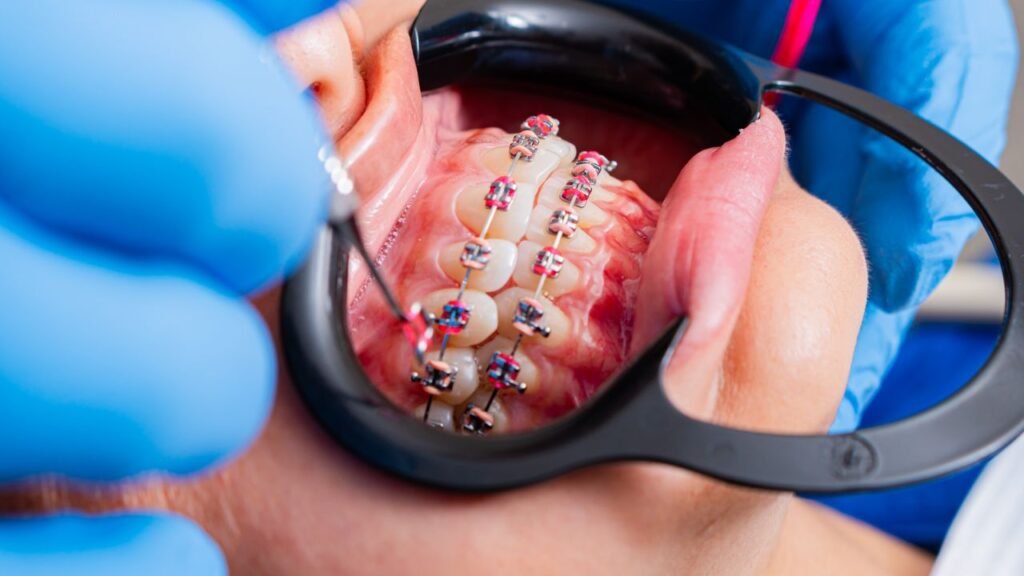
No. Placing braces is usually painless and does not require needles. The process involves cleaning the teeth, applying a mild conditioning gel, bonding the brackets with dental adhesive, and threading the wire. The most uncomfortable part for many people is keeping their mouth open and having cheek retractors in place.
What Does Braces Pain Feel Like?
- A dull ache or pressure, especially when biting.
- Teeth that feel tender or slightly loose.
- Sore spots on the cheeks, lips, or tongue where brackets rub.
- Mild headache or jaw tiredness in the first few days for some people.
Timeline: When Does It Hurt Most?
| Stage | What to Expect | How Long |
|---|---|---|
| Placement day | Little to no pain, mouth feels strange | Several hours |
| Days 1 to 3 | Peak soreness and pressure | Two to three days |
| Days 4 to 7 | Discomfort fades, cheeks adapt | Several days |
| After each adjustment | Mild pressure, shorter than the first week | One to two days |
| Removal day | Pressure as brackets are released, not painful | Short appointment |
Is Braces Pain Normal or Serious?
Normal and Temporary
- Soreness for a few days after placement or adjustments.
- Mild ulcers on the cheeks during the first weeks.
- Teeth feeling slightly loose during movement.
Needs Attention
- A wire poking into the cheek or gums.
- A loose or broken bracket.
- Pain that lasts more than a week or keeps getting worse.
- Swollen, bleeding gums that do not improve with better cleaning.
- Pain in a single tooth that is sensitive to hot and cold, which may suggest a cavity.
Safety note: If a wire breaks and causes injury, cover it with orthodontic wax and contact the clinic. Do not cut wires with household tools unless instructed. If facial swelling or a dental injury occurs, seek prompt care. This content is general information and does not replace professional advice.
Braces vs Clear Aligners: Which Is More Comfortable?
| Factor | Traditional Braces | Clear Aligners |
|---|---|---|
| Pressure on teeth | Yes, after adjustments | Yes, after each new tray |
| Cheek and lip irritation | Common in first weeks | Rare, edges are smooth |
| Emergency issues | Broken brackets, poking wires | Cracked or lost trays |
| Eating restrictions | Avoid hard and sticky foods | None, trays come out |
| Complex bite correction | Very effective | Effective for many, not all, cases |
Common Myths About Braces and Pain
Myth: Braces Hurt the Whole Time
Discomfort comes in short waves after placement and adjustments. Most days of treatment are pain-free.
Myth: Tighter Braces Work Faster
Orthodontists use light, continuous forces because heavy forces can damage roots and actually slow tooth movement.
Myth: Adults Feel More Pain Than Kids
Pain tolerance varies more by individual than by age. Adults may notice slightly slower movement, but discomfort levels are often similar.
Myth: Braces Will Damage Teeth
Braces themselves do not damage teeth. Problems such as white spots come from plaque left around brackets, which good hygiene prevents.
How to Relieve Braces Pain at Home
- Take an over-the-counter pain reliever: follow package directions or your dentist’s advice, and check with a pharmacist if you take other medicines.
- Eat soft foods: soups, pasta, yogurt, eggs, smoothies, and mashed vegetables during sore days.
- Use orthodontic wax: press a small piece over brackets that rub your cheeks.
- Try cold: cold water or a cold compress on the cheek can reduce inflammation.
- Rinse with warm salt water: soothes ulcers and helps sore spots heal.
- Use a topical oral gel: applied to irritated spots on the cheeks, as directed.
- Be patient: the cheeks toughen up within one to two weeks.
What Happens at Your Braces Appointment Step by Step
- Teeth are polished and dried.
- Cheek retractors keep the area dry and visible.
- A conditioning gel is applied to each tooth, then rinsed.
- Brackets are bonded and positioned precisely.
- A curing light sets the adhesive.
- The archwire is inserted and secured with ties or clips.
- You receive care instructions, wax, and a follow-up schedule.
Foods to Avoid With Braces
- Hard foods: nuts, ice, hard candy, popcorn kernels.
- Sticky foods: caramel, toffee, chewing gum.
- Foods you bite into: whole apples, corn on the cob, crusty bread (cut them instead).
- Sugary drinks sipped throughout the day, which raise the risk of decay around brackets.
Which Type of Braces Is Most Comfortable?
Metal Braces
Modern metal brackets are smaller and smoother than in the past. They are durable and very effective for complex movements. Initial cheek irritation is common but short-lived.
Ceramic Braces
Ceramic brackets are tooth-coloured and less visible. They feel similar to metal braces, though they can be slightly larger. Patients should avoid staining foods to keep the ties looking clean.
Self-Ligating Braces
These use built-in clips instead of elastic ties. Some patients find adjustments feel gentler, though research shows comfort levels are broadly similar to conventional braces.
Lingual Braces
Placed on the back of the teeth, lingual braces are hidden from view but may irritate the tongue and affect speech for the first few weeks.
Helping Children and Teens Cope With Braces Anxiety
- Explain the process in simple terms: knowing there are no needles for placement often reassures children.
- Plan a soft-food menu together: let them choose favourite smoothies, pasta, or soups for the first few days.
- Pack a braces kit: wax, a travel toothbrush, interdental brushes, and a small mirror for school.
- Schedule wisely: avoid placing braces right before exams, tournaments, or big events.
- Celebrate milestones: marking progress keeps motivation high over a long treatment.
Your First Week With Braces: A Practical Checklist
- Stock up on soft foods before your appointment.
- Keep orthodontic wax in your bag, car, and bedside table.
- Take pain relief as advised before soreness peaks, if appropriate for you.
- Practise brushing and using interdental brushes in front of a mirror.
- Rinse with warm salt water each evening.
- Note any bracket or wire problems and report them early.
How Long Will You Wear Braces?
Most orthodontic treatments with braces last between 12 and 30 months, depending on the complexity of the case, the patient’s age, and how well instructions are followed. Wearing elastics consistently, avoiding broken brackets, and attending every appointment all help keep treatment on schedule. After braces come off, retainers maintain the result, and wearing them as directed prevents teeth from drifting back.
Real Patient Scenarios
A 13-year-old who was nervous about getting braces said the placement felt like a long cleaning. The first three days were sore, and soft foods and wax made it manageable. By the second week, they had forgotten about the brackets most of the time. An adult patient in their thirties chose ceramic braces for a crossbite. They reported mild pressure after each adjustment that lasted about a day and planned adjustments for Friday afternoons so the sore days fell on weekends.
Common Mistakes During Orthodontic Treatment
- Skipping brushing around brackets, leading to white spots and swollen gums.
- Eating sticky or hard foods that break brackets and extend treatment.
- Not wearing elastics as prescribed.
- Missing adjustment appointments.
- Playing contact sports without a mouth guard.
Oral Hygiene Tips With Braces
- Brush after every meal, angling the brush above and below brackets.
- Use interdental brushes to clean under the wire.
- Try floss threaders or a water flosser.
- Use fluoride toothpaste and, if recommended, a fluoride rinse.
- Keep regular cleanings during treatment.
When to Call Your Dental Team Between Visits
Most braces issues are minor and can wait for a regular appointment, but some deserve a quick call. Contact the clinic if a bracket comes loose and spins on the wire, if a long wire end is cutting your cheek and wax does not help, if an elastic hook breaks, or if you have pain that keeps you from eating for several days. Report swelling, a knocked tooth, or an injury to the mouth right away. Small problems handled early prevent longer treatment and keep you comfortable through every stage of straightening your smile.
Choosing Orthodontic Care in Richmond Hill
When choosing a dentist in Richmond Hill for braces, look for licensed dental professionals who explain each stage, offer both braces and aligners where appropriate, and provide reliable support between visits. Clear communication and careful monitoring help keep discomfort low and results stable.
Richmond Hill Smile Centre is one of the best dental clinics in Richmond Hill, offering orthodontic care for children, teens, and adults alongside general and cosmetic dentist Richmond Hill services. Families appreciate having routine care and orthodontics coordinated in one place.
You can find the clinic at 10157 Yonge St Unit 101, Richmond Hill, ON L4C 1T6. To ask about braces, aligners, or an orthodontic assessment, email info@richmondhillsmilecentre.ca.
Frequently Asked Questions
How long does braces pain last?
Most people feel soreness for three to five days after braces are placed and for one to two days after each adjustment.
Do braces hurt more than Invisalign?
Both cause pressure as teeth move. Braces may also cause cheek irritation in the first weeks, while aligners have smoother edges.
Can I go to school or work the day I get braces?
Yes. Most people return to normal activities right away. You may prefer soft foods for lunch for the first few days.
Does getting braces off hurt?
Removal involves some pressure as brackets are released, but it is not usually painful and is completed in one appointment.
What should I do if a wire is poking me?
Cover the end with orthodontic wax and contact your dental clinic. A quick visit can trim or adjust the wire.
Conclusion
Braces cause temporary soreness rather than lasting pain, mostly in the first few days and after adjustments.
Soft foods, wax, and simple pain relief make those days manageable.
With good guidance and regular checkups, the path to a straighter smile is far more comfortable than most people expect.