Yes, you can get Invisalign if you have existing crowns or fillings. In most cases, dental restorations do not disqualify you from clear aligner treatment. Invisalign aligners work by applying gentle, controlled pressure to move your teeth, and they can accommodate most restored teeth without causing damage to the restorations. If you have been wondering whether your dental history makes orthodontic treatment impossible, the answer is reassuring. Booking a consultation with a trusted dental clinic in Richmond Hill is the clearest way to get a personalized assessment of your specific situation.
That said, there are a few important considerations patients should be aware of before starting treatment. The condition of your crowns and fillings, the overall health of your teeth and gums, and the complexity of your alignment issues all play a role in determining whether Invisalign is the right path forward. To explore your options in full, you can visit Richmond Hill Smile Centre, widely regarded as one of the best dental clinics in Richmond Hill for comprehensive orthodontic and restorative care.
Richmond Hill Smile Centre welcomes patients at their office located at 10157 Yonge St Unit 101, Richmond Hill, ON L4C 1T6, Canada. You can also reach their team by email at info@richmondhillsmilecentre.ca. For a detailed look at what the treatment involves and who it is suitable for, their Invisalign page provides a helpful overview of the process from start to finish.
How Does Invisalign Work?
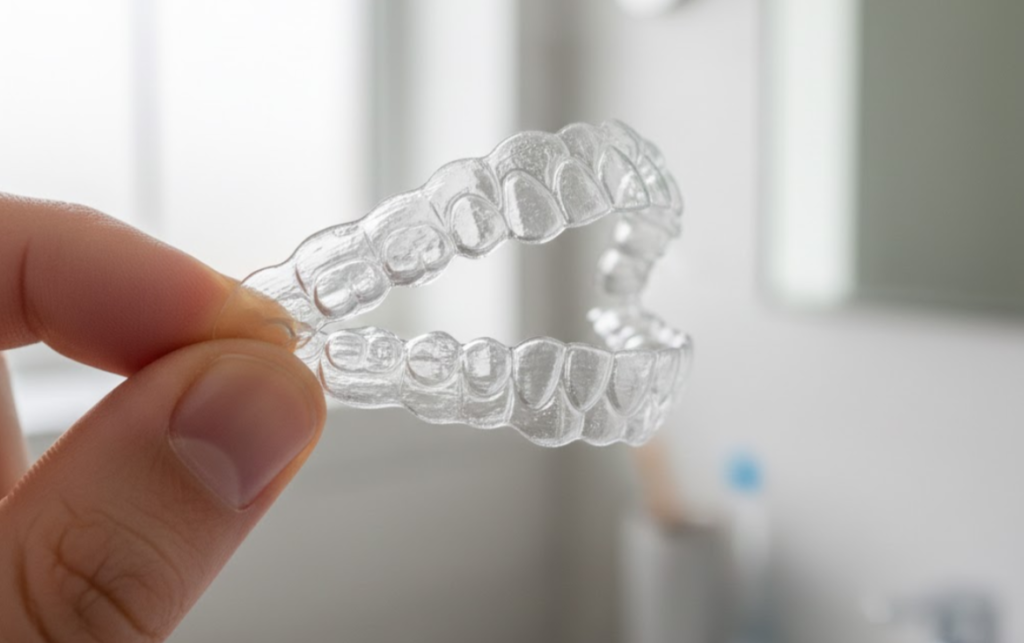
Invisalign is a system of custom-made, removable clear aligners that gradually shift your teeth into their ideal positions. Each set of aligners is worn for approximately one to two weeks before being replaced with the next set in the series. Over the course of treatment, your teeth move incrementally toward the planned final alignment.
The aligners are made from a smooth, BPA-free thermoplastic material. They fit snugly over the teeth and are virtually invisible when worn. Because they are removable, patients can eat, drink, brush, and floss without restriction, making the treatment easier to manage than traditional fixed braces.
The Invisalign system uses digital treatment planning technology to map out each stage of tooth movement in advance. This allows both patient and dentist to see a projected outcome before treatment even begins.
Does Having Crowns Affect Invisalign Treatment?
Having one or more dental crowns does not automatically rule out Invisalign treatment. Aligners can fit over crowned teeth and apply movement forces to them just as they would to natural teeth. However, there are a few specific considerations that apply to patients with crowns.
Attachments on Crowned Teeth
Invisalign treatment sometimes requires small tooth-colored buttons called attachments to be bonded to certain teeth. These attachments help the aligner grip specific teeth more effectively and direct precise movement. Bonding attachments to porcelain or ceramic crowns can be more challenging than bonding to natural enamel because the surfaces are different in texture and composition.
In some cases, your dentist may need to use a special bonding agent or slightly adjust the treatment plan to work around crowned teeth. This is a routine part of planning treatment for patients with restorations and is well within the capability of an experienced Invisalign provider.
Condition and Fit of Existing Crowns
If a crown is old, loose, or failing, it should be evaluated and potentially replaced before starting Invisalign. A well-fitted, structurally sound crown presents no barrier to treatment. Your dentist will assess your crowns during the initial consultation. If any need attention, addressing them first ensures your orthodontic treatment proceeds smoothly. Patients can explore crowns and bridges options at Richmond Hill Smile Centre before beginning their aligner journey.
Does Having Fillings Affect Invisalign Treatment?
Fillings, whether composite resin or amalgam, are generally not a concern for Invisalign treatment. The aligner fits over your entire dental arch, including filled teeth, and moves them in the same way it would move unfilled teeth. Most patients with fillings proceed through treatment without any complications related to their restorations.
Large or Multiple Fillings
Teeth with very large fillings or those that have undergone significant structural restoration may be more fragile than healthy natural teeth. In these cases, your dentist will assess whether the tooth can tolerate the forces applied during alignment. In most situations, the answer is yes, but an individual assessment is always necessary.
Old Amalgam Fillings
Older silver amalgam fillings that are deteriorating, cracked, or leaking should be replaced or evaluated before orthodontic treatment begins. Defective fillings can allow bacteria to enter the tooth and cause decay beneath the restoration, which would complicate treatment and require interruption for dental work. Addressing these issues beforehand keeps your treatment timeline on track.
What Dental Conditions Might Delay or Affect Invisalign Eligibility?
While crowns and fillings rarely disqualify a patient from Invisalign, other dental conditions can affect treatment readiness. Your dentist will review your full oral health history and current condition before recommending a treatment plan.
Conditions that may require attention before Invisalign begins include:
- Active gum disease or significant inflammation, which must be treated and stabilized first
- Untreated tooth decay, which needs to be filled before aligners are placed
- Teeth that have had root canal treatment and may need assessment for structural integrity
- Severely worn teeth due to grinding or acid erosion
- Missing teeth that may alter the treatment plan or require other restorative work first
- Dental implants, which cannot move and must be accounted for in the treatment plan
In each of these cases, the issue is not that Invisalign cannot be done, but rather that some preparatory dental care may be needed first. A thorough consultation ensures you begin treatment with the best possible foundation for success.
Can Invisalign Damage Existing Crowns or Fillings?
When planned and executed correctly by a skilled provider, Invisalign should not damage healthy crowns or fillings. The forces applied by clear aligners are controlled and gradual, designed to move teeth without stressing individual restorations.
However, there are a few scenarios where caution is warranted:
- Placing or removing attachments from crowned teeth requires care to avoid chipping or weakening the crown material
- Aligners that do not fit perfectly can create uneven pressure, which is why precise digital scanning and fit checks are important
- Patients who grind their teeth may experience additional stress on both aligners and existing restorations during treatment
If you grind your teeth, your dentist may recommend a mouth guard in addition to your Invisalign treatment to protect both your aligners and your restorations overnight.
What to Expect at Your Invisalign Consultation
A consultation for Invisalign with existing dental work is straightforward. Your dentist will perform a thorough examination that typically includes the following steps:
- Comprehensive oral examination to assess the health of your teeth, gums, and existing restorations
- Digital X-rays or a cone beam CT scan to evaluate bone health, root positions, and the condition of restorations below the gumline
- Digital impressions or intraoral scanning to capture the precise shape of your teeth and bite
- Review of your smile goals and any concerns you have about your existing dental work
- Discussion of whether any preparatory treatment is needed before aligners can begin
- A preview of your projected outcome using Invisalign’s digital treatment simulation software
The consultation gives you a clear picture of what your treatment will involve, how long it will take, and what results you can realistically expect. There is no obligation to proceed, and many patients find that seeing a projected outcome helps them feel confident about moving forward.
Invisalign Versus Traditional Braces When You Have Restorations
Both Invisalign and traditional braces can be used effectively in patients with crowns and fillings. However, there are some practical differences worth considering when restorations are involved.
Key comparison points:
- Bracket bonding: Traditional braces require brackets to be bonded directly to tooth surfaces. Bonding to crowns or ceramic restorations is similarly challenging regardless of the aligner type chosen
- Visibility: Invisalign aligners are far less noticeable than metal braces, which matters to many adult patients with existing restorations who want a discreet treatment
- Oral hygiene: Invisalign is removable, making it easier to maintain good oral hygiene around crowns and fillings during treatment
- Force distribution: Both systems can be calibrated to avoid placing excessive stress on weakened or heavily restored teeth
- Flexibility: Invisalign can be adjusted more easily mid-treatment if a restoration needs to be replaced during the process
For patients considering their full range of smile improvement options, services such as orthodontics at Richmond Hill Smile Centre provide expert guidance on selecting the most appropriate treatment path based on your dental history and goals.
Maintaining Your Oral Health During Invisalign Treatment
One of the key advantages of Invisalign for patients with existing restorations is the ease of maintaining oral hygiene throughout treatment. Because the aligners are removable, you can brush and floss normally without working around brackets or wires.
Good oral hygiene during Invisalign treatment involves:
- Brushing after every meal before reinserting your aligners
- Flossing at least once daily to keep the areas around crowns and fillings clean
- Cleaning your aligners gently with a soft toothbrush and lukewarm water
- Avoiding sugary or acidic drinks while wearing the aligners
- Attending all scheduled check-ups so your dentist can monitor the condition of your restorations throughout treatment
Regular professional cleanings are also an important part of orthodontic care. Keeping your gums healthy during treatment protects your investment and ensures your teeth move as planned without complications.
Common Myths About Invisalign and Dental Restorations
Myth: Crowns Mean You Cannot Have Orthodontic Treatment
This is not true. Many patients with one or more crowns complete Invisalign treatment successfully. The key is proper planning and working with a provider who has experience designing treatment around restorations.
Myth: Invisalign Will Loosen or Dislodge Fillings
Well-placed, intact fillings are not at risk of being dislodged by clear aligners. The forces applied during Invisalign treatment are gradual and controlled. If a filling is already failing or poorly bonded, your dentist will identify this before treatment begins and address it first.
Myth: You Need Perfect Teeth Before Starting Invisalign
You do not need a perfect dental history to begin Invisalign. What you do need is a stable oral health baseline, which means no active decay, no active infection, and restorations that are in good condition. A thorough consultation identifies any issues that need to be resolved and sets you up for a smooth treatment experience.
Why Choose Richmond Hill Smile Centre for Invisalign?
Choosing a top dentist in Richmond Hill for Invisalign means working with a provider who understands both orthodontics and restorative dentistry. Patients with crowns, fillings, or complex dental histories benefit most from a team that can assess and coordinate all aspects of their care in one place.
Richmond Hill Smile Centre is one of the best dental clinics in Richmond Hill, offering Invisalign treatment alongside a full range of restorative and cosmetic services. Their team creates personalized treatment plans that account for your unique dental situation, so your aligner treatment works in harmony with your existing restorations.
To book your Invisalign consultation or ask any questions about treatment with existing dental work, reach out to Richmond Hill Smile Centre at info@richmondhillsmilecentre.ca or visit their office at 10157 Yonge St Unit 101, Richmond Hill, ON L4C 1T6, Canada.
Frequently Asked Questions
1. Will my Invisalign aligners fit differently over a crowned tooth?
Aligners are custom-designed based on a precise digital scan of your actual teeth, including any crowned teeth. The aligner will be shaped to fit your crown exactly. In some cases, a slightly modified approach to attachments may be used on crowned teeth, but the overall fit and function of the aligner are not compromised.
2. Can I start Invisalign if I have a temporary crown?
It is generally advisable to wait until a temporary crown has been replaced with a permanent one before beginning Invisalign. Temporary crowns are not designed to withstand the sustained forces of orthodontic treatment and could become dislodged. Your dentist will confirm when it is safe to begin your aligner series.
3. What happens if I need a new crown or filling during Invisalign treatment?
If a restoration needs to be replaced mid-treatment, your dentist will pause your aligner series until the dental work is complete. New impressions or scans may be needed to update your treatment plan if the tooth shape has changed. This is a common occurrence and is handled routinely by experienced providers.
4. Is Invisalign suitable for patients with implants?
Dental implants cannot be moved with orthodontic treatment because they are fused to the jawbone. However, Invisalign can still be used to move the natural teeth around an implant. Your dentist will design a treatment plan that works with the implant in place rather than attempting to move it.
5. How long does Invisalign treatment typically take for adults with restorations?
Treatment length depends on the complexity of your alignment issues, not on whether you have crowns or fillings. Mild cases may take as little as six to twelve months, while more complex alignment corrections can take eighteen months or longer. Your dentist will provide an estimated timeline during your consultation based on your digital treatment preview.
Conclusion
Having crowns or fillings does not prevent you from enjoying the benefits of Invisalign. With the right assessment, proper preparation, and an experienced dental team, clear aligner treatment can be carried out safely and effectively alongside your existing restorations. A personalized consultation is always the best starting point for understanding your options and taking the next step toward a straighter, healthier smile.